Canada Online Tutoring
Role:
UX UI Designer
Project Type
App MVP
Timeline
4 weeks
Tools
Figma, Figjam, Notion, Midjourney, Chatgpt
project background
Canada Online Tutoring partnered with me to design an MVP mobile application focused on improving customer satisfaction, increasing retention, and expanding reach through a mobile-first tutoring experience.
About
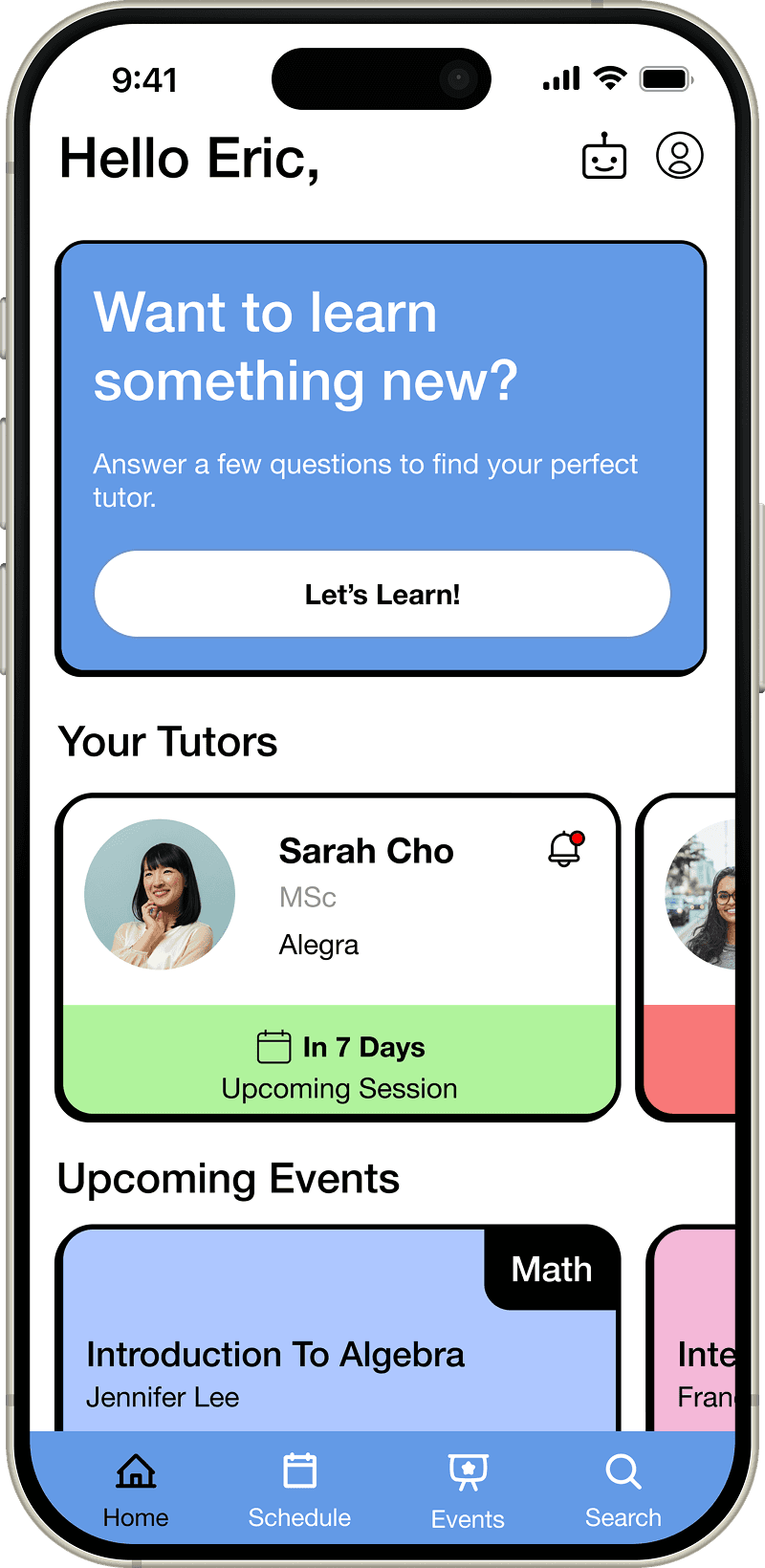
This project focused on designing an MVP for an on-demand tutoring platform, prioritizing low-friction onboarding and fast, confident tutor matching. While the MVP included a credit-based system for purchasing tutoring hours in advance, the core goal was to help users reach their first session quickly and build trust early in the experience.
To encourage repeat usage, the MVP introduced event-based tutoring, multi-session booking, Google Calendar integration, and discounted advance purchases. These features were intentionally prioritized to validate user behavior around discovery, scheduling, and long-term engagement, while laying the foundation for a scalable roadmap.
I partnered with another designer to deliver the MVP in four weeks, collaborating closely across research, design, and delivery. We leveraged existing insights and design resources to ensure consistency while moving quickly to meet client needs.
Emphasize Research & Discovery
User Research Across Key Stakeholders
To understand the needs of all parties involved, we conducted qualitative user interviews with parents, students, and educators. Each group played a distinct role in the tutoring decision-making process, and it was important to capture their unique motivations, concerns, and expectations.
Our interviews focused on how users currently discovered tutoring services, what influenced their trust in a tutor or platform, how they preferred to schedule sessions, and what factors motivated them to commit to ongoing learning. We also explored pain points related to pricing transparency, scheduling flexibility, and communication.
All interviews were documented and synthesized using affinity mapping in FigJam. This allowed us to identify recurring behavioral patterns and emotional drivers across stakeholders while highlighting where needs overlapped or diverged between parents, students, and educators.
Affinity Map Synthesis.
Defining Problem & Framing Strategies
Synthesizing Insights Into Actionable UX Opportunities
After completing research, we analyzed our findings and grouped insights into several key themes, including speed and efficiency, transparency in matching, flexibility in scheduling, and continuity in learning. These themes helped us move beyond individual anecdotes and focus on systemic user needs.
We translated these insights into clear point-of-view (POV) statements that articulated who the user was, what they needed, and why it mattered. This step ensured the team remained grounded in user-centered thinking rather than jumping prematurely into solutions.
From the POV statements, we generated a set of “How Might We” questions to reframe insights into actionable design opportunities. These questions became the foundation for ideation and helped align user needs with the business’s operational goals.
User Flows & Task Flows
Concept exploration and early validation
From Low-Fidelity Concepts to High-Fidelity Prototype
With priorities defined, we began exploring low-fidelity sketches and wireframes to quickly test different layout and interaction patterns. This phase allowed us to iterate rapidly and explore multiple approaches without being constrained by visual details.
We referenced established patterns from industry-leading education and scheduling platforms to inform usability and interaction decisions. These references helped ensure that the experience felt familiar and intuitive to users while still supporting the client’s unique needs.
Through ongoing critique sessions and mentor feedback, we refined the designs and progressed into high-fidelity prototypes in Figma. Each iteration focused on clarity, accessibility, and reducing cognitive load across key user flows.
Low Fidelity Designs
Design System & Branding Integration
Designing for Conversion and Long-Term Engagement
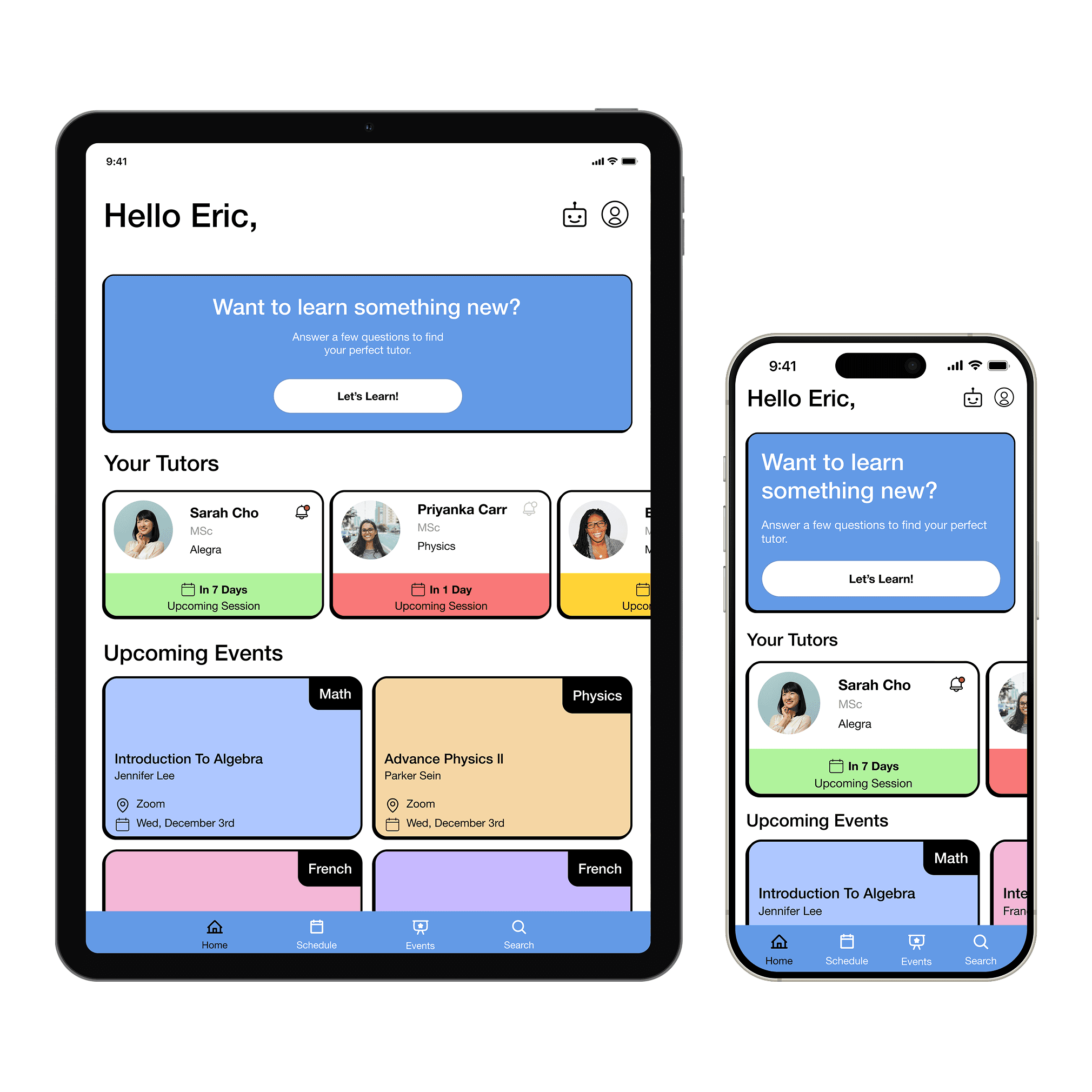
A key focus of the design was creating a seamless end-to-end booking and checkout experience. We intentionally reduced the number of steps required to schedule and pay for a session, ensuring users could move from discovery to confirmation with minimal friction.
To support long-term engagement, we designed a flexible checkout flow that allowed users to add additional sessions or purchase discounted credit bundles for future bookings. This approach balanced business goals with user value by offering savings while encouraging continued learning.
Throughout the checkout experience, we emphasized transparency and trust by clearly communicating pricing, session details, and flexibility. These decisions were informed directly by research insights around user hesitation and commitment.
Test & Delivery Validation & Outcomes
testing, delivery, and handoff preparation
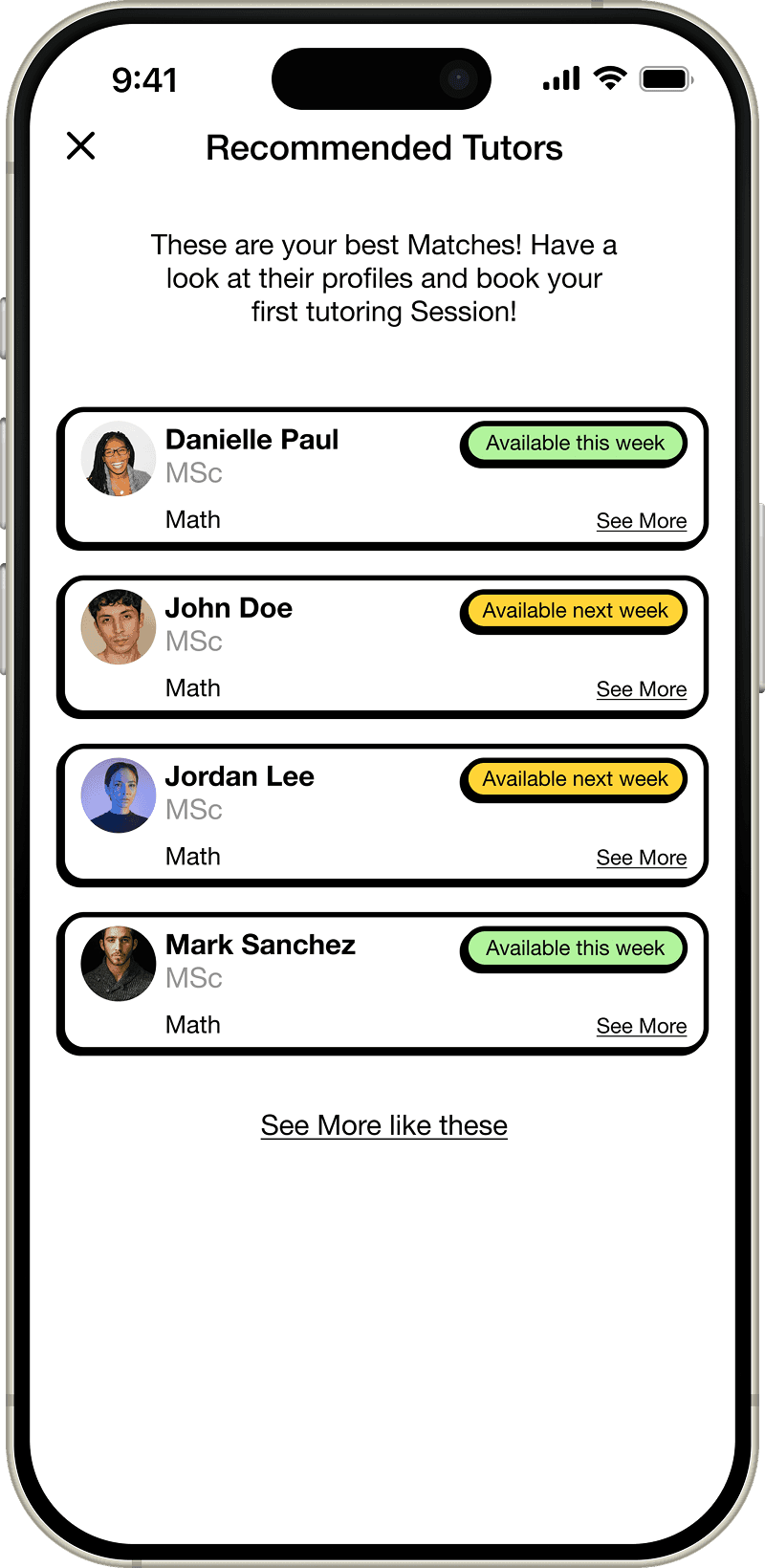
Prior to handoff, the high-fidelity mobile prototype was tested across key user flows to validate clarity, usability, and task completion. Testing focused on sign-up, tutor matching, scheduling, and checkout to ensure users could move confidently from discovery to confirmation without friction.
Insights from testing identified opportunities to improve the checkout UI, as well as the need for additional navigational context and user support at critical decision points. These findings informed targeted design refinements, strengthening clarity, reducing cognitive load, and improving overall flow cohesion.
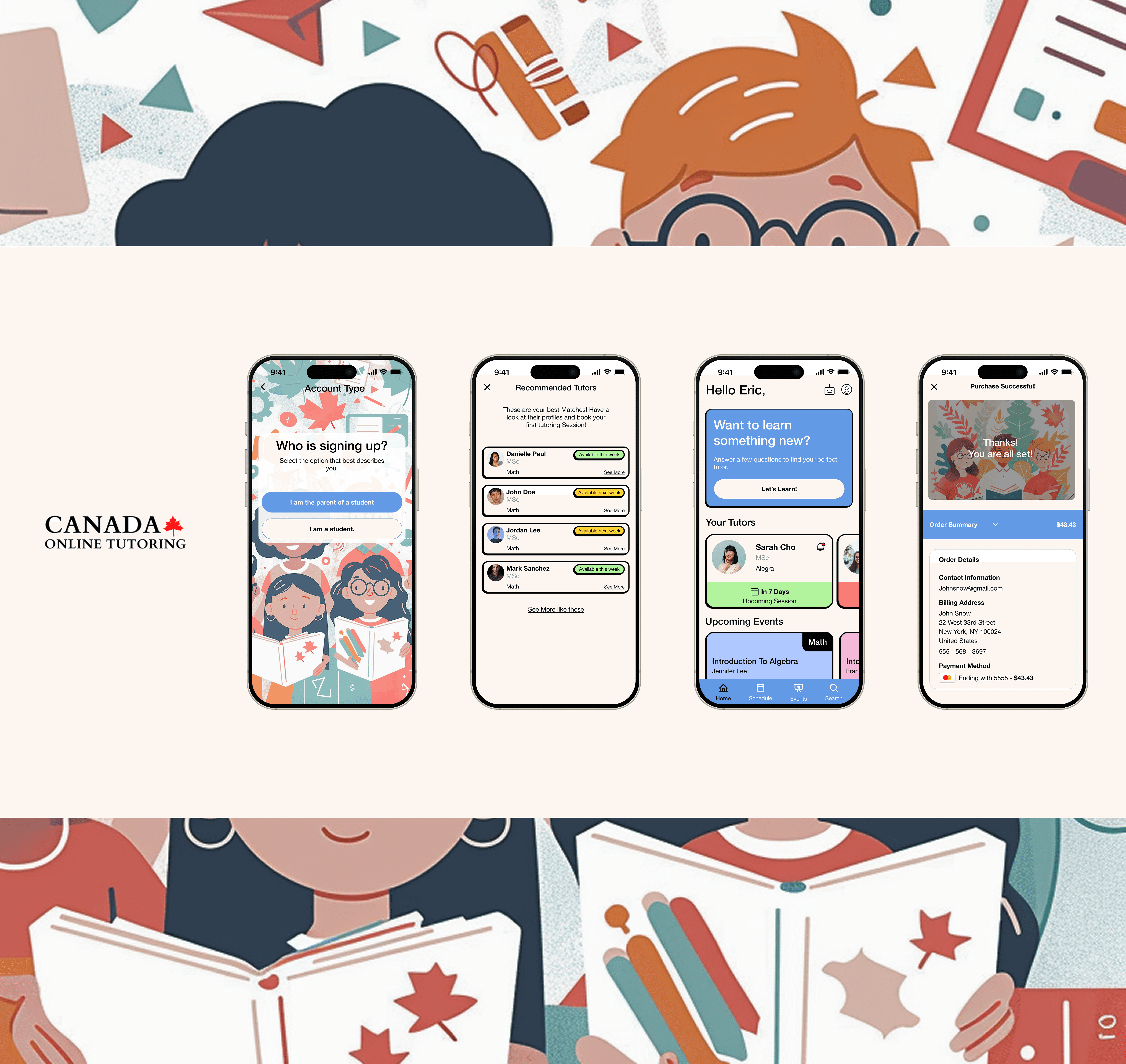
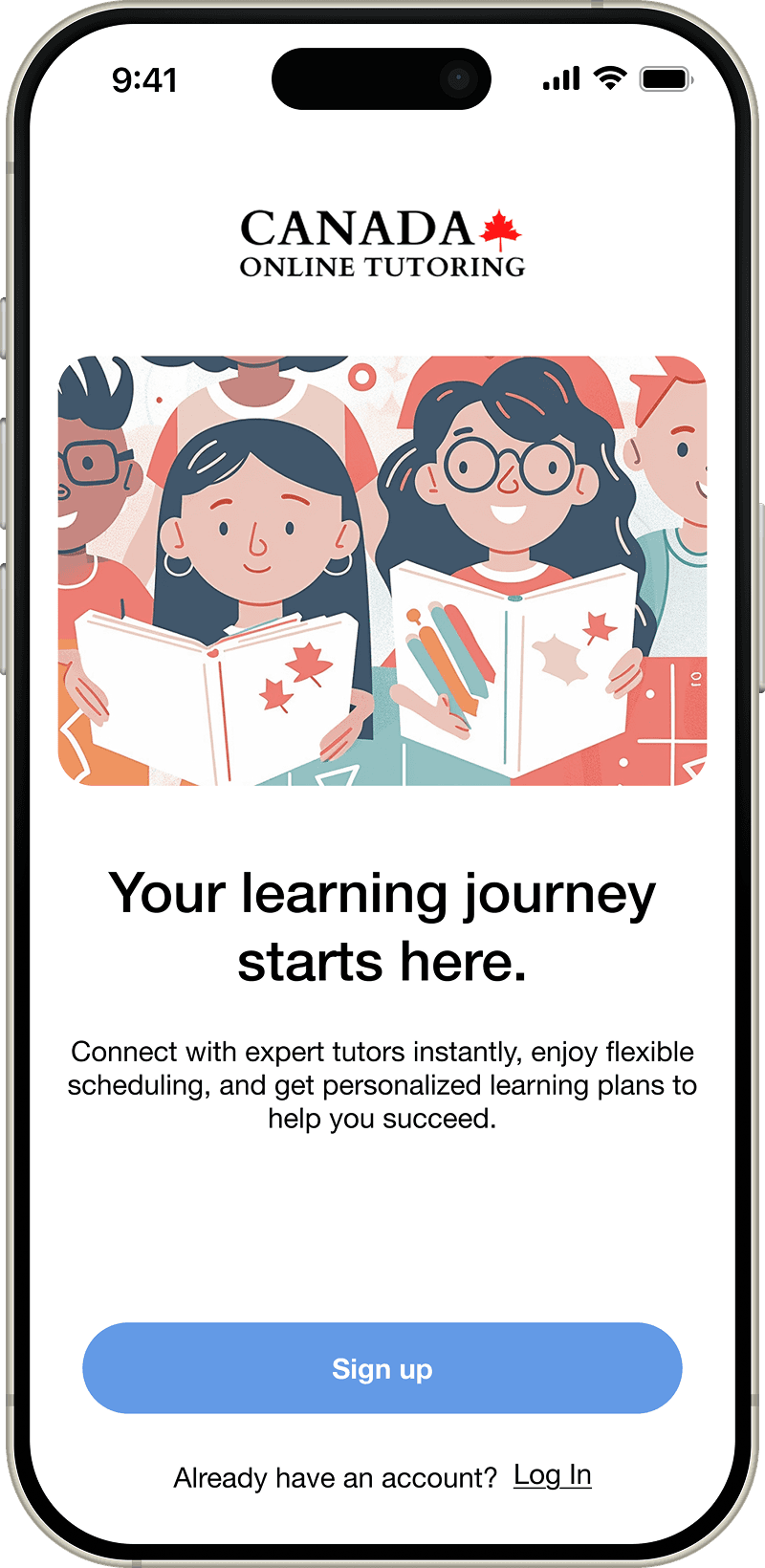
The final deliverable was a five-flow, high-fidelity mobile prototype covering sign-up, tutor matching, scheduling, checkout, and confirmation—designed to function as a single, intuitive end-to-end experience. To support development, detailed design annotations and interaction notes were prepared to clarify behaviors, edge cases, and feedback states.
The completed prototype was delivered to the client’s engineering team as a foundation for implementation and future iteration, providing a scalable solution aligned with both user needs and business objectives.
Key Learnings & Reflections
Key Learnings & Reflection
This project provided meaningful learning opportunities across both product strategy and collaboration. One key takeaway was the importance of starting with a clear, well-defined brief and business goals. Establishing these early is critical for setting product direction and ensuring design decisions align with broader objectives.
I also learned how essential effective collaboration and well-structured processes are to maintaining speed and efficiency. This project required close collaboration with another designer, which in theory should compound output. However, without clearly defined requirements and efficient workflows, collaboration can unintentionally slow progress rather than accelerate it.
If I were to approach this project again, I would begin by establishing a stronger brand foundation, including voice, tone, and visual direction. Research into comparable applications and insights from user interviews suggested opportunities to introduce a more engaging, gamified experience—such as learning streaks, group learning opportunities, tutor reviews, trust-building systems, AI-assisted features, and a more playful, approachable brand aesthetic.
For a future 2.0 iteration, my goal would be to refine and expand on these areas to create an experience that feels magical, engaging, and genuinely useful for learners.