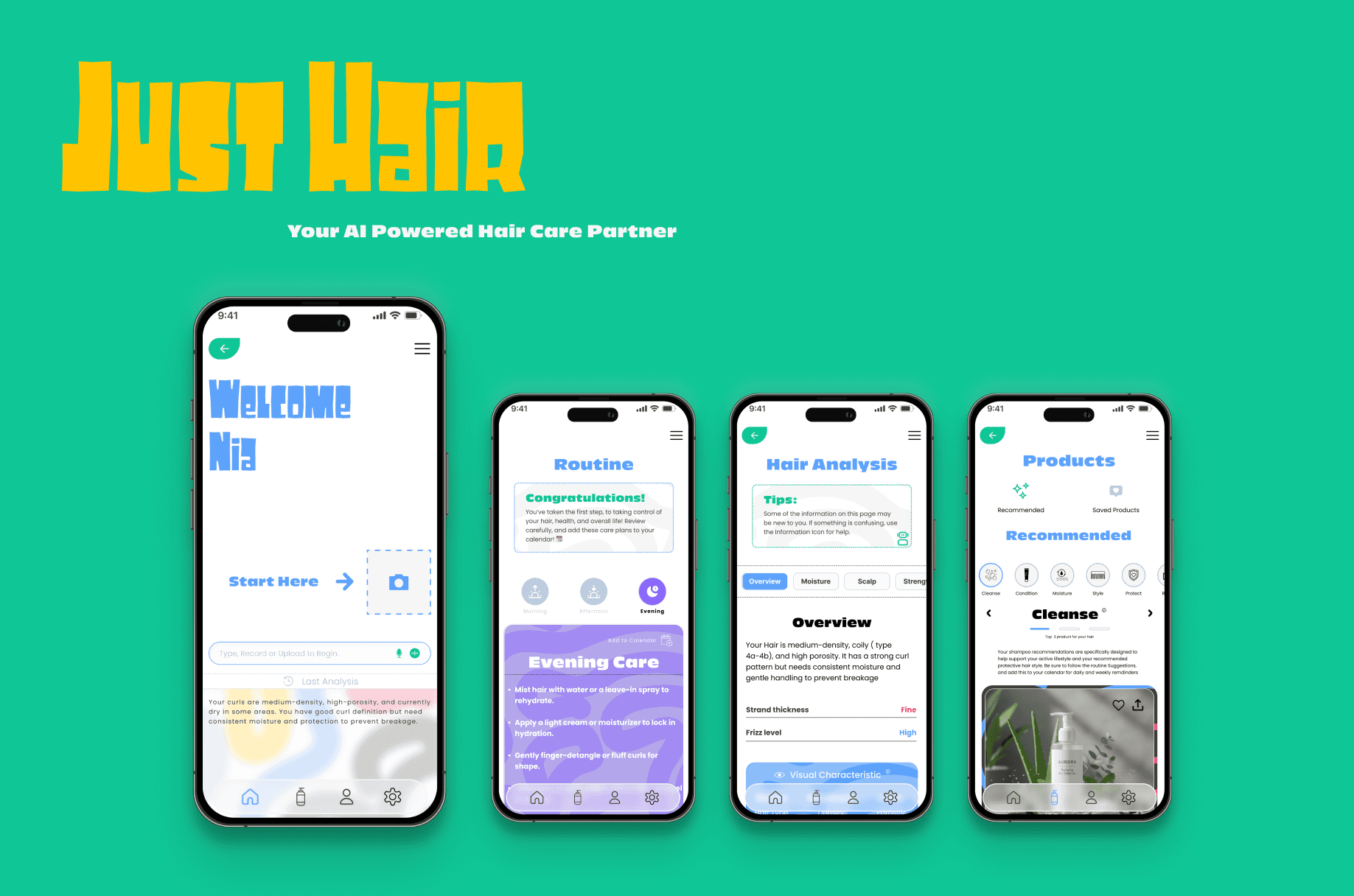
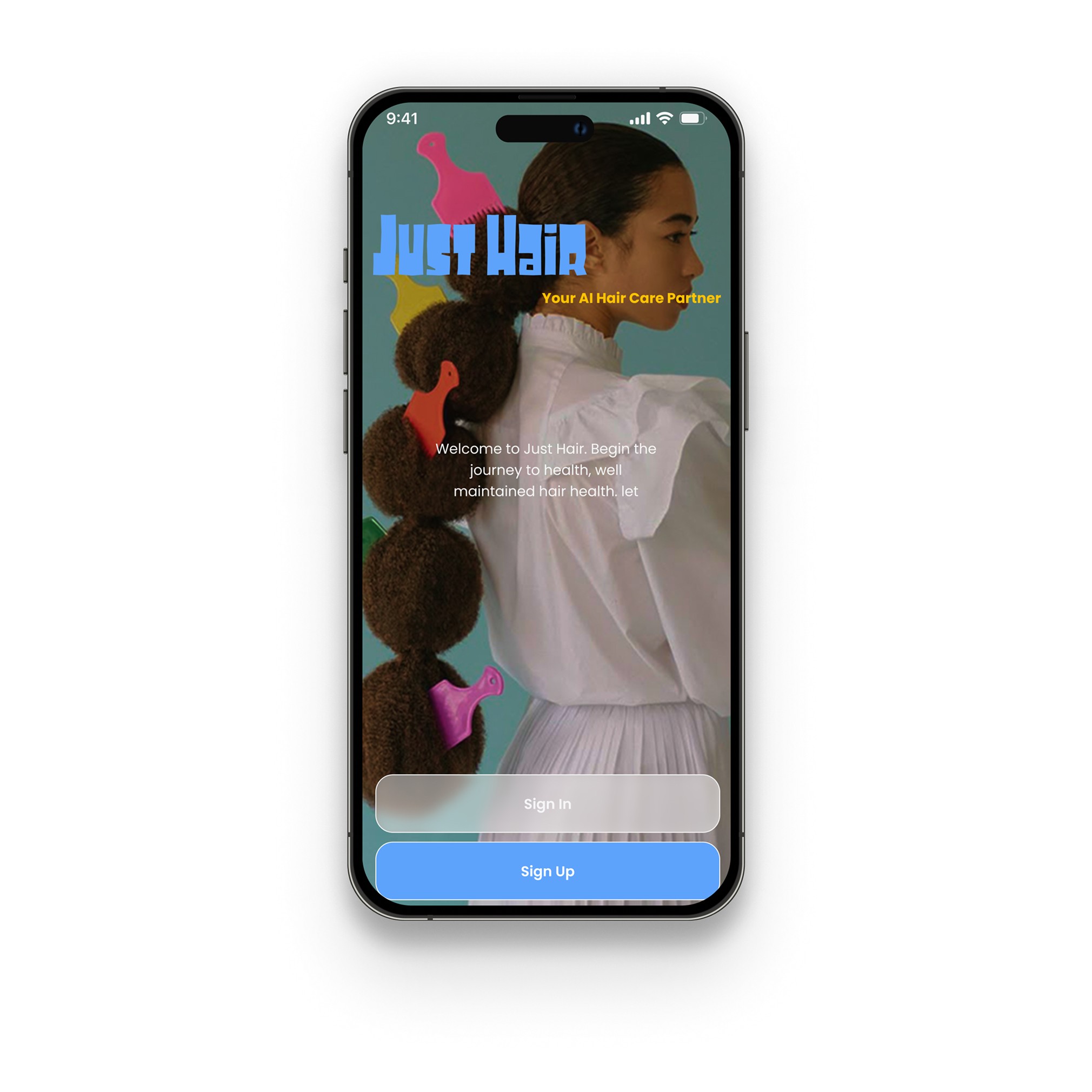
JUST HAIR Ai
Role:
Lead Designer (solo)
Project Type:
End to End Mobile
Timeline:
6 weeks
Tools:
Figma, Figjam, Maze, Notion
project background.
Data shows that Black Women in the US spend almost 9x more than other racial group on hair products.
Leveraging AI, how can we help to solve one of Black Women’s greatest challenges? Hair care and services.
Black Women & Women with coiled hair and textured hair have struggled to understand their hair, to find products, services, and acceptance.
How might we improve the lives of many with AI?
about.
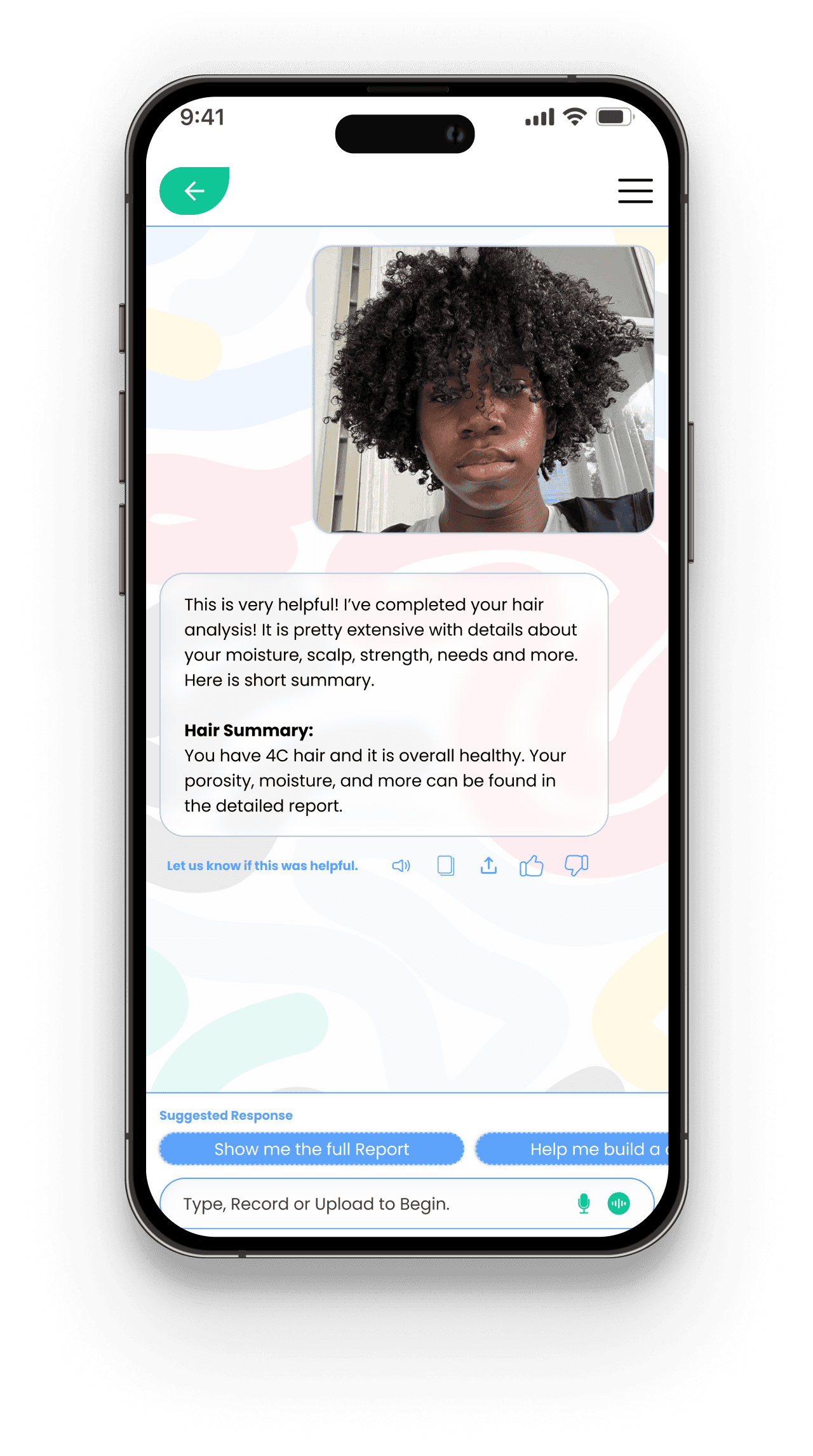
The hair salon and barber industry feels antiquated, with many establishments stuck in stagnant practices, while other sectors have evolved rapidly. If we take a look at the beauty industry, black women have been overlooked making their search for services and products rather difficult. Finding the perfect hair for purchase, The stylist to braid or service their unique hair needs, and finding products while abroad can be a very large challenge. Just hair, is an AI power app design to close the gap of hair education, product find, and self care for all hair type. Leveraging AI, LLM, and user data the solution is position to continue learning and scaling to be the perfect hair care partner.
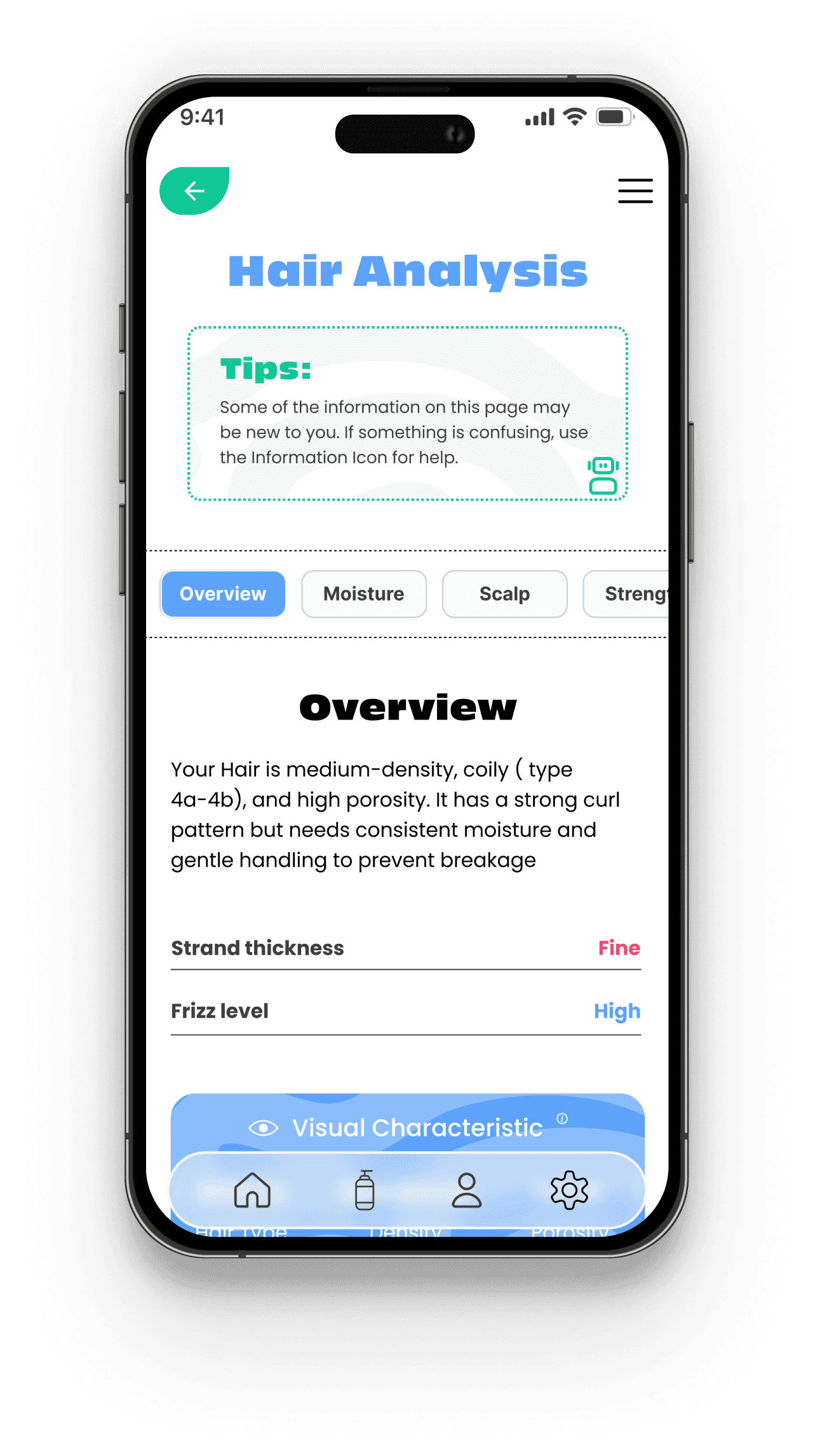
Emphasize Research & Discovery
reimagining hair care through ai.
To understand the depth of challenges within the Black women’s hair care industry, I began by scouring the internet for insights on existing hair care applications, emerging technologies, and market trends. Leveraging ChatGPT, I gathered and synthesized relevant data to validate my initial hypothesis — that AI could close major gaps in accessibility, personalization, and education within this space.
My research revealed striking realities: Black consumers spend nearly nine times more on beauty and hair products than other ethnicities, with many Black women in the U.S. investing $200–$800 per month in hair care. Yet 28% still struggle to find suitable products, and many must travel farther to access salons equipped to serve their hair types. Despite a 30% growth in natural hair care product sales between 2014 and 2019, concerns over safety and harmful ingredients remain prevalent.
To ground these statistics in lived experiences, I conducted interviews with women across different ages, regions, and hair textures. These conversations illuminated the emotional and financial toll of trial-and-error routines and reinforced the need for a solution that empowers users through knowledge and personalization. This foundation shaped the next phases of my design process, helping me frame user interviews, pain points, and opportunities for an AI-driven experience that feels both personal and trustworthy.
Affinity Map & Competitive Analysis
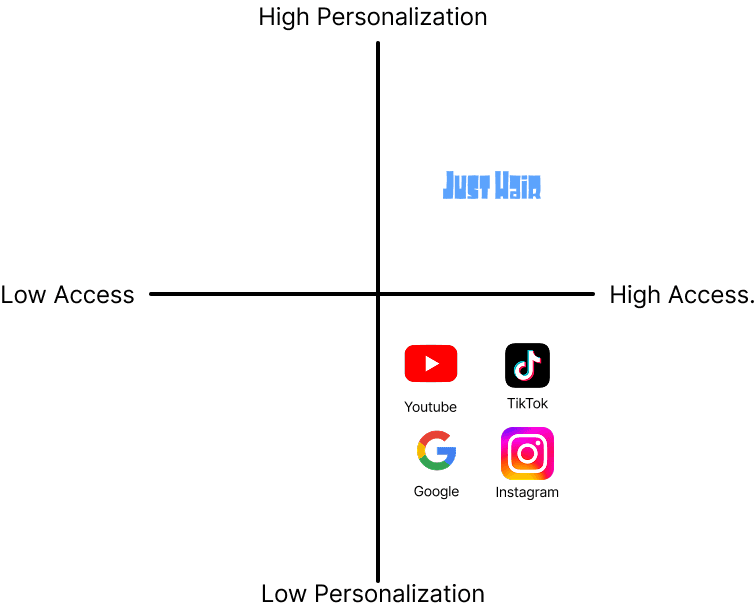
understanding the global hair care journey.
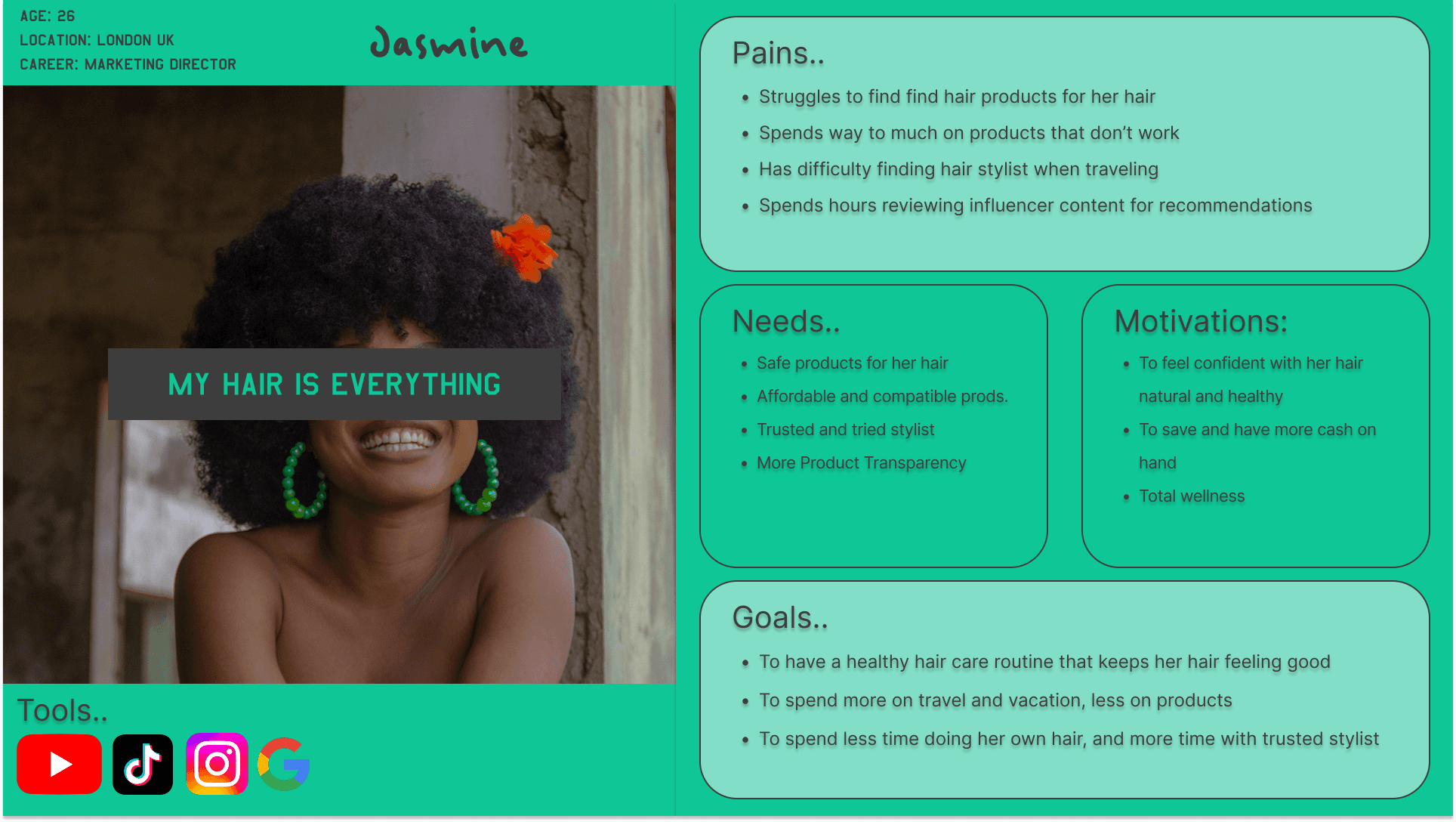
To complement my secondary research, I conducted six in-depth user interviews with a diverse group of women — including mothers, athletes, and professionals with a range of hair textures and lifestyles. Each participant shared her personal relationship with hair care: the routines, frustrations, and emotional connections that shape daily decisions.
Common themes emerged across regions and backgrounds — from the trial-and-error struggle of finding the right products, to the influence of climate, travel, and water quality on hair health. Many expressed frustration with the lack of trusted guidance, often relying on social media or peer advice instead of professional insight.
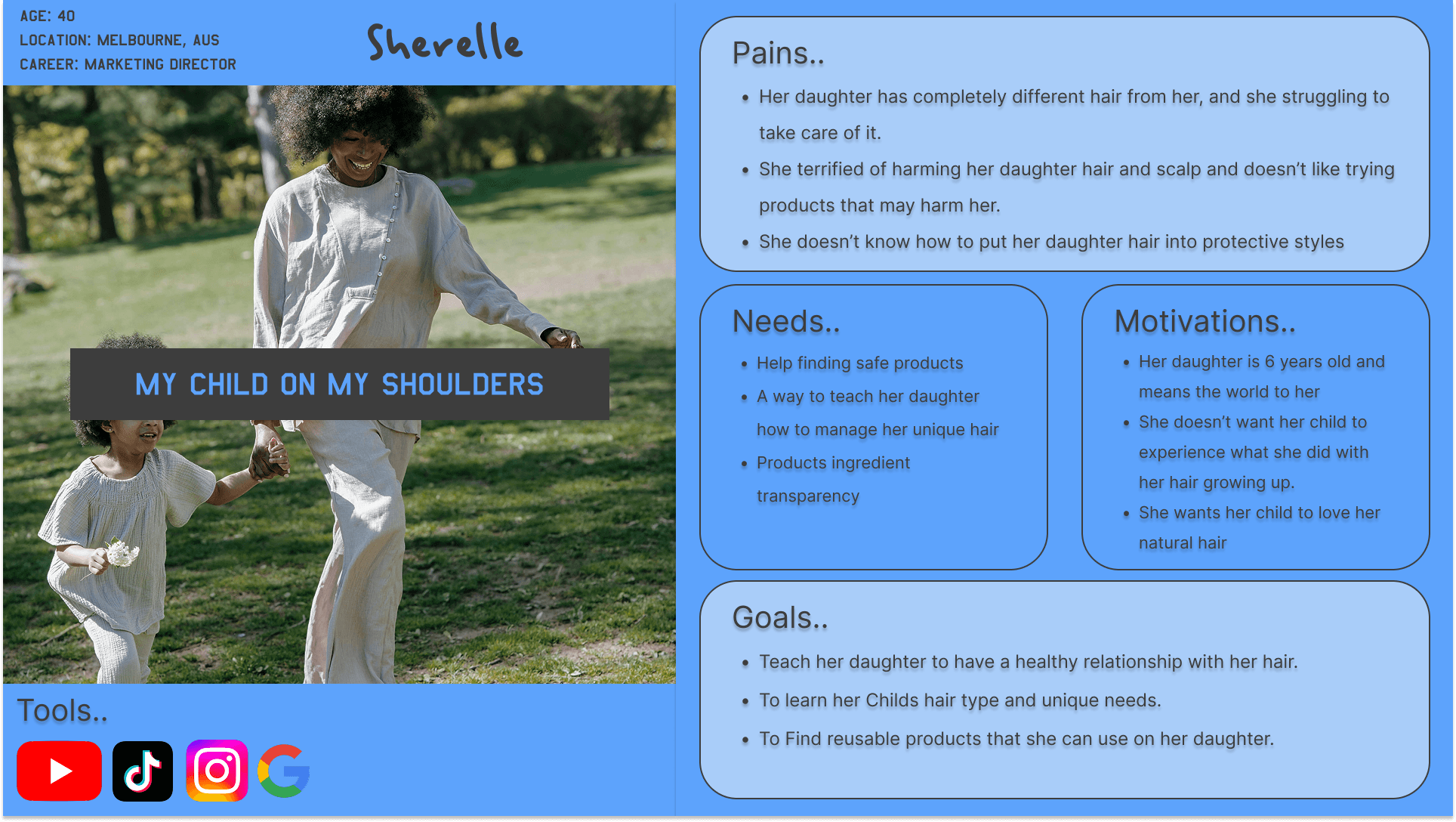
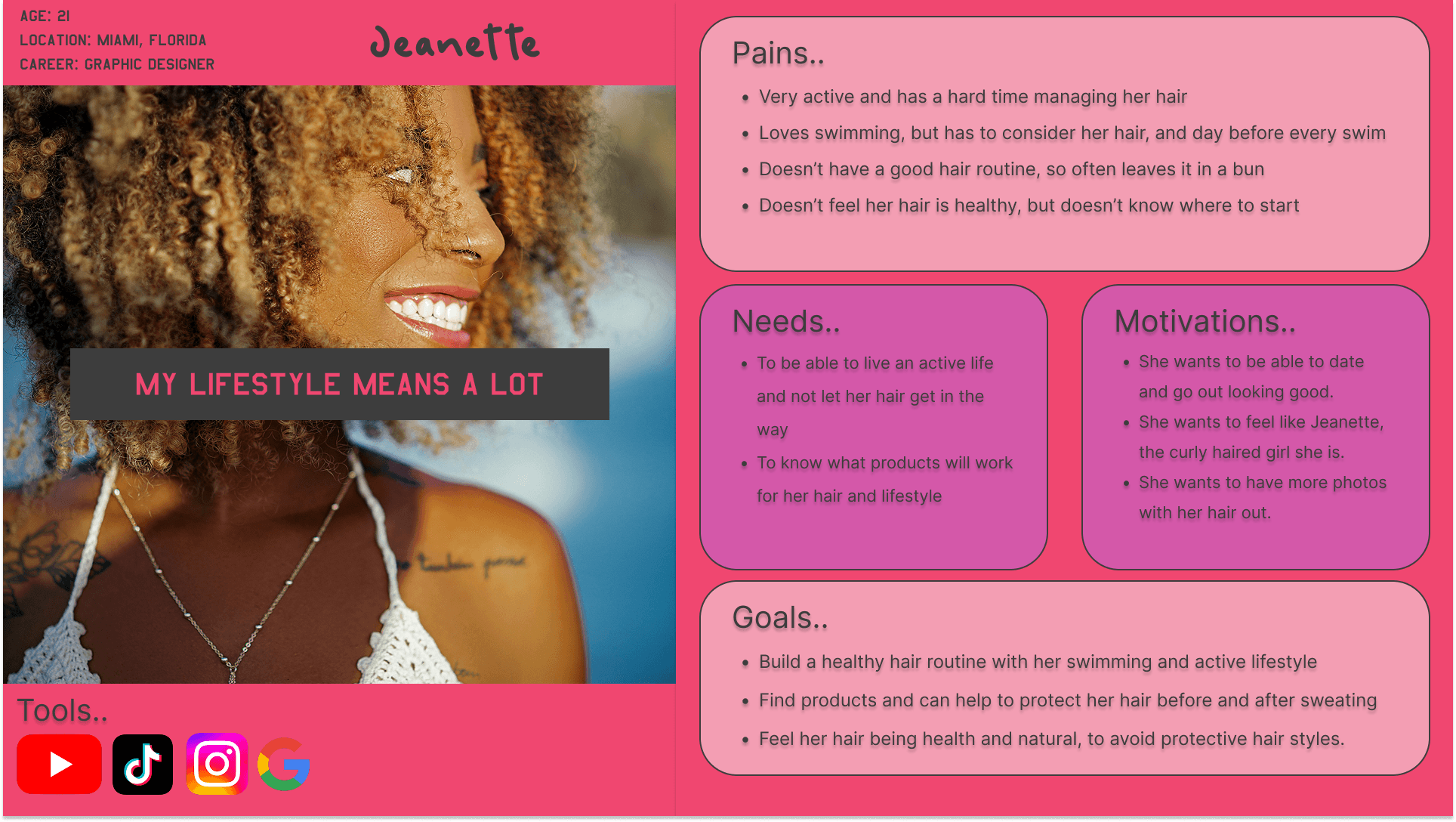
To make sense of the qualitative data, I used card sorting, user stories, and persona development to synthesize patterns and needs. This process transformed scattered insights into clear direction, revealing that the real opportunity lay not just in recommending products — but in educating users about their unique hair and creating a personalized, confidence-building experience.
Personas & User Interviews
Defining Problem & Framing Strategies
spotting the gap: where knowledge meets access.
Analyzing insights from both research and user interviews revealed a consistent theme: women weren’t just struggling to find the right products — they were struggling to understand their own hair. This gap between knowledge and access became the core opportunity for design.
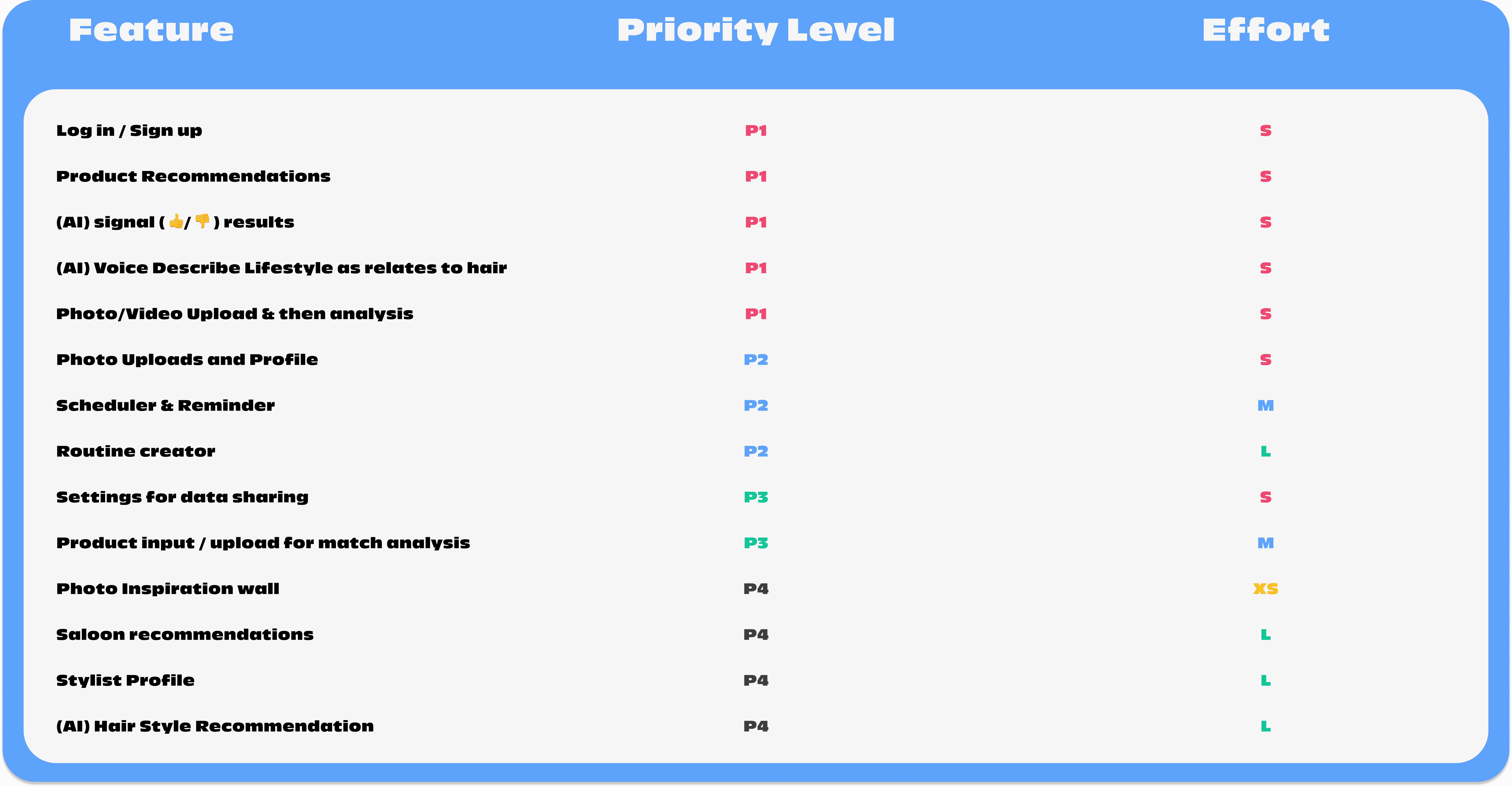
To turn insights into action, I created a series of “How Might We” questions, problem statements, and a feature prioritization list. This helped frame the direction for the MVP, ensuring every idea aligned with real user needs and the larger goal of empowerment through education.
The process clarified three key priorities:
Education — helping users understand their hair type and care routine.
Personalization — recommending products and routines tailored to individual profiles.
Accessibility — making quality care advice and products easier to find globally.
These foundations guided the next stage — transforming abstract insights into tangible design decisions.
Feature Prioritization
Concept exploration and early validation
From Idea to Interaction: Mapping the Experience
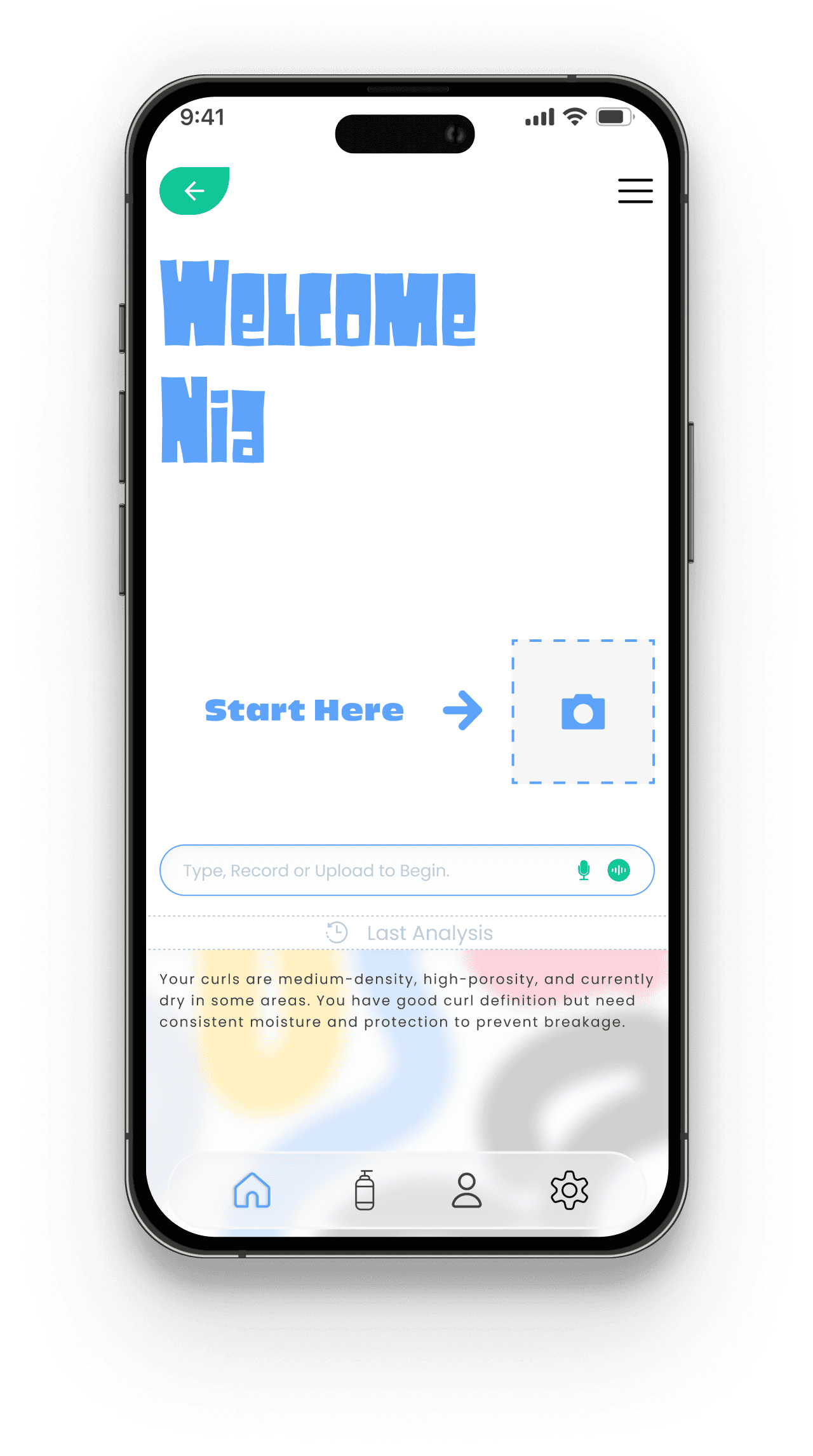
Building on the insights defined in the previous phase, I translated the user needs and priorities into a clear, intuitive experience. This began with committing to a user flow that captured the essential journey — from onboarding and hair analysis to personalized recommendations and community engagement.
From there, I developed low-fidelity wireframes to explore layout structure, hierarchy, and interactions. Each page was designed with purpose, ensuring that key information — like product suggestions, care tips, and stylist connections — lived in one seamless flow.
This stage wasn’t just about structure; it was about storytelling through design. Every screen needed to guide users naturally, reduce friction, and reinforce the feeling of empowerment that defined the concept’s foundation.
User Flows, Task Flows, Site Map
Design System & Branding Integration
Crafting a Confident Experience
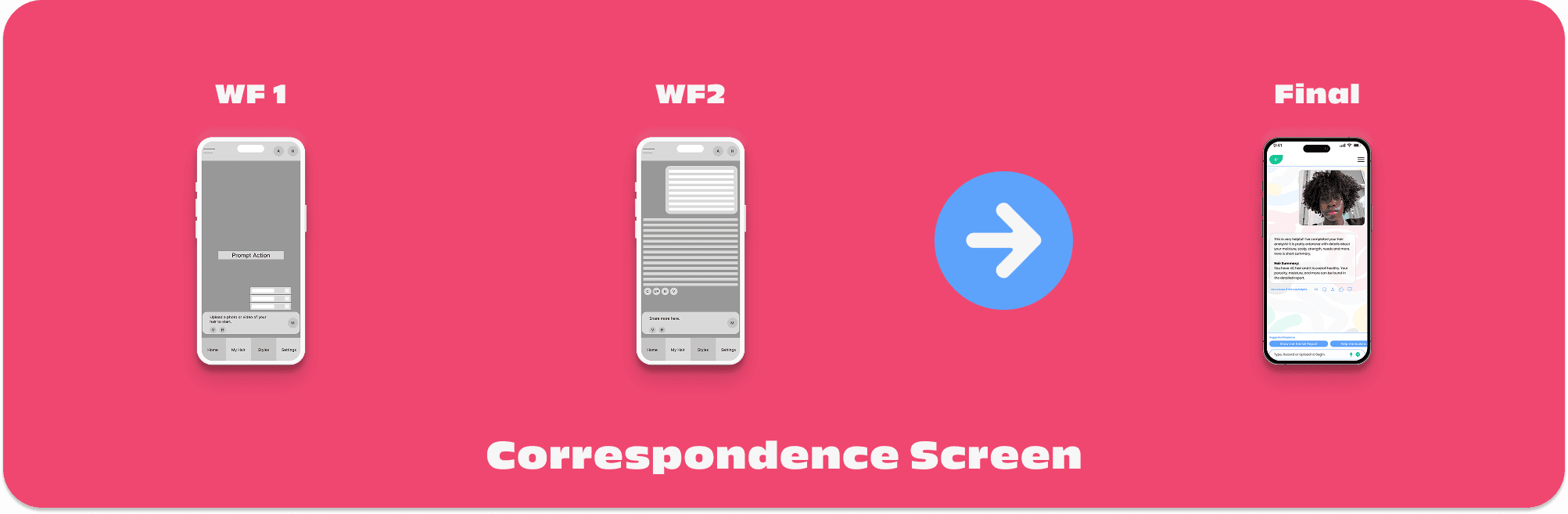
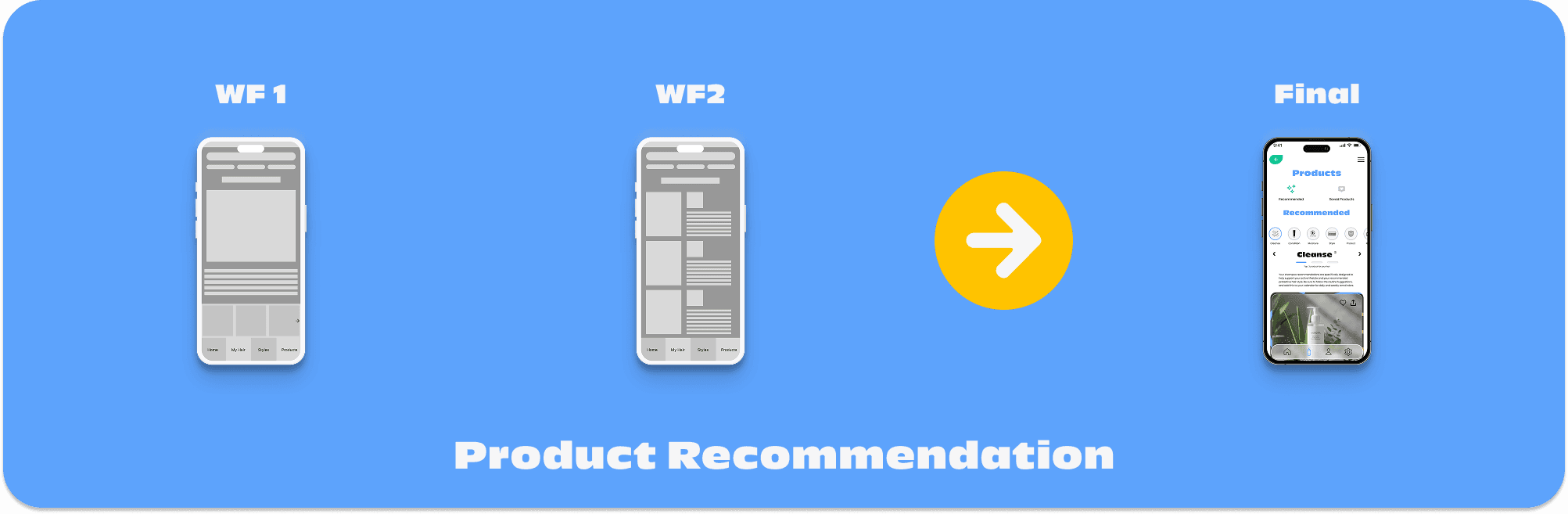
After gathering user feedback on the low-fidelity wireframes, I refined the experience through mid-fidelity iterations, incorporating continuous testing and feedback loops to improve clarity and usability. These refinements paved the way for high-fidelity prototypes, where the product’s visual language and interaction patterns started to take shape.
LoFi to HiFi Design Comparison

building design system that scale.
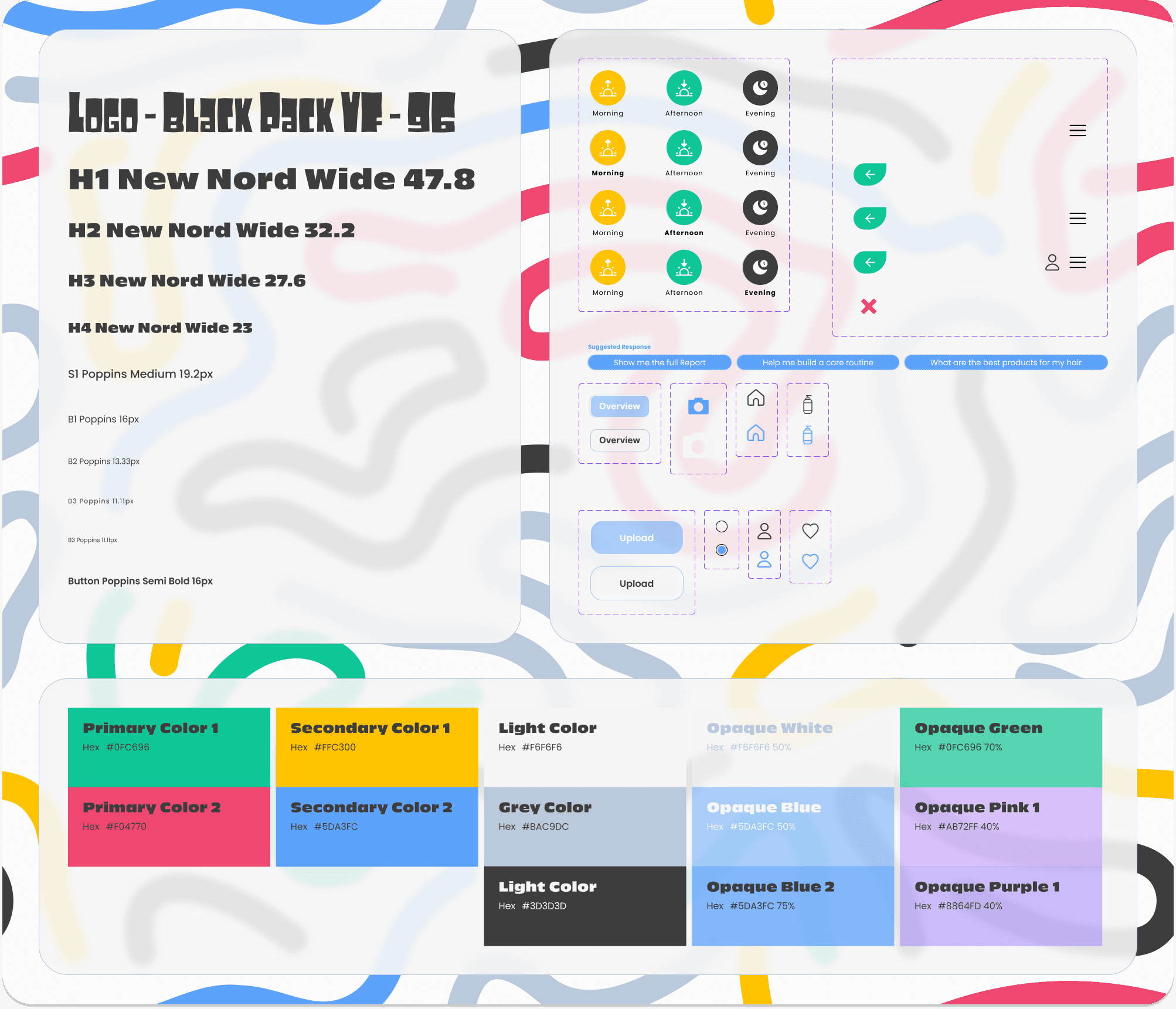
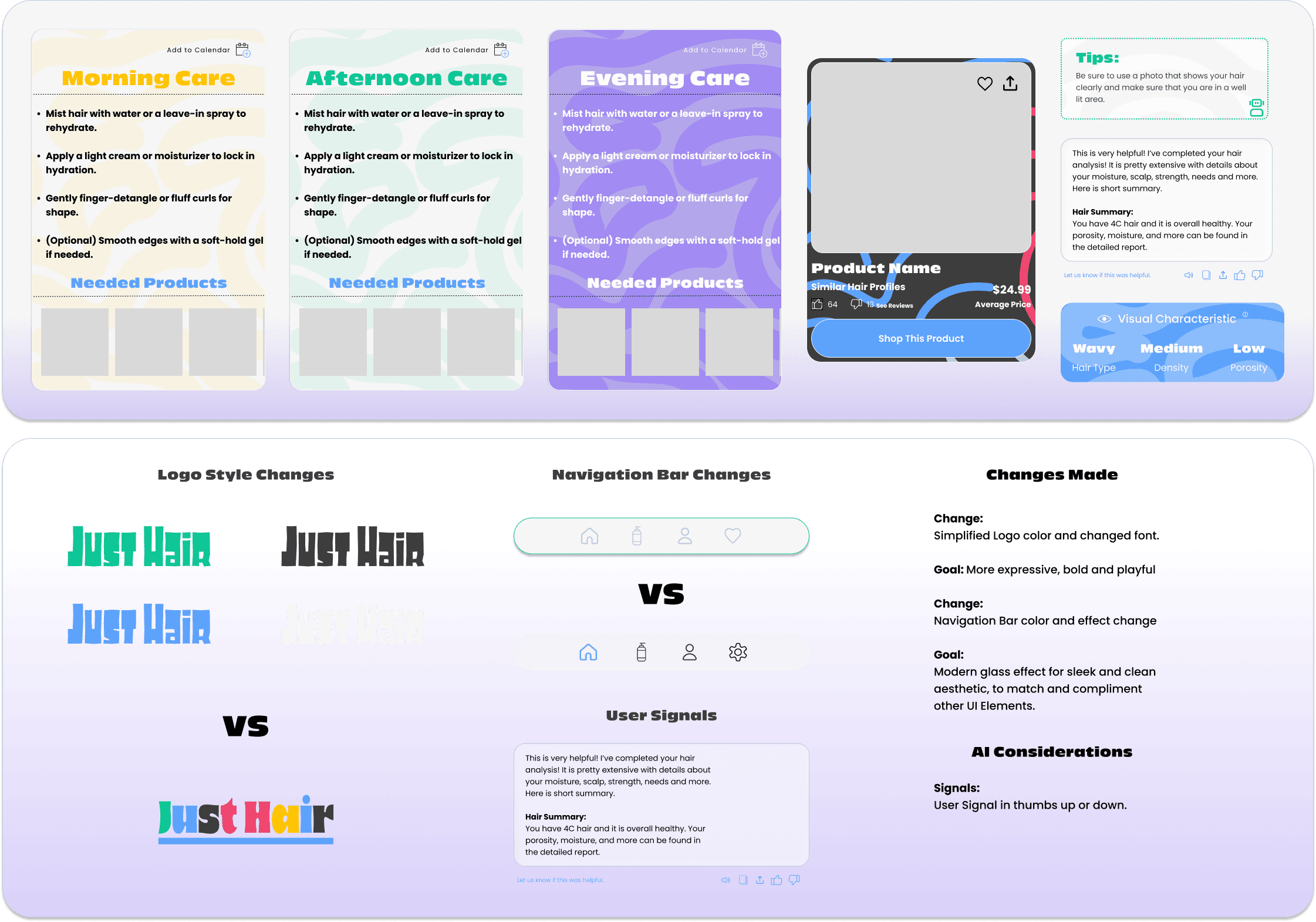
With validated insights from user testing, I developed a design system to ensure consistency across all components — from color palettes and typography to button states and iconography. The goal was to create a cohesive, scalable visual identity that balanced functionality with emotional resonance.
The branding draws inspiration from clean white space and a sense of openness, balanced with bold color and personality. Because hair is such a defining part of personal identity, the design embraces a modern, confident aesthetic — one that feels sleek and minimal while still vibrant and expressive, reflecting both individuality and the innovative nature of an AI-powered experience.
font and color palette
Test & Delivery Validation & Outcomes
Testing, Learning, and Refining
With the high-fidelity designs complete, I focused on refining every detail of the experience — from the design system scale and variables to card layouts and reusable components. The goal was to ensure the interface felt intuitive, cohesive, and ready for real-world interaction.
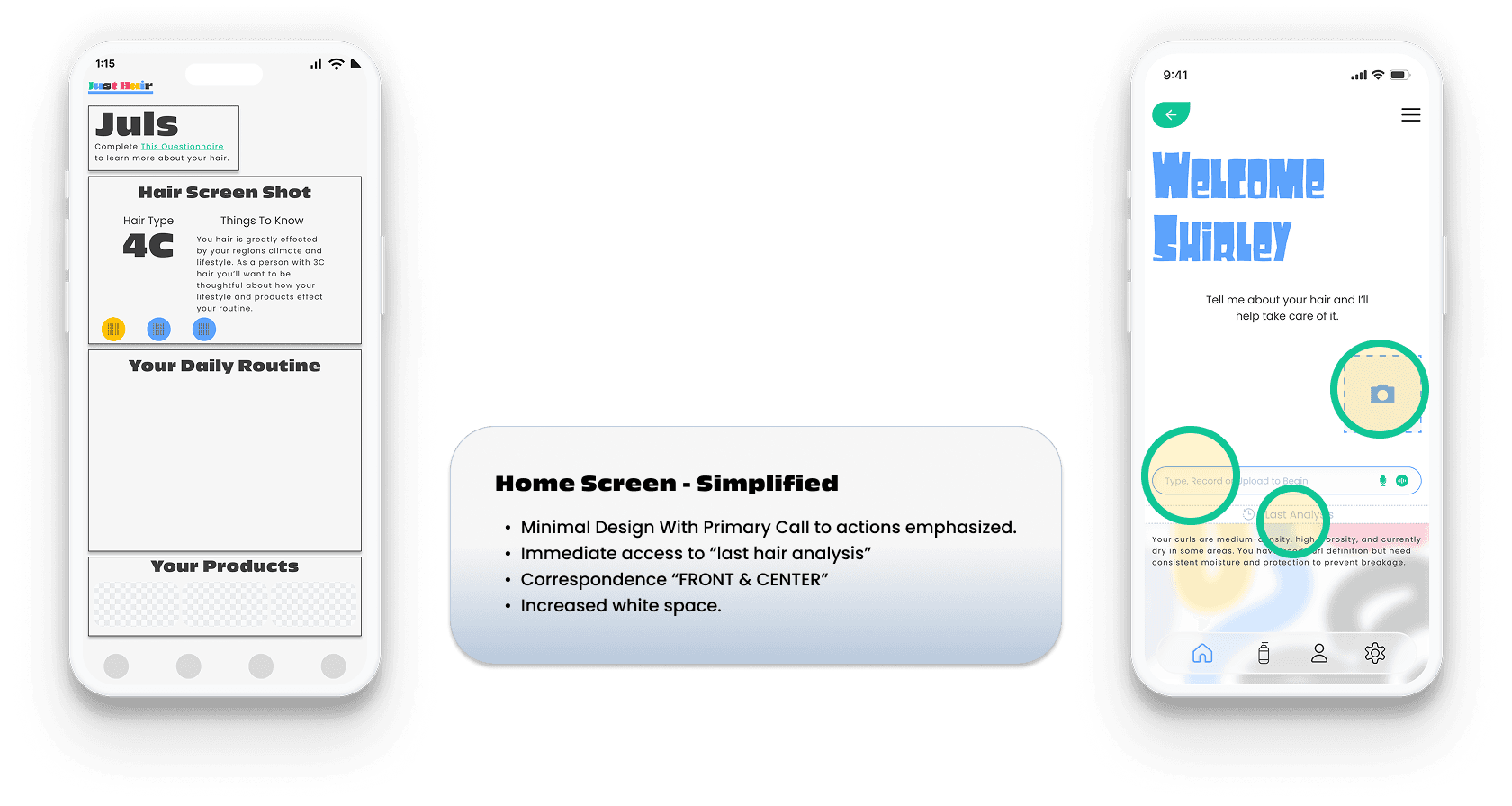
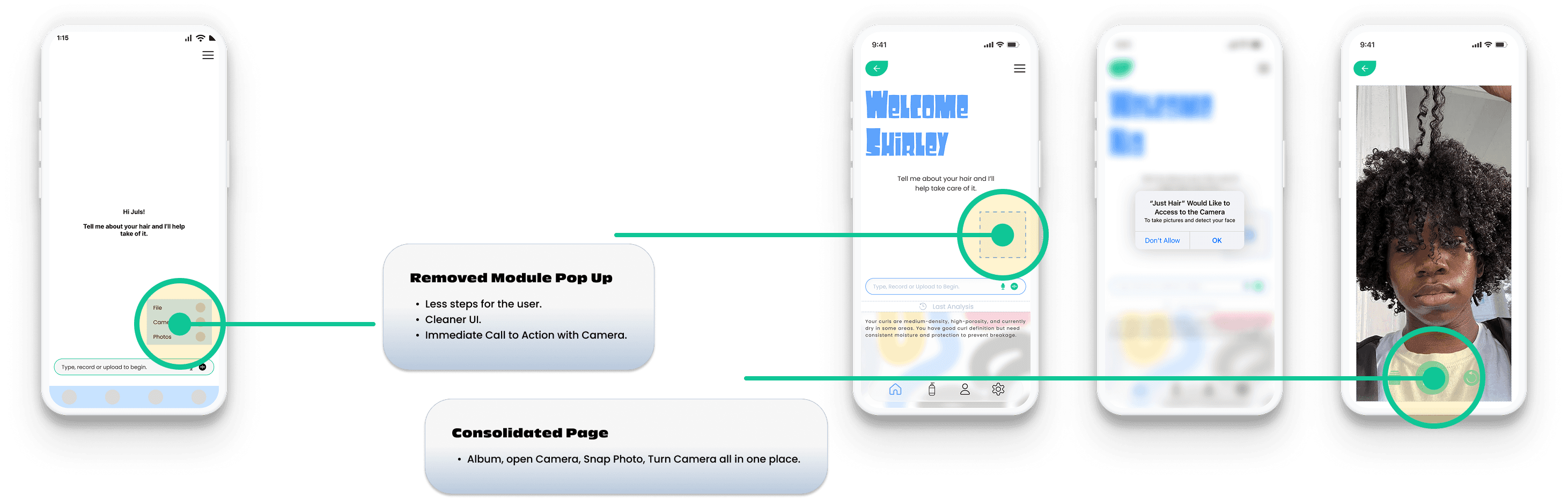
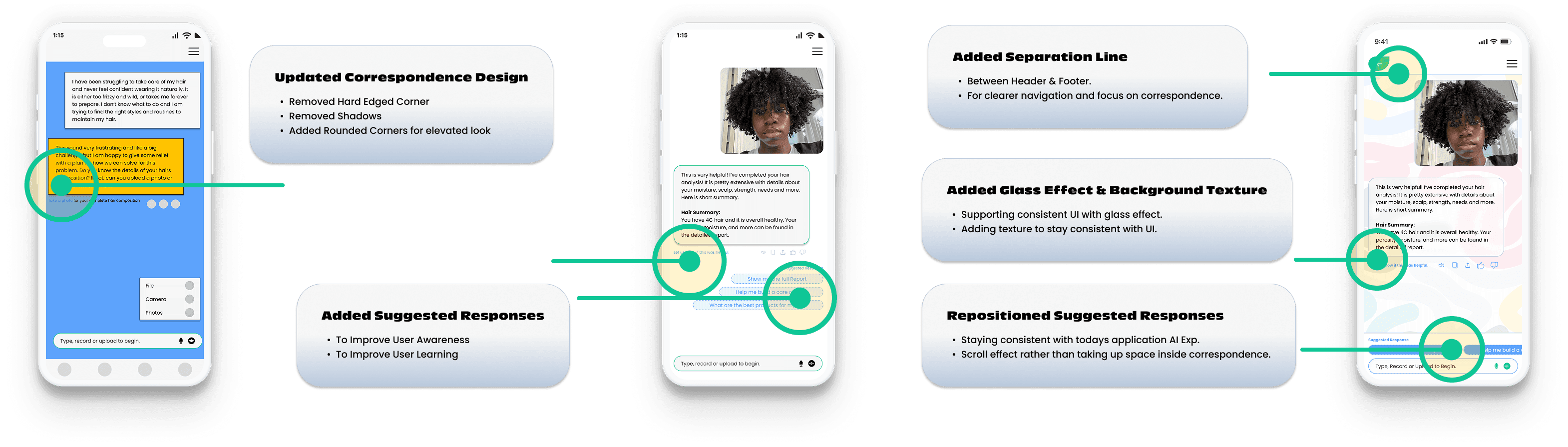
To validate the design, I conducted usability testing using Maze, gathering both quantitative metrics and qualitative feedback from users. These insights revealed subtle friction points in navigation and layout hierarchy, which informed the final design refinements.
Through iterative testing and validation, the product evolved into a fully functional, user-centered prototype — one that balanced technical scalability with a seamless, empowering user experience.
Design Iteration and Changes for improved Usability
Key Learnings & Reflections
Beyond the Screen: Building Confidence and Connection
This project was an exciting exploration into the possibilities of leveraging large language models (LLMs) to create deeply personal, human-centered solutions. It showed me how AI can move beyond automation — becoming a tool for empowerment, education, and self-discovery.
Working through this concept reinforced the importance of user-centered experimentation — not just building with AI, but designing for the people who will shape and teach it through their interactions. The process was both experimental and visionary, pushing me to think beyond conventional UX patterns and imagine how emerging technology can meet real, emotional needs.