
GoTukang
Role:
Lead Designer (solo)
Project Type:
Feature Add
Timeline:
8 weeks
Tools:
Figma, Figjam, Maze, Notion
project background.
Living in Indonesia revealed just how different life is compared to New York — where many everyday services still feel outdated or inefficient. While some accept this as “just how it is,” others see it as an opportunity for progress. This project reimagines how technology can elevate a simple aspect of daily business life across Indonesia, blending functionality with a touch of romanticism for change.
about.
I was tasked to add a feature to an existing application without manipulating its core brand. Living in Indonesia and experiencing multiple countries in Asia, I Hypothesized that Gojek was missing a large opportunity to leverage their platform for Tukang services. I started with research, understanding the competitors, the market size, and the user experience. As problems were revealed, I outlined problems and potential solution to be tested. Low Fidelity User Test helped me to iterate and improve early in the design stage. I took this feedback and produced a high fidelity prototype, UI design kit, and began my final usability test. The results were most ideal, resulting in minor changes and overall success.
Emphasize Research & Discovery
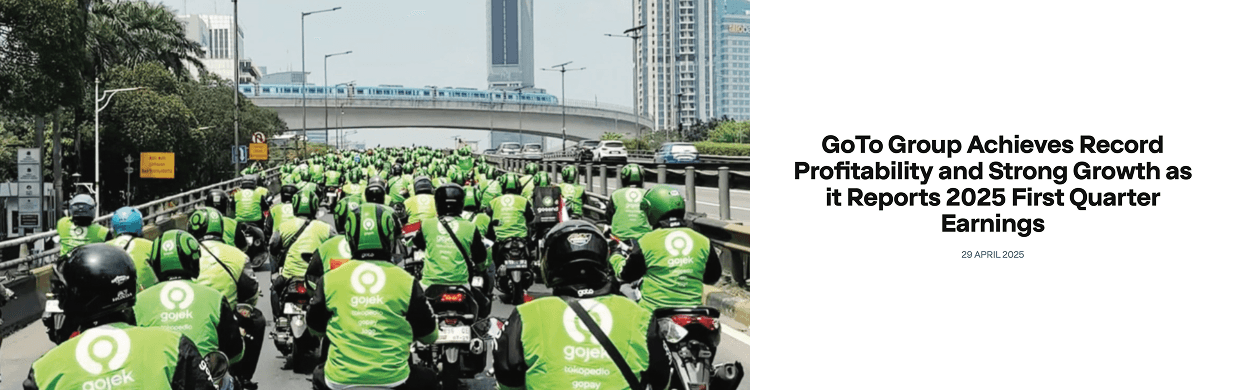
Launching Tukang in Gojek: Capitalizing on GoTo’s 2025 Surge
In reviewing existing Tukang and home service apps, I found only small players with limited reach compared to super apps like Gojek. What set Indonesia apart was scale: in 2025, Gojek reached 22 million monthly active users—a base nearly triple the population of Singapore. GoTo, its parent company, also posted a 43% year-over-year rise in core transactions, marking a profitable turnaround. Combined with Indonesia’s US$273B construction sector and 9M workers, the market presented the strongest opportunity to expand Tukang services within Gojek’s ecosystem.
In-Person Insights Revealed What the Data Missed
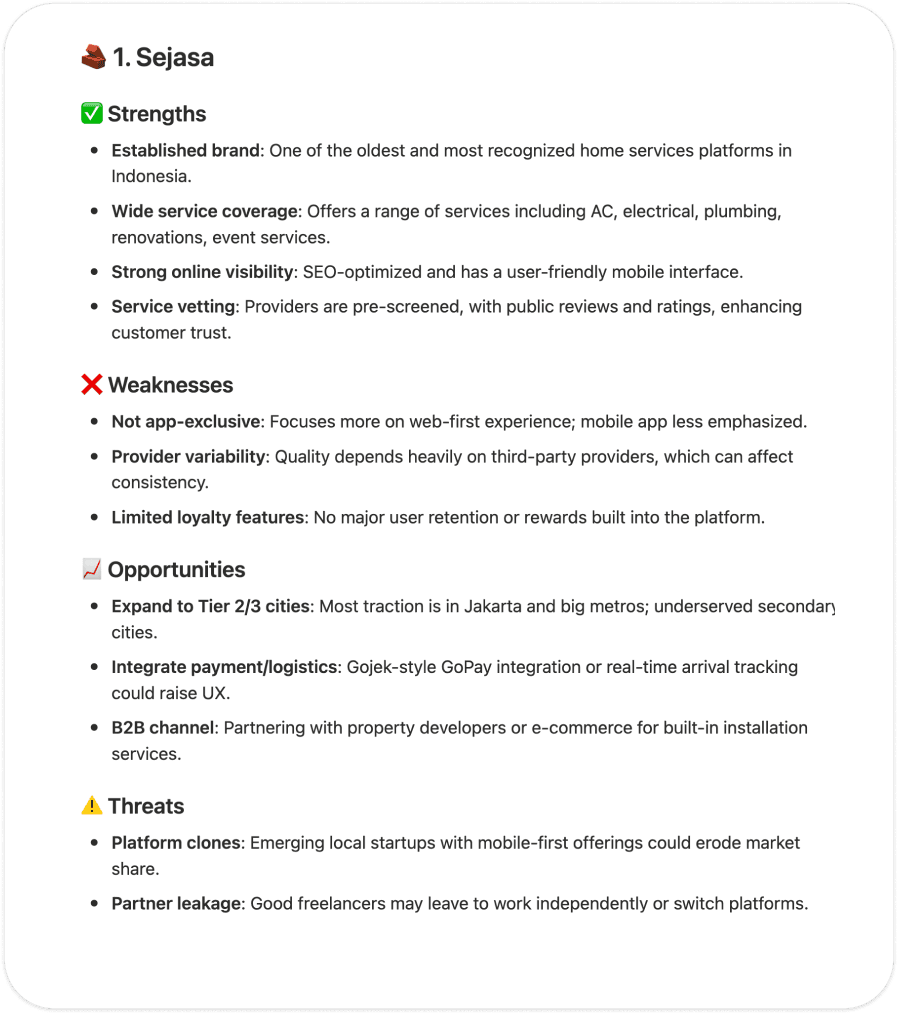
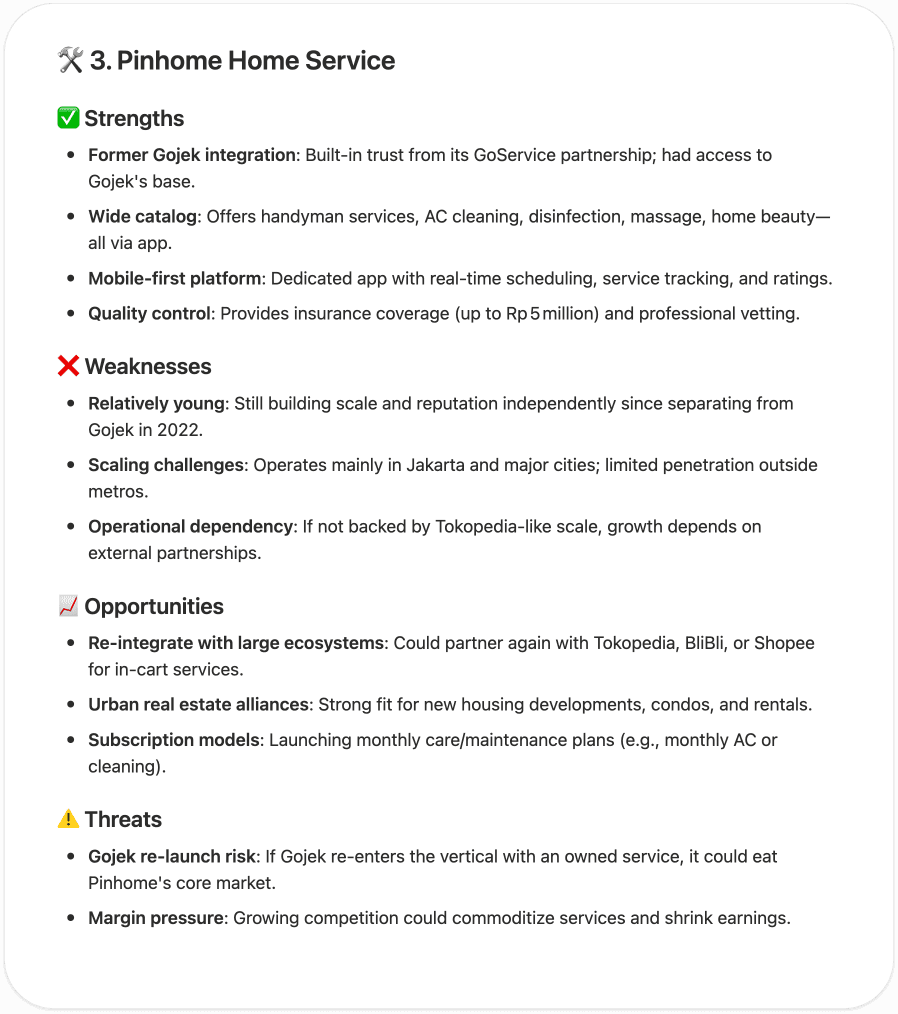
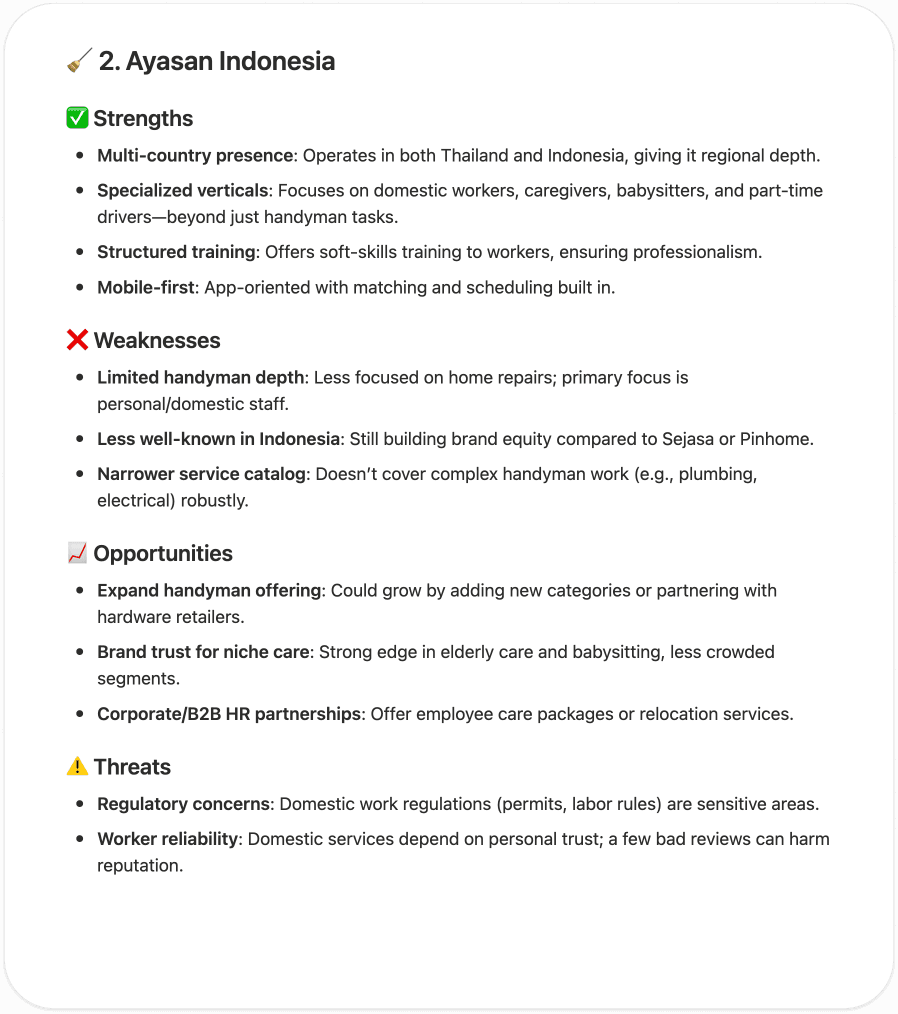
While Gojek and Grab dominate Southeast Asia’s ride-hailing and delivery market, neither has yet expanded into Tukang (handyman) services. To explore this gap, I conducted a competitive analysis comparing Gojek with smaller players such as Sinjasa, Ayasan, and Pinhome. My SWOT analysis revealed that while these niche platforms provide access to cleaners, nannies, or handymen, they lack scale, user trust, and brand recognition.
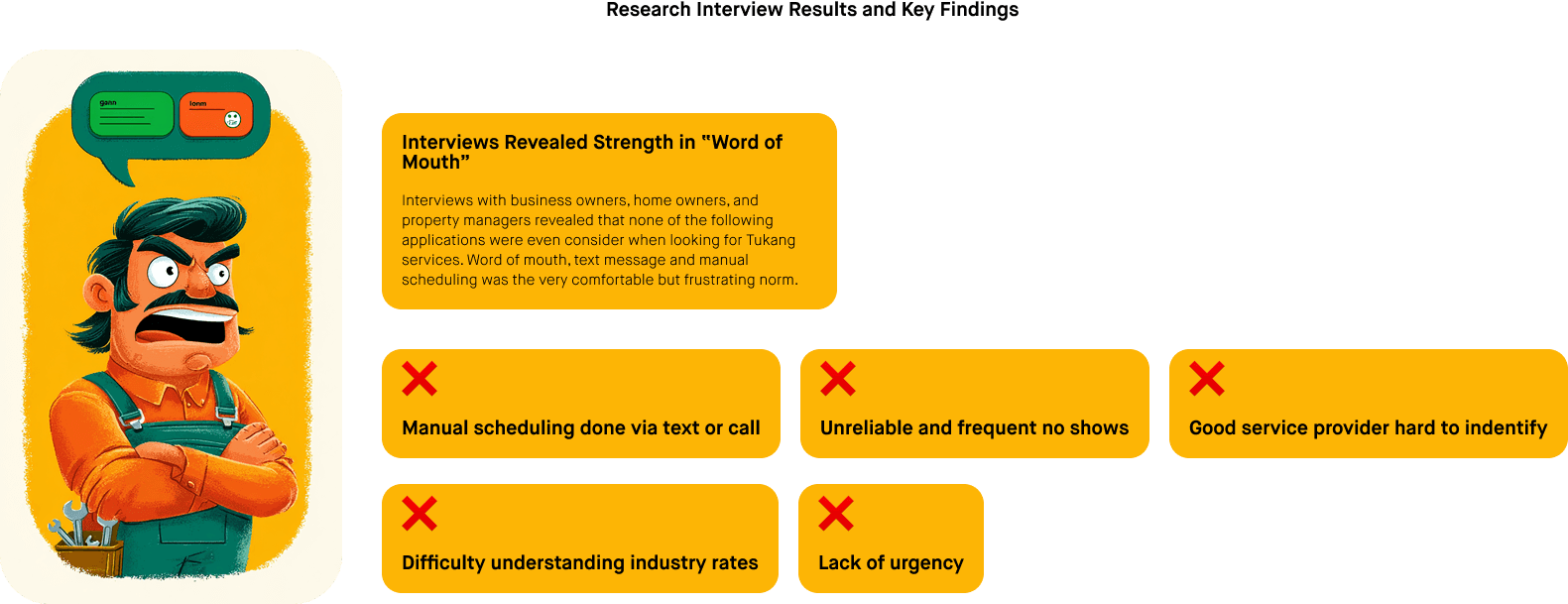
This opportunity became clearer after interviewing five business and homeowners in Bali. Each expressed similar frustrations—finding a reliable tukang still relied on word-of-mouth, personal networks, or outdated classifieds. Notably, none of the participants were aware of the smaller apps attempting to solve this problem. This highlighted both the limited reach of existing solutions and the unique advantage Gojek holds: a massive user base, proven trust, and the infrastructure to seamlessly expand into this space.
Interviews & Competitive Analysis
Defining Problem & Framing Strategies
Prioritizing Problems, Turning Research Into Real People.
Through my interviews, users consistently expressed the difficulties of finding trustworthy tukangs. Word of mouth was their only reliable option, yet even then, experiences were often frustrating: some tukangs lacked professionalism, others failed to deliver on the client’s vision, and in many cases, they simply didn’t show up.
To address these pain points, I synthesized insights into POVs (Point of Views) and HMW (How Might We) statements, which guided the creation of a comprehensive list of potential features. Given the scope of challenges and the time constraints of this project, I prioritized the features that would deliver the most immediate impact and best align with Gojek’s platform strengths.
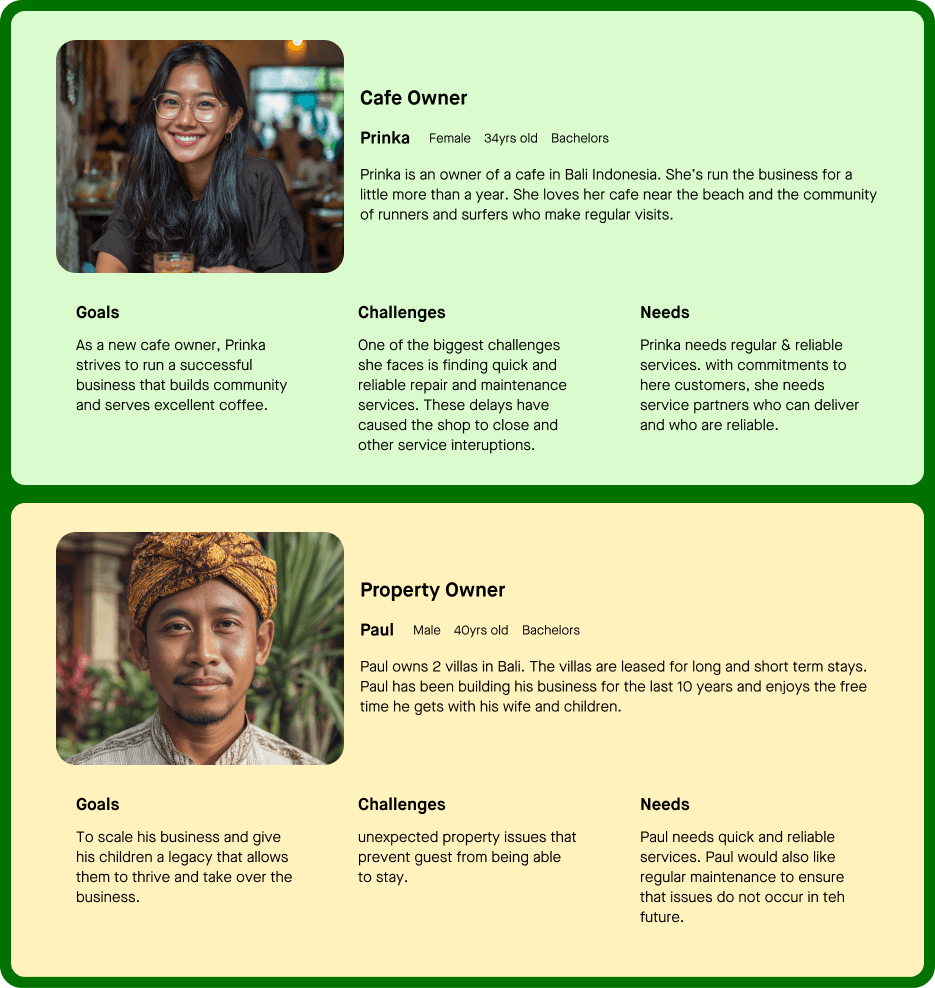
Using the raw data and recurring themes from my user interviews, I created detailed user personas to represent the key segments interacting with tukang services in Indonesia. Each persona captured motivations, pain points, behaviors, and goals, allowing me to humanize the data and keep my design decisions grounded in real user needs.
These personas became a critical tool throughout the project. They helped me stay focused on user priorities, evaluate which features would have the most impact, and make trade-offs when balancing business goals with user satisfaction. By consistently referring back to the personas, I ensured that every design choice aligned with the realities of the people I was designing for, rather than assumptions or generalized market trends.
User Personas
Concept exploration and early validation
Designing User Journeys and Validating Early
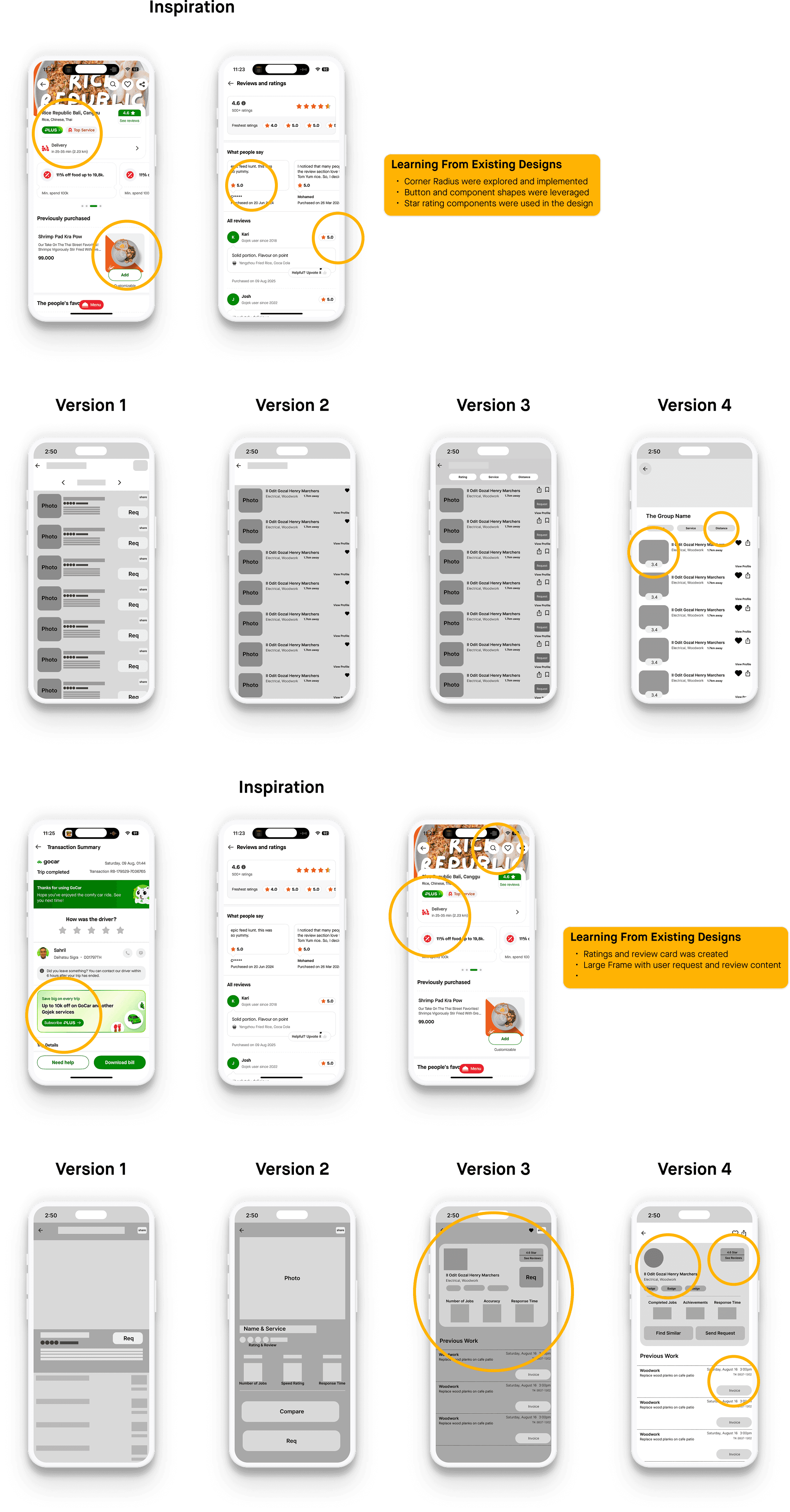
Designing within Gojek’s brand became a study in flow and form. I began by sketching how a new Tukang feature could live naturally within Gojek’s ecosystem — mapping journeys, testing pathways, and exploring the small moments where users connect with function. Drawing inspiration from Gojek’s visual language, I captured references from existing screens and reimagined them through wireframes that blended familiarity with fresh utility. Each round of testing brought clarity, turning early concepts into structured experiences that moved from low-fidelity sketches to polished, cohesive designs.
Existing Inspiration and Lofi Exploration
Design System & Branding Integration
From Concept to High-Fidelity Prototype
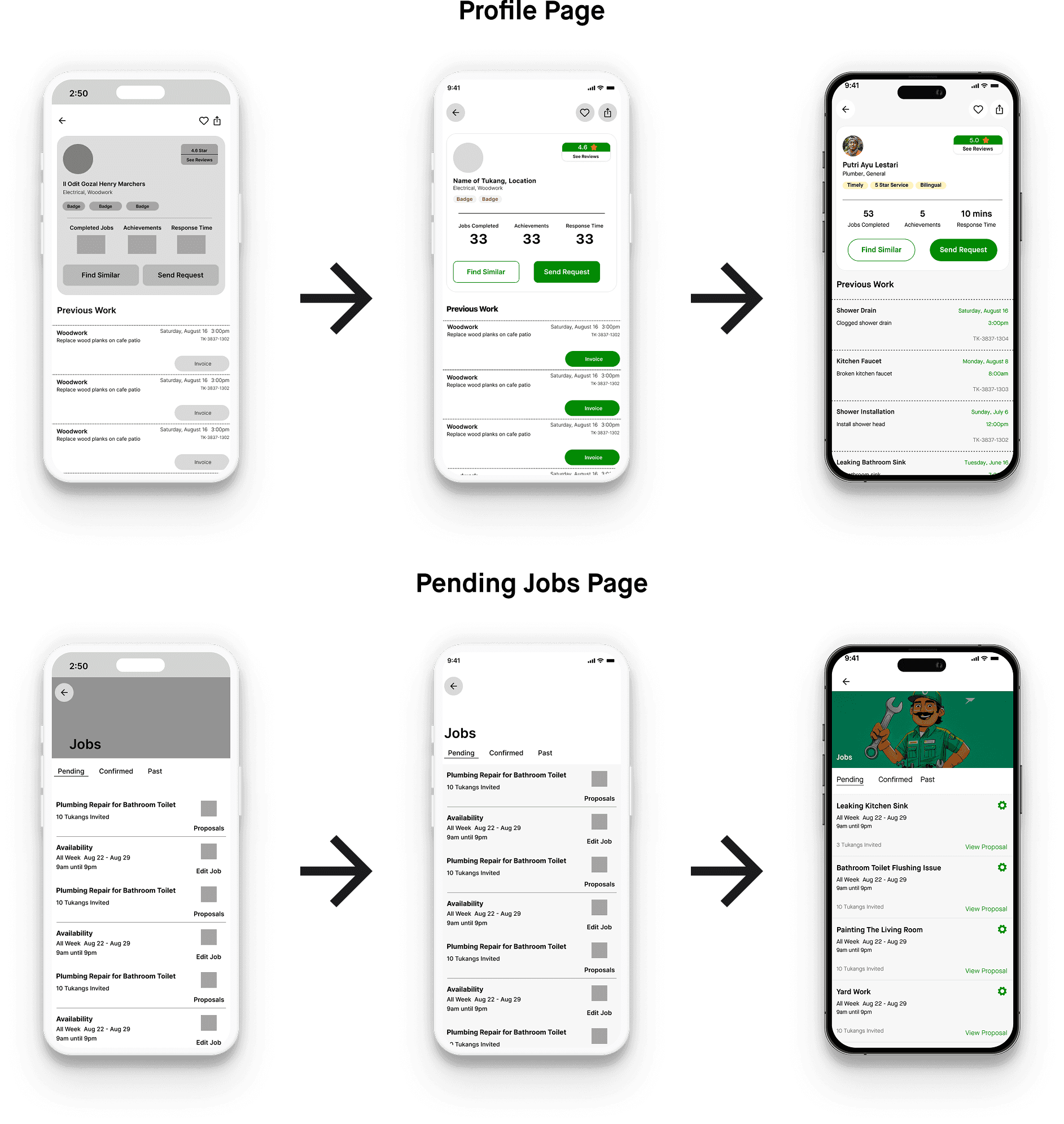
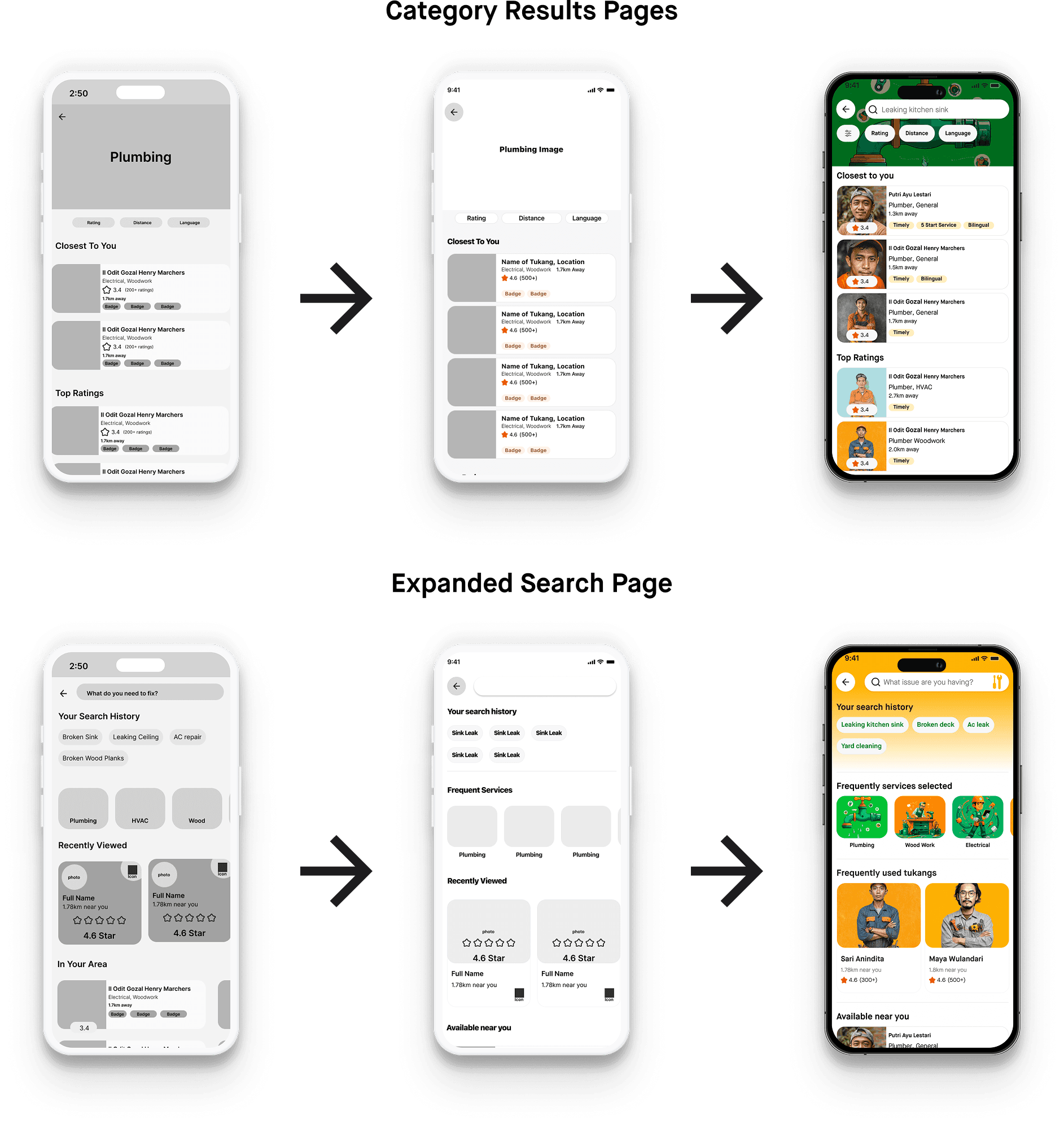
The design process began with four low-fidelity (LOFI) user flows, each exploring a different way users could discover and request a Tukang within the Gojek ecosystem. These early wireframes allowed me to test ideas quickly and visualize how the new service could integrate seamlessly with Gojek’s familiar experience.
After reviewing all four flows, I selected one to develop further — “Searching and Requesting a Tukang.” This pathway represented the most natural and intuitive user journey, mirroring how people already navigate existing Gojek services like GoRide or GoSend.
From there, I refined the structure through iterative sketching and feedback, evolving the flow into detailed wireframes. This stage focused on clarity: reducing friction during search, highlighting service transparency, and ensuring that booking a Tukang felt as effortless as ordering a ride.
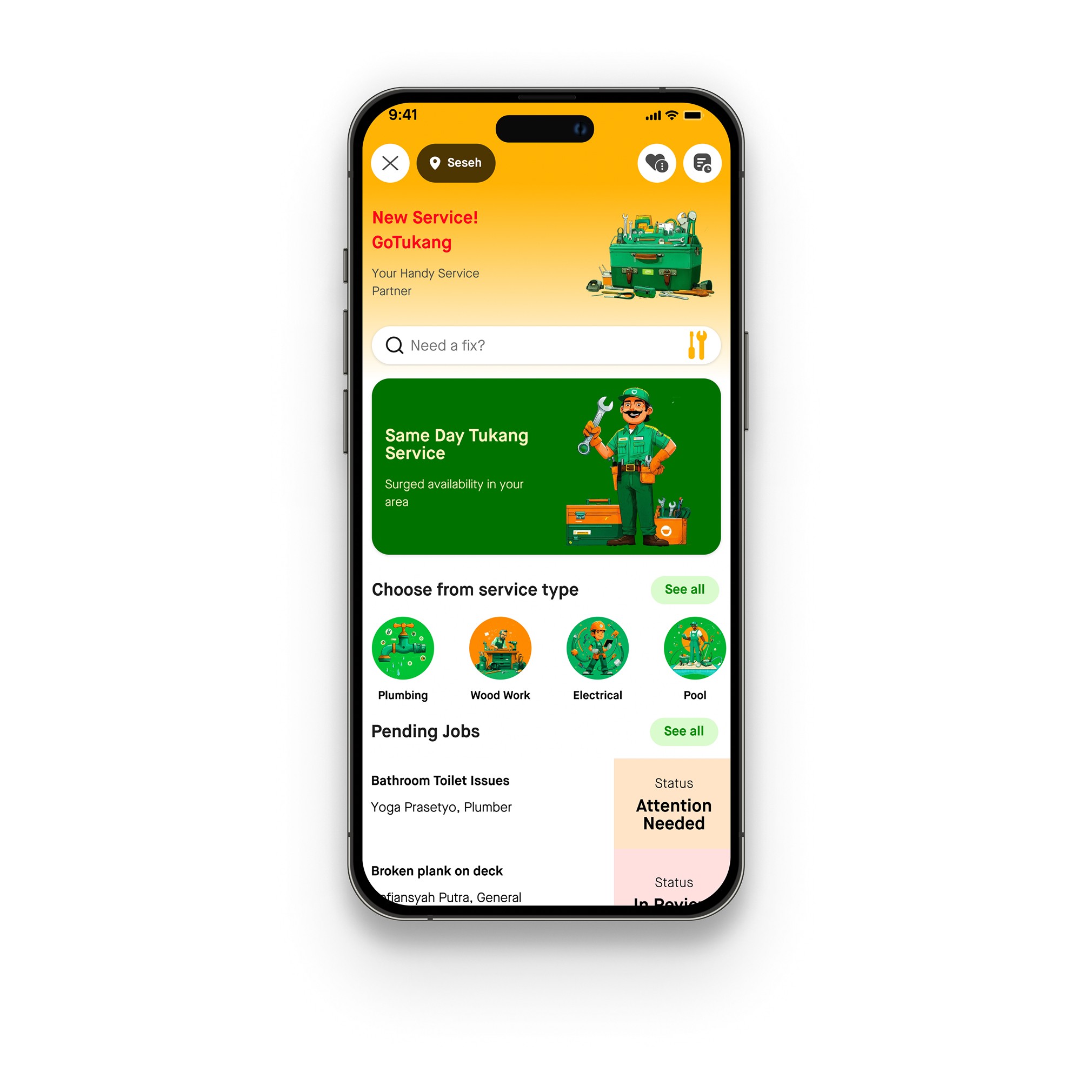
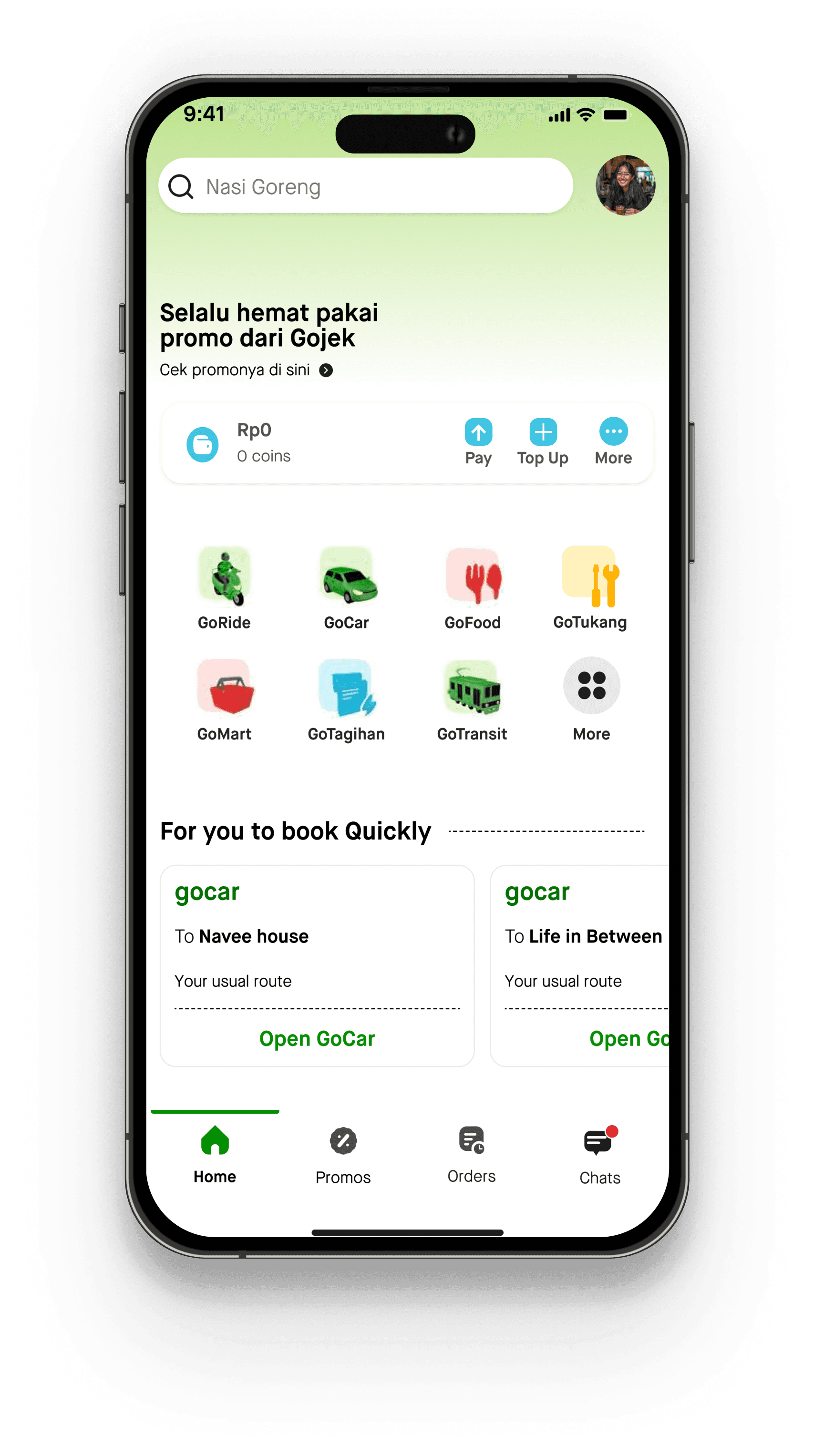
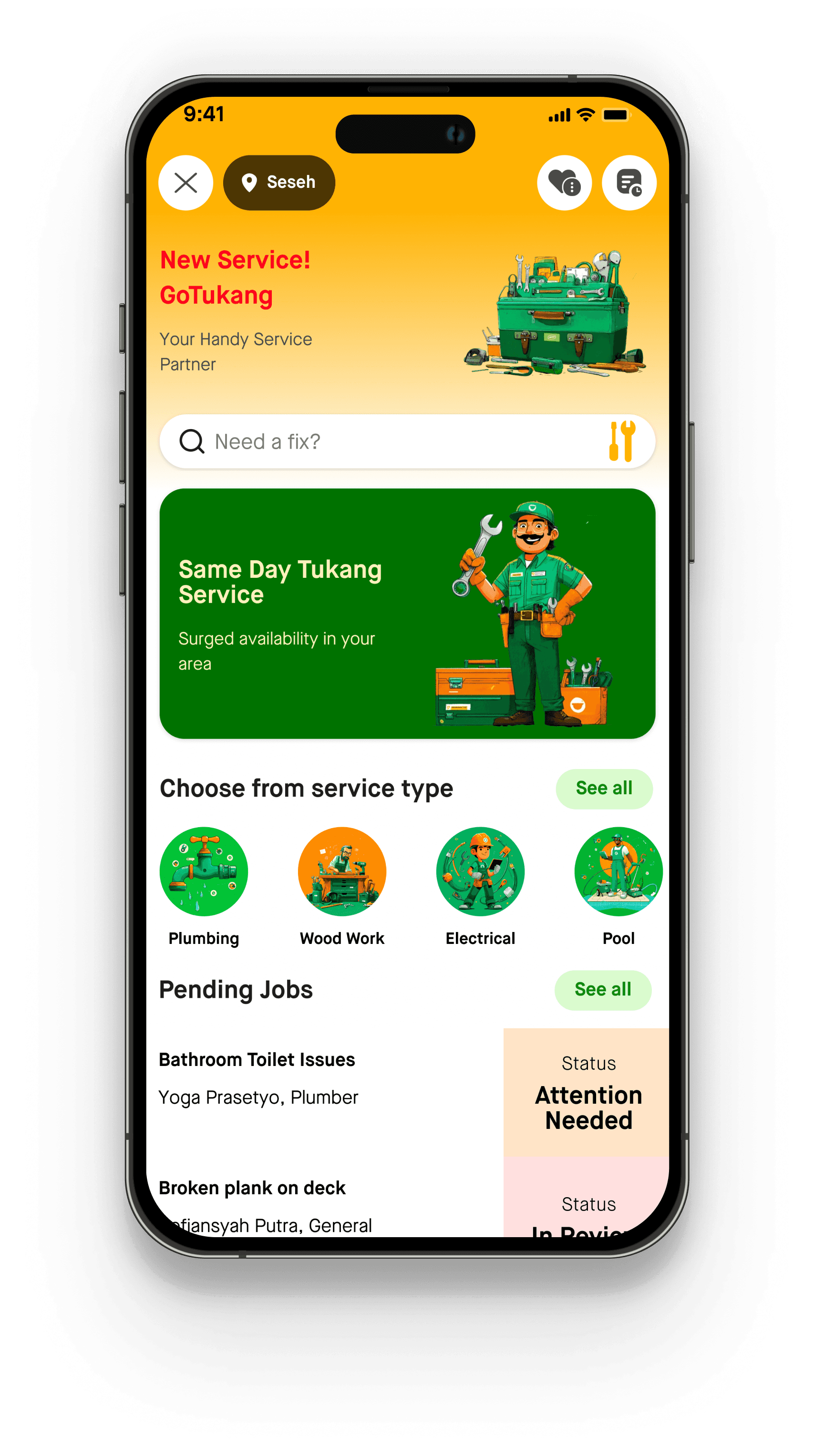
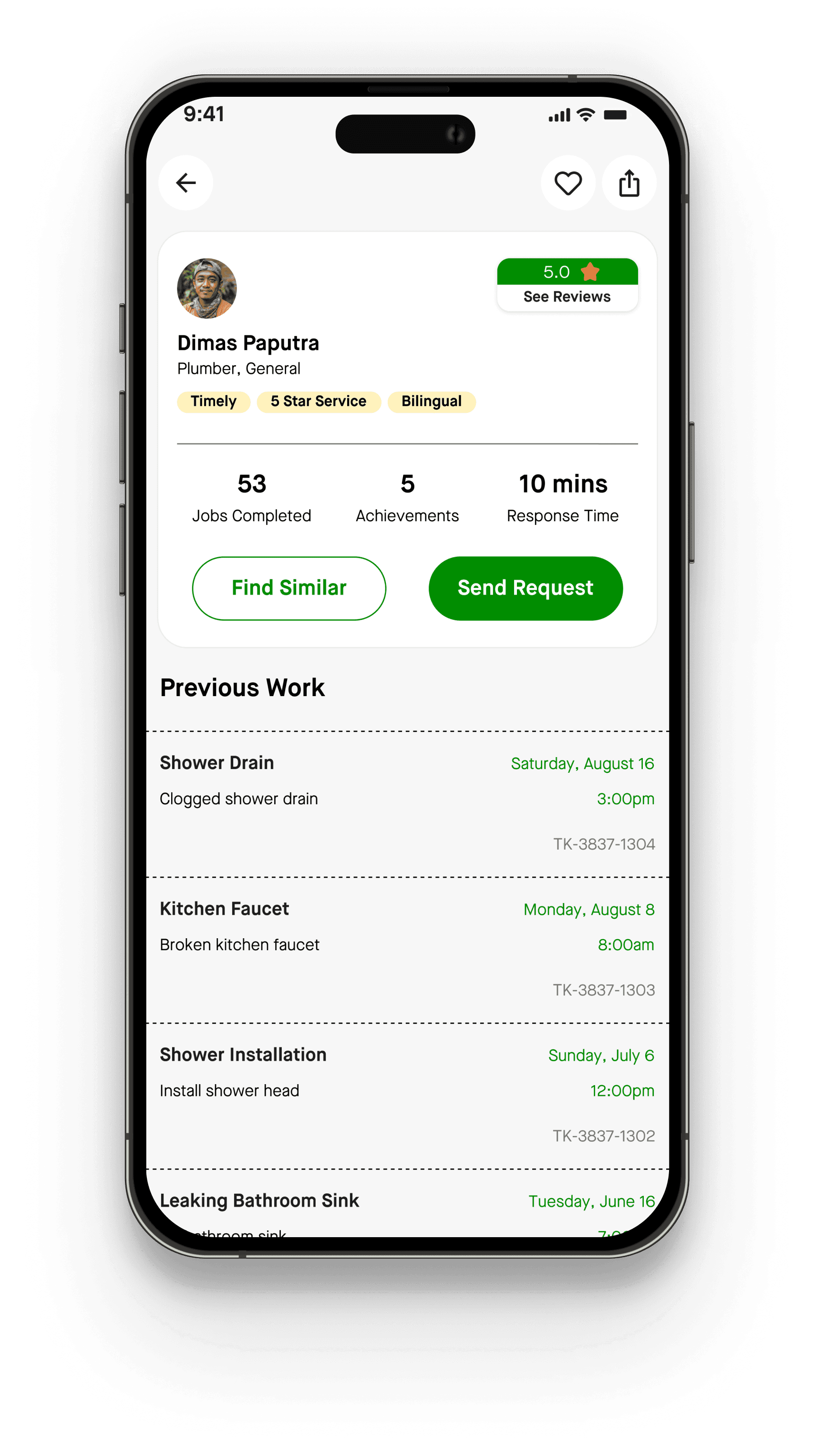
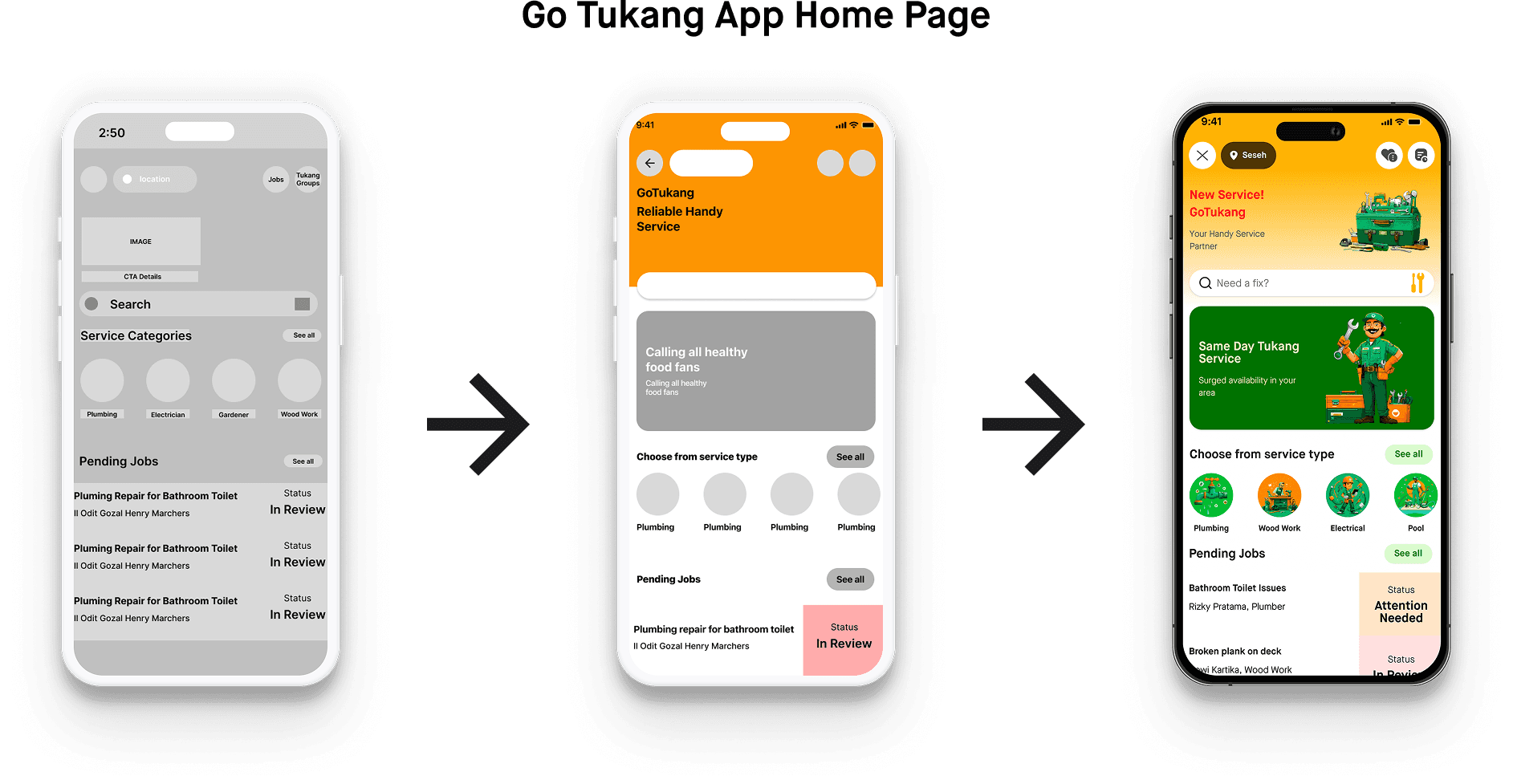
With this foundation, I transitioned into high-fidelity (Hi-Fi) designs, applying Gojek’s established color palette, typography, and interaction patterns. Each screen was crafted to feel native to Gojek’s environment while introducing subtle visual distinctions that gave Tukang its own identity. The final prototype not only demonstrated functional cohesion but also visual harmony — positioning Tukang as a believable and scalable extension of Gojek’s super app experience.
Mid Fidelity to High Fidelity Designs
Creating GoTukang Design System
Because Gojek’s design system isn’t publicly available, I developed a custom product design system to ensure consistency and scalability across the new Tukang experience. This included rebuilding core foundations — typography, color palette, icons, and reusable UI components — all aligned with Gojek’s visual language. Establishing this system early allowed for faster iteration and seamless cohesion across screens.
Once the high-fidelity prototype was complete, I conducted a usability test via Maze with seven participants. The feedback validated key interaction patterns and revealed minor refinements to enhance flow clarity and overall usability.
Design System & Branding
Test & Delivery Validation & Outcomes
From Concept to Validation
The usability test results were overwhelmingly positive, requiring just four key iterations to optimize the flow:
Incorporating images that aligned with the Gojek brand, generated using MidJourney.
Adding essential UI elements, such as calendar selectors, dropdown menus, and keyboard inputs.
Adjusting button text to prevent user confusion and improve clarity.
Splitting the flow into two distinct user requests to streamline interactions.
Thanks to the robust and intentional wireframe testing, the high-fidelity designs were nearly flawless during usability reviews. This iterative process not only validated the solution but also ensured that the final prototype remained intuitive, visually cohesive, and fully aligned with user needs.
Key Learnings & Reflections
what i discovered along the way
Working within Gojek’s ecosystem reinforced the importance of designing for consistency while introducing innovation. Building a custom design system from scratch gave me a deeper appreciation for structure — how typography, spacing, and reusable components quietly shape user trust and familiarity.
Through usability testing, I learned that validation is as critical as vision. Small refinements uncovered during testing had an outsized impact on flow clarity and user confidence. This project ultimately reminded me that strong UX design thrives in context — not by reinventing what exists, but by enhancing it with empathy, precision, and purpose.
