
Just Hair
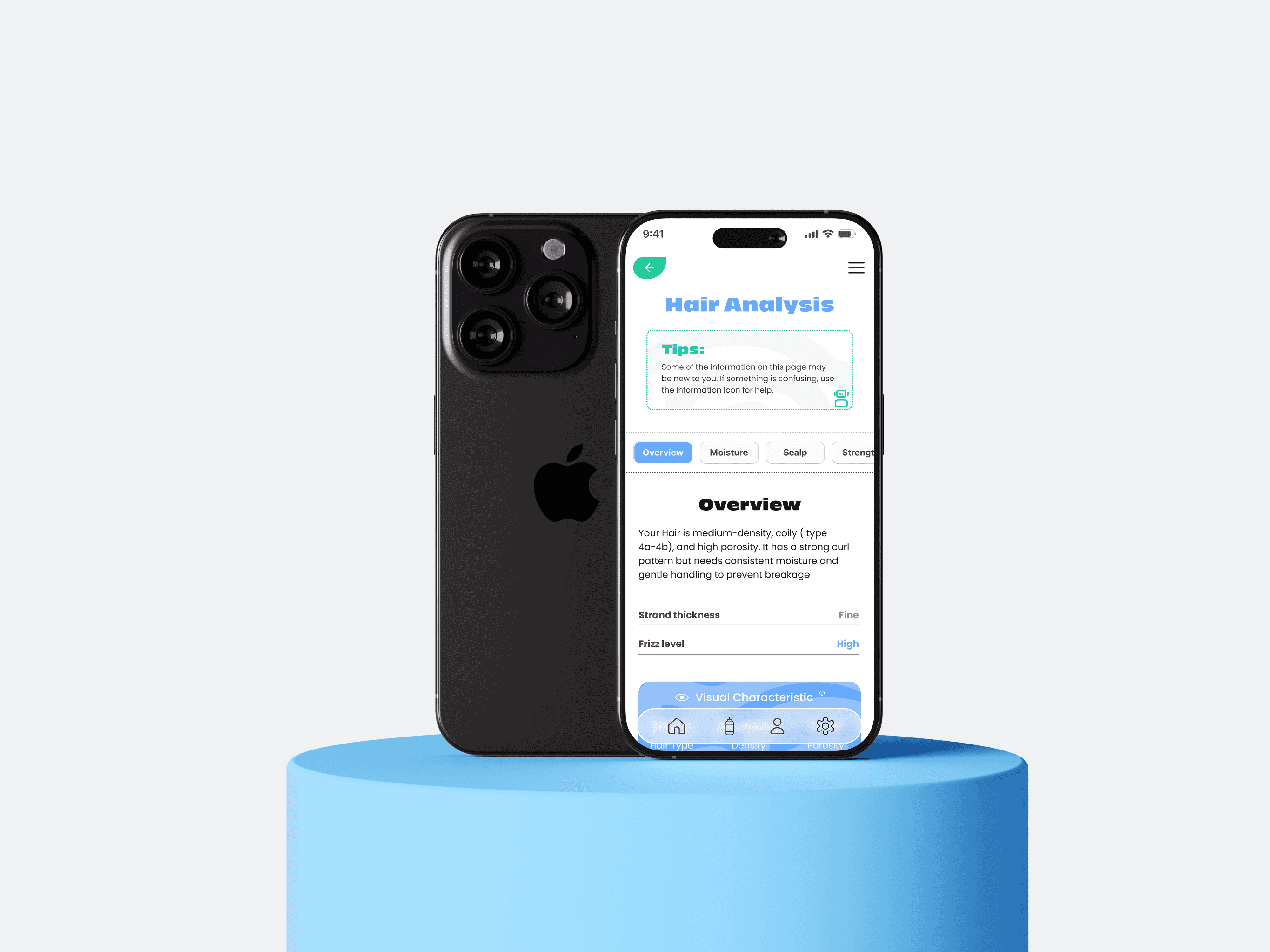
This project explores an AI-enabled mobile experience, focused on addressing gaps in women’s hair care education, product discovery, and routine building.
Using qualitative research and LLM experimentation, I designed an end-to-end application that allows users to upload a photo or video of their hair, receive personalized analysis, and build simple, sustainable routines tailored to their lifestyle.
Lead Designer
UX Research
UI Design
Branding & Visual Design
Interaction Design
Problem
" Despite the size and growth of the global hair care industry, women with textured hair—particularly Black women—struggle to confidently care for their hair in ways that fit their lifestyles "
[ Extended ]
Research revealed a consistent set of challenges across geographies and age groups:
Users spent disproportionately more on hair products due to trial-and-error discovery, often without reliable guidance
Finding trusted, skilled stylists—locally or while traveling—was difficult and inconsistent
Educational resources around hair health, curl patterns, and routines were fragmented or inaccessible
Many users described a decades-long learning curve to understand their own hair
Existing tools and services failed to account for differences in lifestyle, priorities, and context
At its core, the problem was not a lack of products or services—it was a lack of confidence and clarity.
The industry has historically placed the burden of expertise on the user, forcing generations of women to navigate complex, opaque systems without personalized support. This resulted in higher costs, wasted time, inconsistent outcomes, and diminished trust—persisting globally across users from early adulthood through later life.
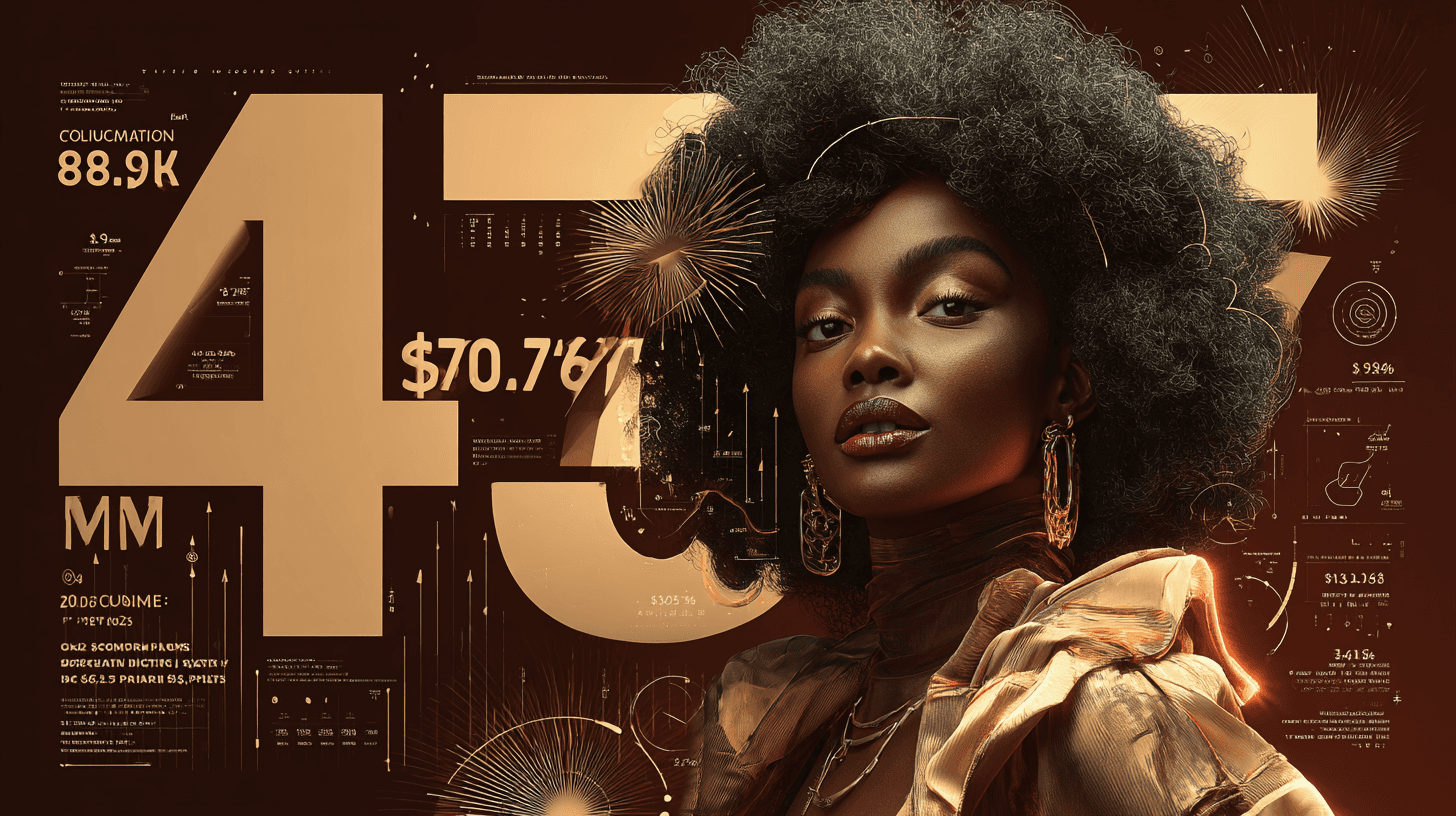
Spending 6x More Annually
Problem, Research
Gap in Treatment Education
Problem, Research
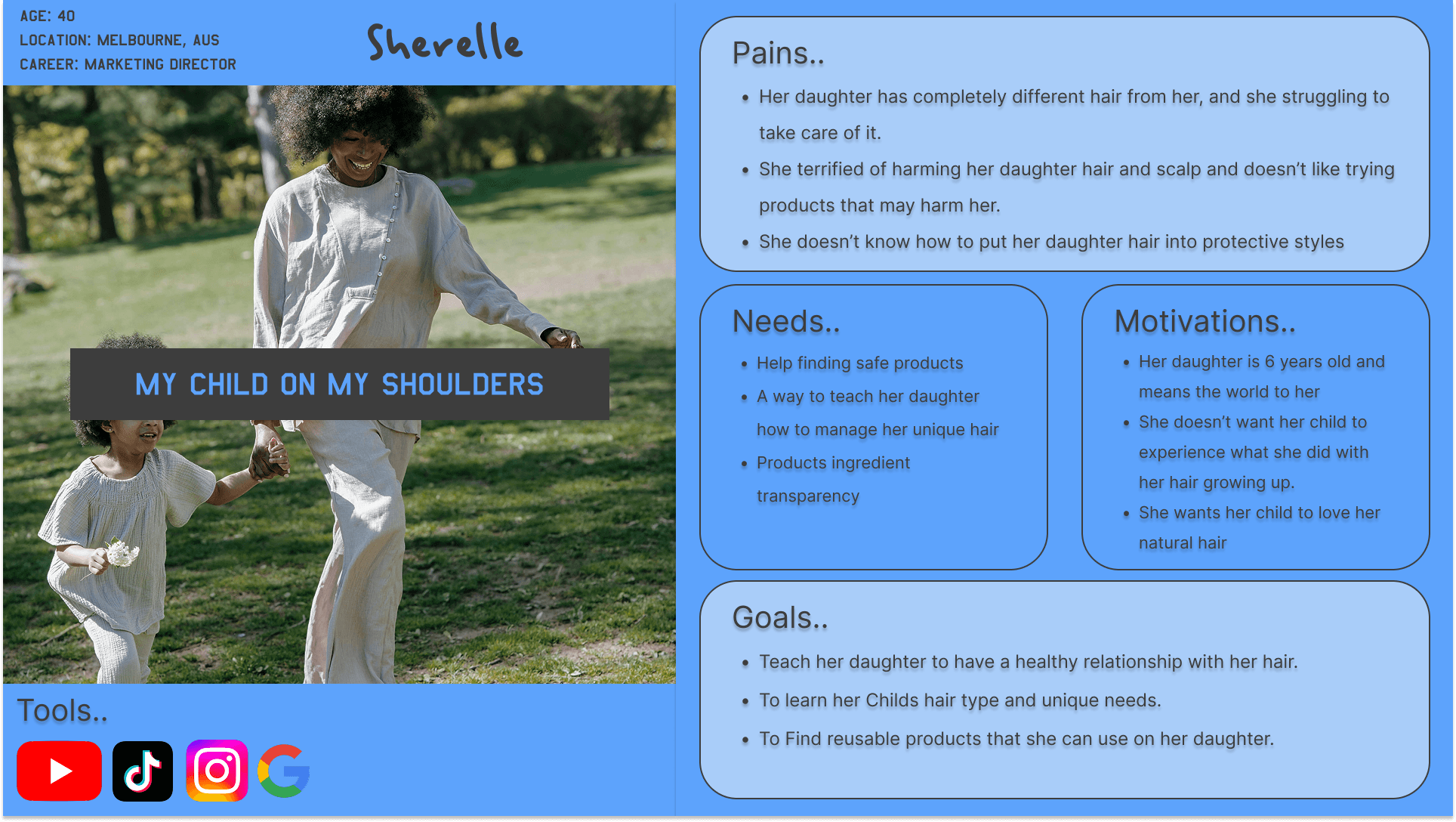
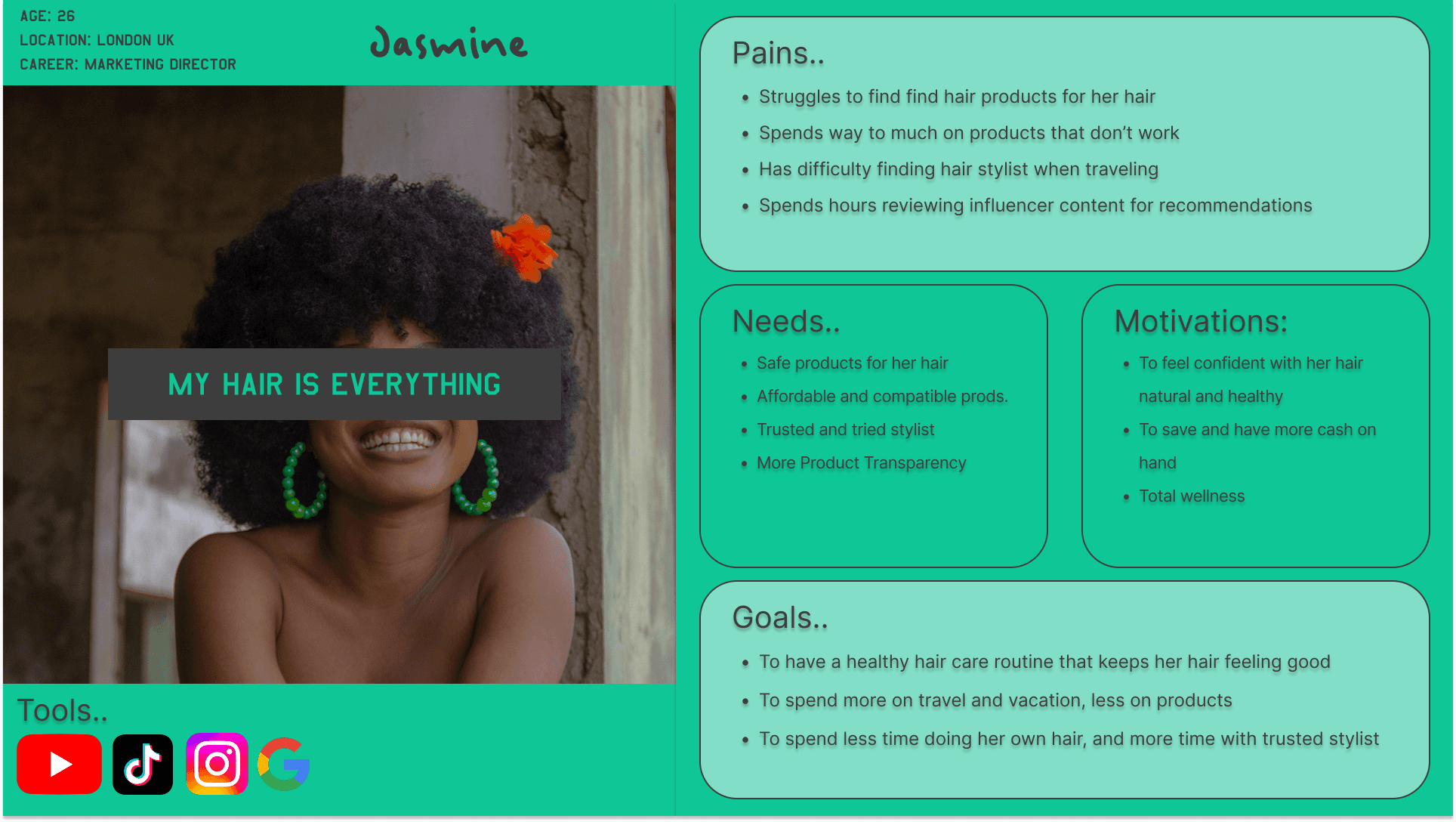
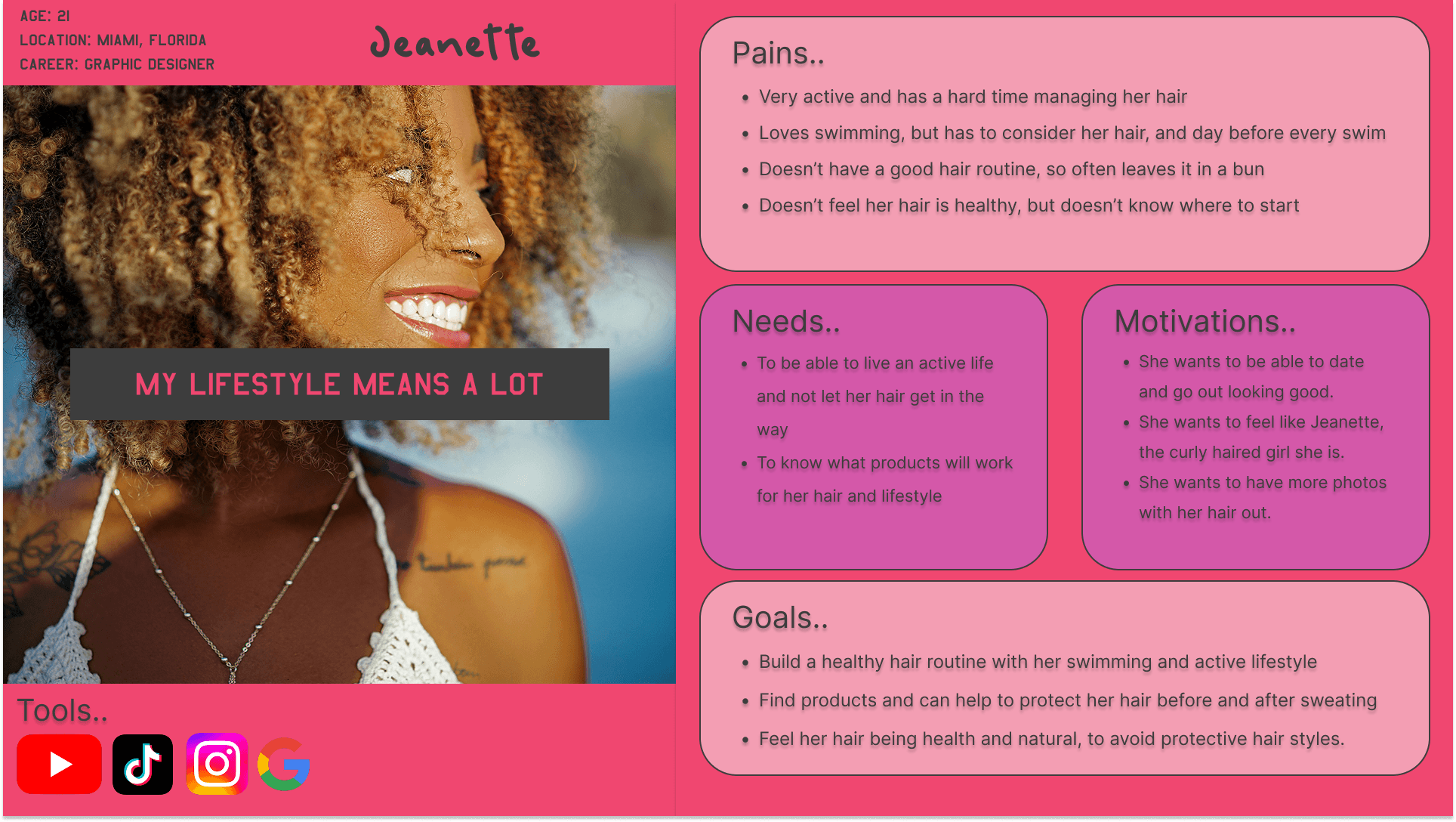
The "Aha Moments" in Research
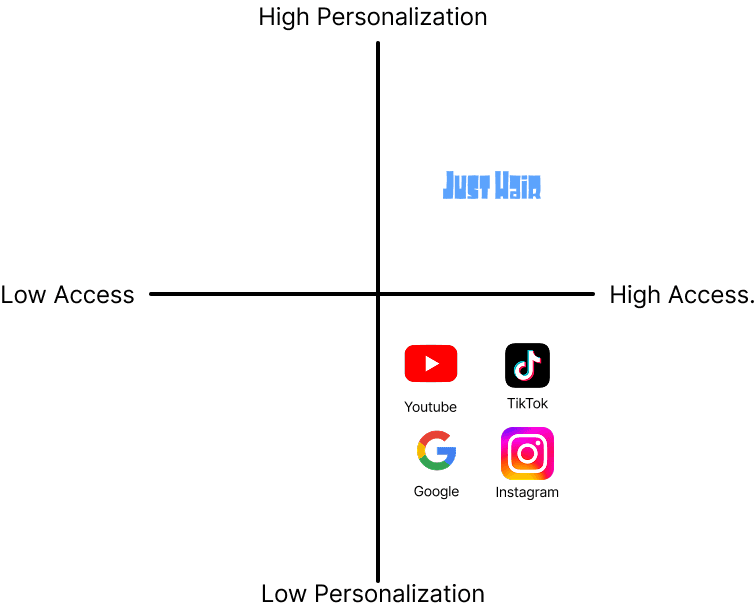
🔁 "They already have systems — YouTube, Google, communities. I wasn't going to beat those."
Research as a Tool
Interviews revealed that users weren't lost for information — they had entire ecosystems they relied on for hair guidance. The Aha moment wasn't about competing with those infrastructures, it was about recognising that Just Hair needed to build its own guided logic from the ground up. Without the familiarity of a search bar or a feed, every screen had to earn the next tap.
→ Feature build: A deliberate navigation flow anchored by the home arrow and suggested corresponding options within the thread — gently pulling users forward without overwhelming them, and making the path feel intuitive even in an unfamiliar product.

🌍 "Hair isn't just hair. It's motherhood, athleticism, climate, identity."
Research as a Tool
The variety of user lifestyles wasn't just interesting context — it was a design signal. A mother managing her child's curl pattern, an athlete navigating sweat and protective styles, a user who recently moved to a humid climate — their relationship with their hair was deeply personal and constantly shifting. Generic advice would fall flat.
→ Feature build: A survey questionnaire feature designed to meet users where they actually are — capturing their personal realities first, so that every recommendation that followed felt relevant, not random.

🛍️ "I've wasted so much money just guessing."
Research as a Tool
Trial and error wasn't just an inconvenience for users — it was a source of genuine frustration and financial waste. Interviews made it clear that users weren't lacking motivation to care for their hair, they were lacking reliable direction on what to actually buy. The demand for a smarter path to product discovery wasn't assumed — it was heard directly.
→ Feature build: A product recommendation feature that removed the guesswork entirely — connecting users to the right products based on their hair profile, so that recommendations felt earned rather than arbitrary.

Solution
" I designed an AI-powered mobile experience that helps users confidently care for their hair by replacing trial-and-error with personalized guidance "
[ Extended ]
Core Approach
Instead of asking users to become experts, the product acts as a personal hair care assistant—translating complex hair science into clear, actionable guidance.
Key Capabilities
Photo and video-based hair and scalp analysis
AI-driven insights assessing hair health, curl pattern, texture, and scalp condition
Plain-language recommendations designed to build confidence, not overwhelm
Personalized routines with reminders to support consistency over time
Designed for Real Lifestyles
High-investment users seeking smarter, more cost-efficient product decisions
Athletes needing low-effort, low-maintenance routines
Parents managing multiple hair types within one household
System-Level Thinking
Beyond individual recommendations, the product was designed to learn over time. By aggregating anonymized data across hair types, products, climates, and lifestyles, the system could identify global patterns—continuously improving recommendations and reducing friction for future users.
End-to-End Ownership
I designed the experience holistically—from onboarding and education to routines, reminders, and long-term engagement—ensuring the solution aligned user confidence with product value.
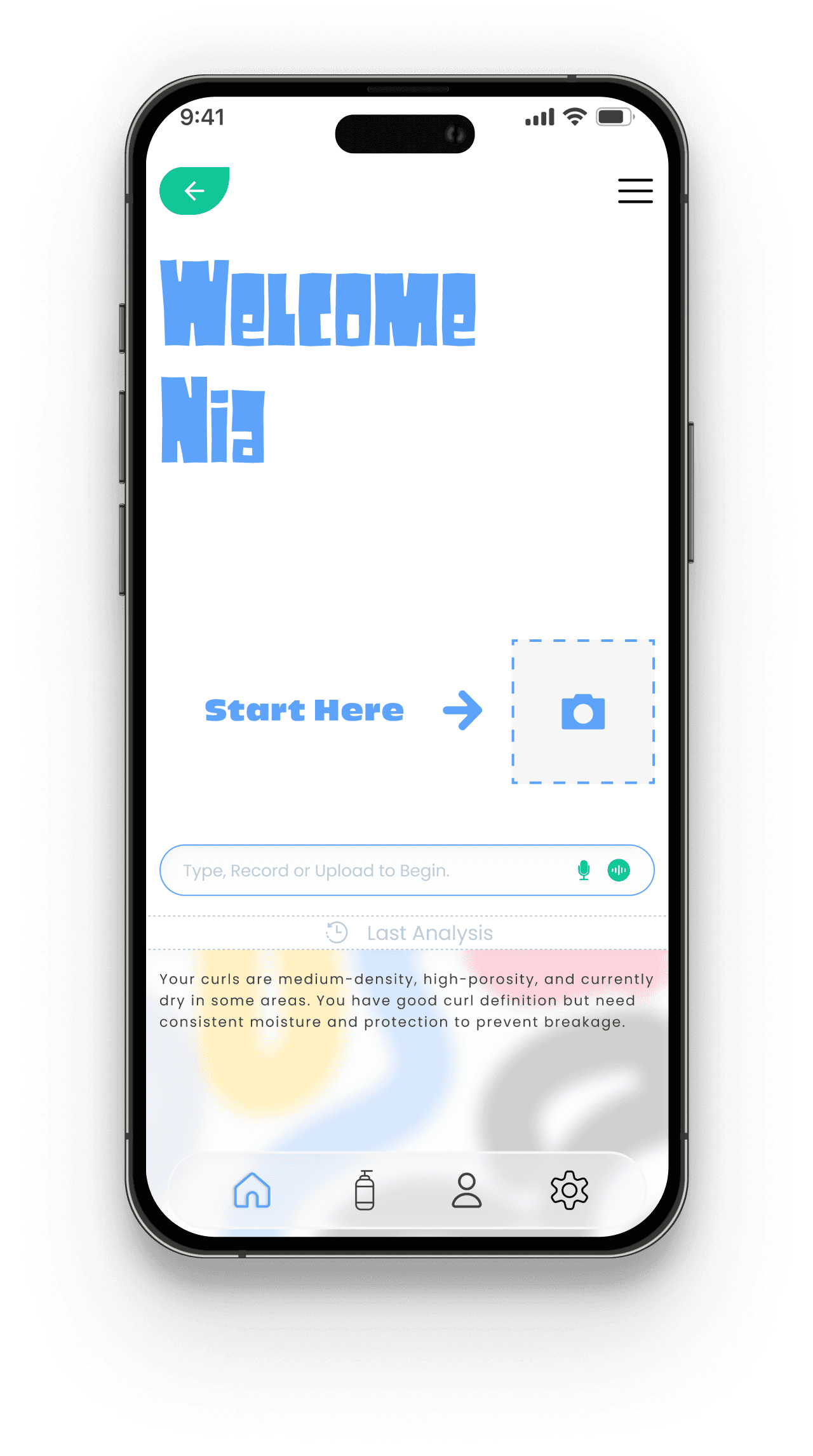
Directive and Intuitive Design
Solution, Design
Results
" Delivered an end-to-end AI-driven product that helped users replace years of trial-and-error with clear, personalized guidance "
[ Extended ]
User Impact
Reduced dependence on costly experimentation by translating hair science into actionable routines
Helped users build confidence faster through education, reminders, and consistent care
Supported diverse lifestyles and life stages with adaptable, low-friction personalization
Product & Platform Impact
Designed a scalable personalization system capable of evolving with user data over time
Positioned hair care as part of a broader wellness ecosystem alongside skin, fitness, and health
Established a foundation for long-term learning across hair types, products, climates, and routines
Image/Video Capture & Analysis
Results, Feature Impact
1
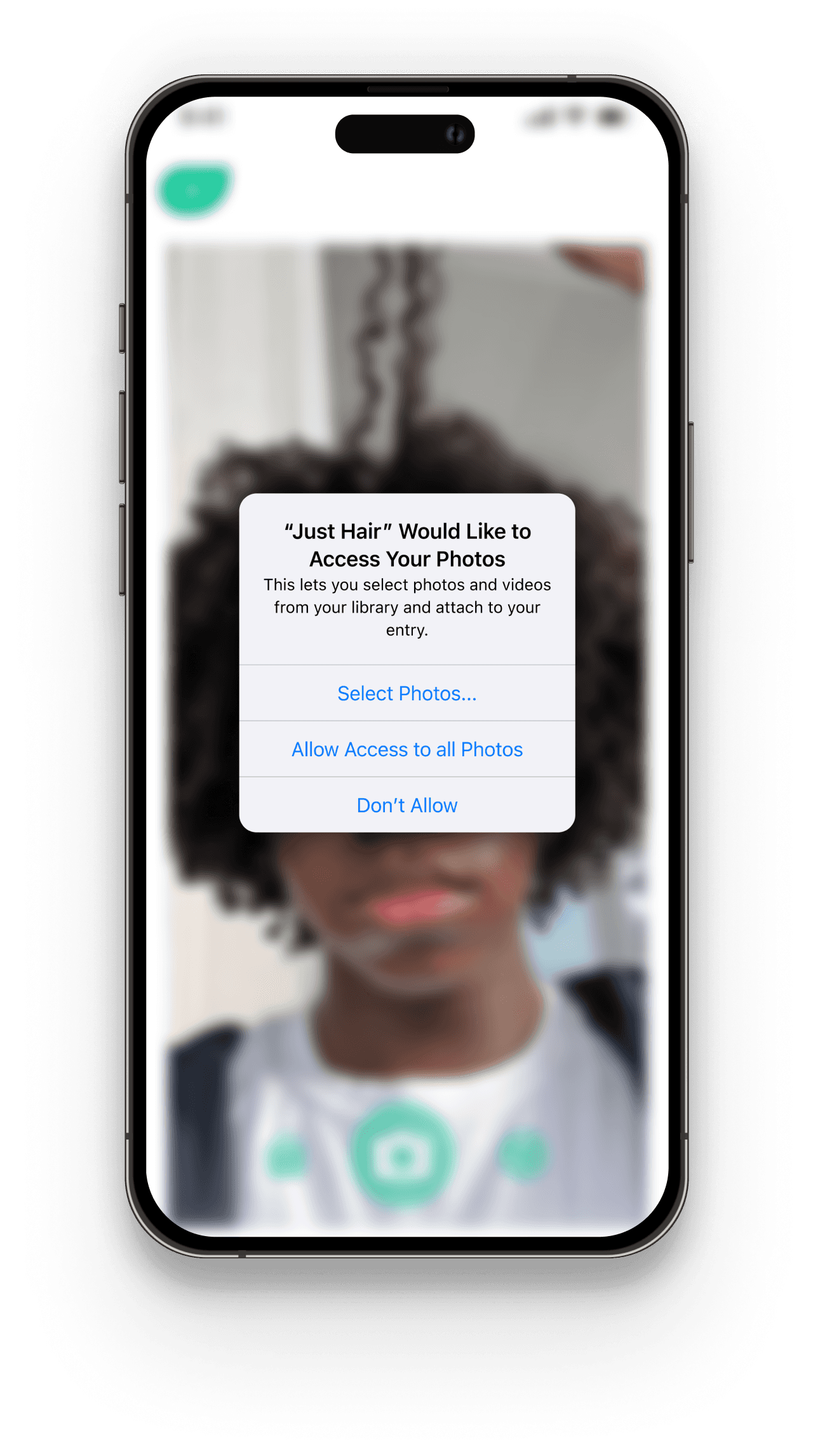
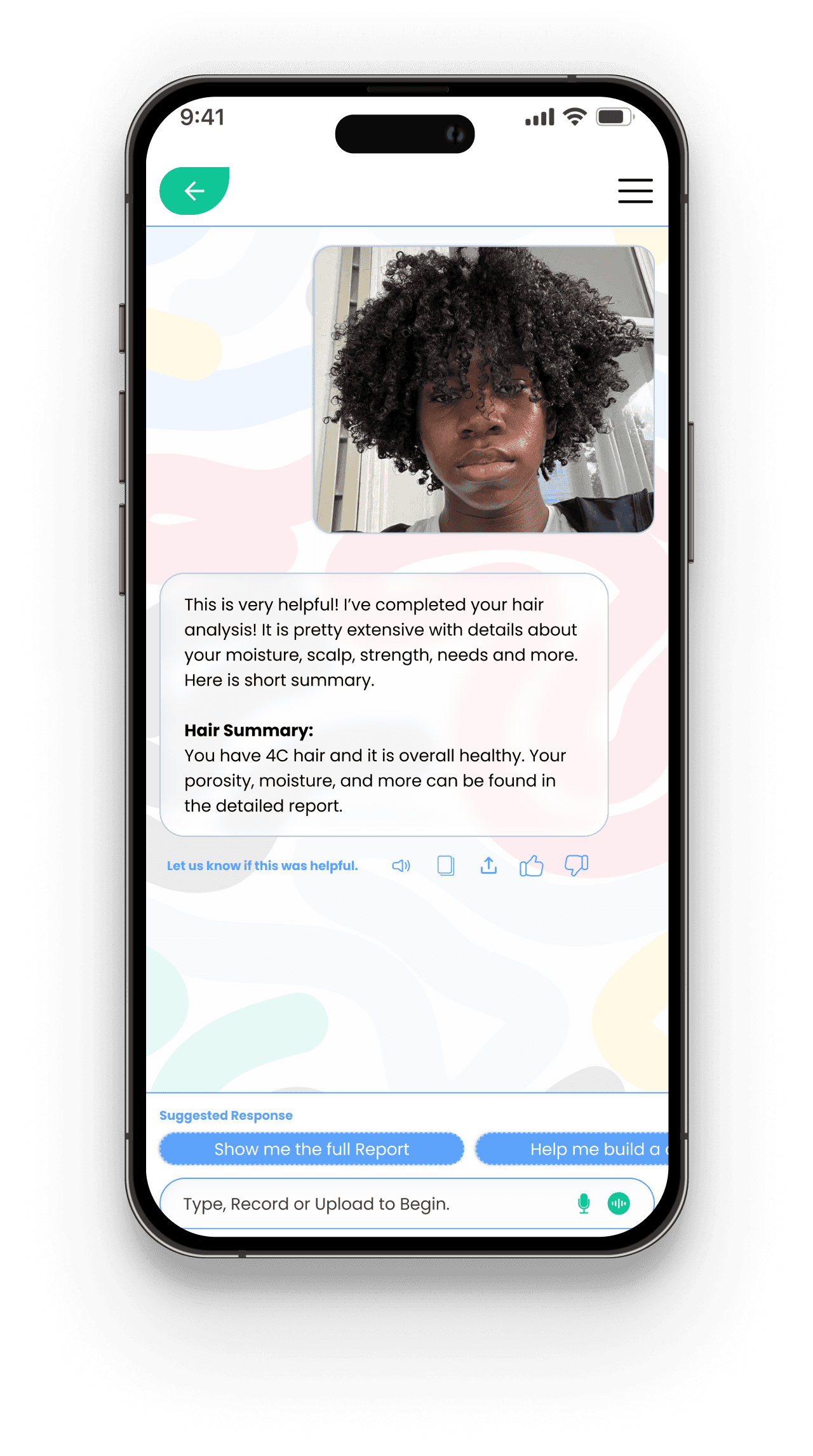
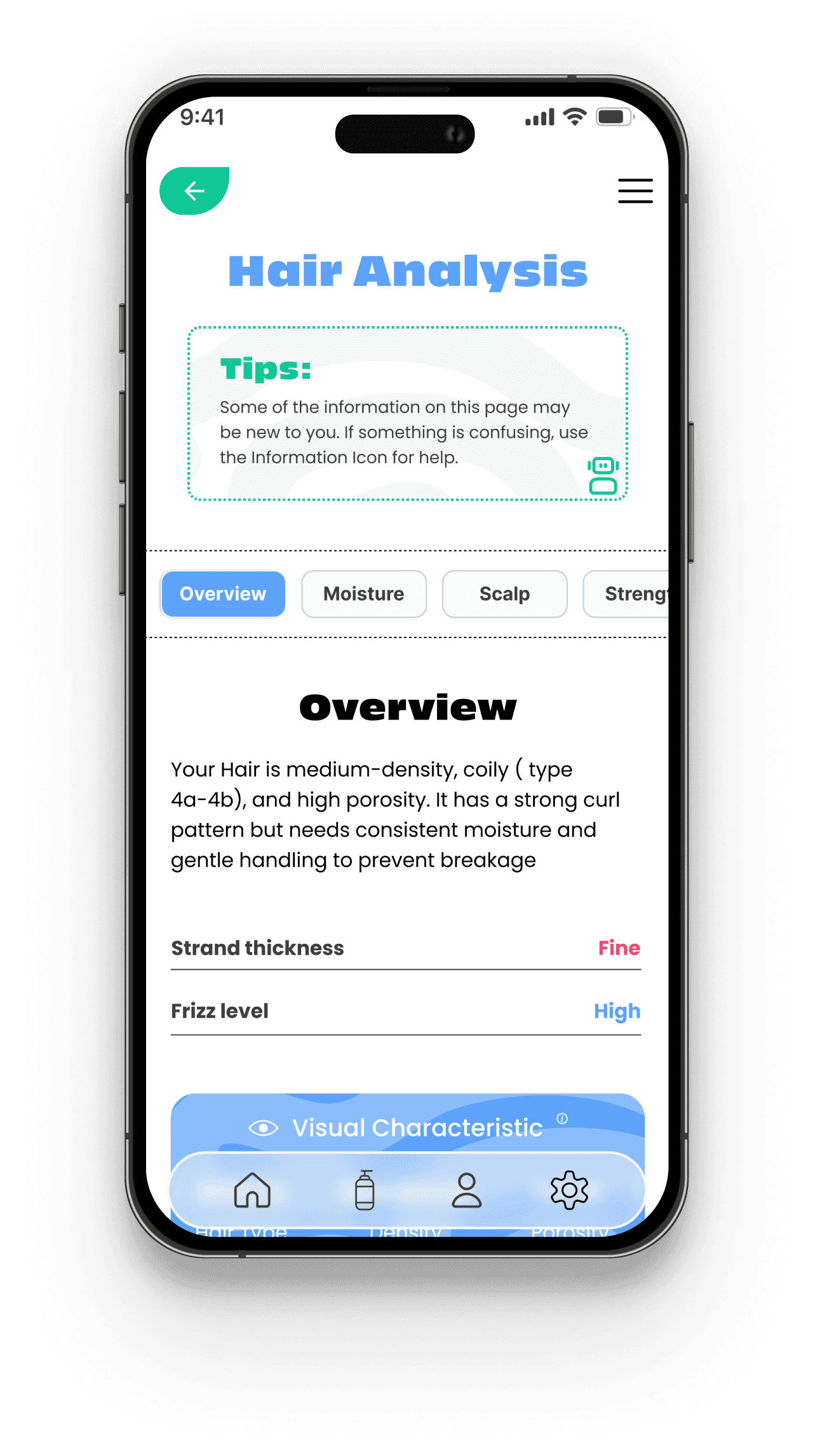
This feature enables users to upload a photo or video of their hair, which is analyzed using GPT-powered large language models alongside image recognition to identify curl pattern and assess overall hair health, including dryness, damage, or moisture balance. It translates these inputs into clear, personalized insights, eliminating the guesswork and trial-and-error many users face when trying to understand and care for their hair. By combining visual analysis with language-based reasoning, the system delivers tailored recommendations that feel intuitive and human-centered, while continuously improving through user feedback to become more accurate and trustworthy over time.
Life Style Questionnaire
Results, Feature Impact
2
This feature uses a lifestyle questionnaire to capture how a user’s daily habits—such as fitness routines, swimming, travel, and general preferences—impact their hair care needs. By understanding these contextual factors, the system can generate routines and product recommendations that align with how users actually live, rather than offering generic advice. This addresses a key insight from research: hair care is not one-size-fits-all, and routines often fail when they don’t account for real-life behavior. By tailoring guidance to each user’s lifestyle, the feature makes recommendations more realistic, sustainable, and easier to maintain over time.
Signals
Results, Feature Impact
3
This feature introduces a feedback system that allows users to provide simple signals—such as thumbs up or thumbs down—on recommendations, routines, and product performance throughout the experience. These signals create a continuous feedback loop, enabling the system to learn from real user preferences and refine future outputs to be more accurate and relevant. Beyond improving the underlying model, this feature gives users a sense of control and participation, addressing a common trust gap in AI-driven products. By making feedback lightweight and embedded across key moments, the experience becomes more adaptive, personalized, and responsive over time.
Reflection
" I learned that when designing AI-driven experiences, education must come before automation. Users need to understand why something is recommended before they’re willing to trust it — especially in emotionally charged, identity-driven spaces like hair care "
[ Extended ]
Feedback loops that allow users to confirm outcomes and improve recommendations over time
Longitudinal learning, tracking how routines perform across climates, seasons, and lifestyle changes
Trust signals, such as explainability, peer validation, and outcome transparency