Case
Study
Overview
Go Tukang
Feature Add
I designed a feature expansion for an Asia-based super app that introduced on-demand handy services into an already dense ecosystem. The challenge was integrating a new service vertical without disrupting existing user behaviors or overwhelming the interface. By mapping end-to-end service flows and prioritizing speed, clarity, and trust, I created a seamless booking experience that felt native to the platform while supporting local service providers at scale. This project showcases my ability to design within large, complex systems, balance feature growth with usability, and adapt product decisions to regional, cultural, and behavioral contexts.
Lead Designer
Role
Solo
Squad
7 weeks
Duration
The Problem
Business owners and property managers lacked reliable access to handyman services, creating operational risk and revenue loss.
Handymen frequently arrived late or failed to show up, disrupting scheduled operations
Unreliable service directly impacted revenue-generating activities and property readiness
Sourcing trusted providers was time-consuming and dependent on personal networks
There was no centralized platform to compare availability, pricing, or reliability
Unpredictable scheduling increased stress and made day-to-day planning difficult
The Solution
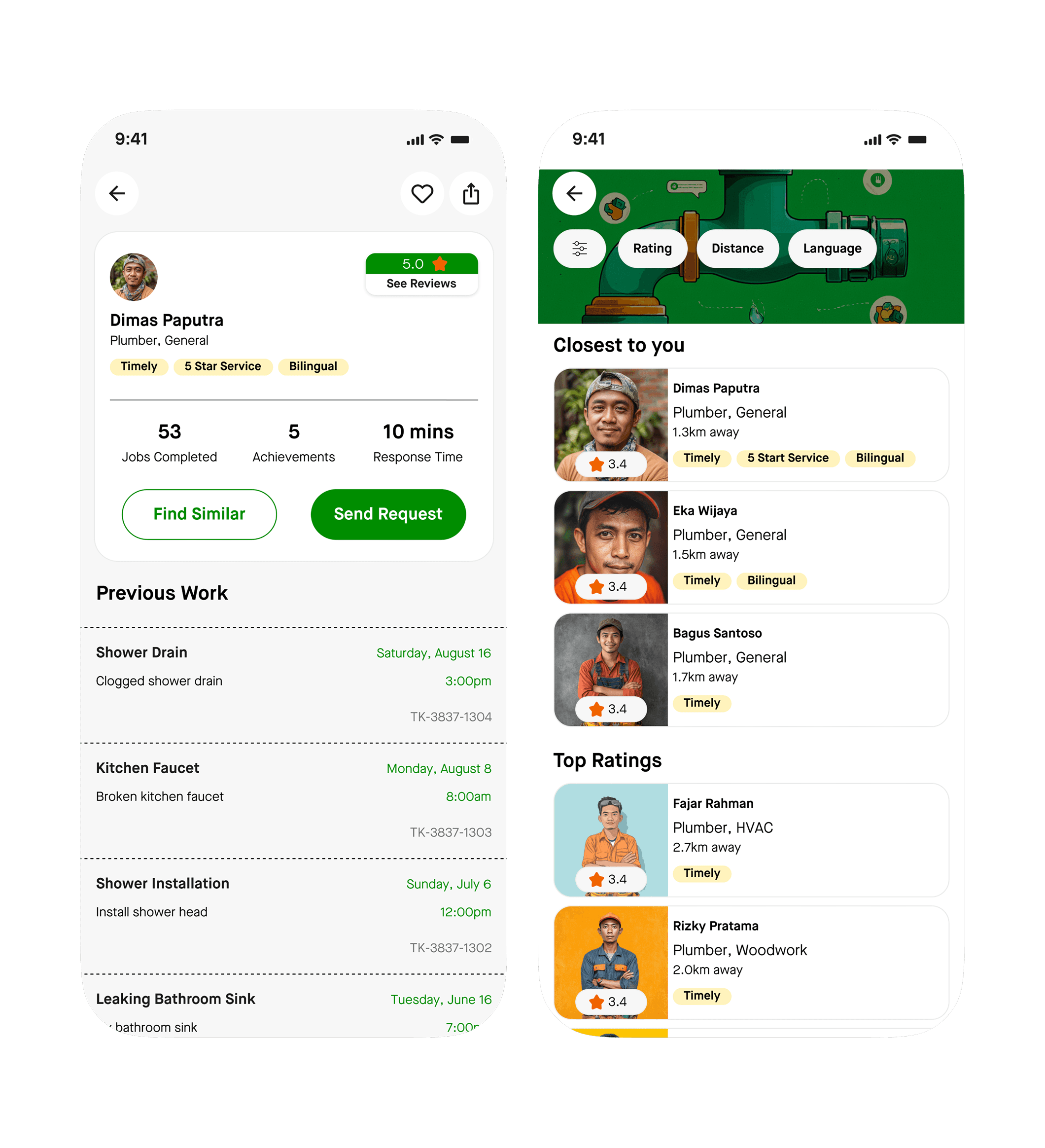
I designed GoTukang, an end-to-end mobile service flow within the Gojek ecosystem that made sourcing handyman services more reliable, transparent, and easier to manage.
Enabled business owners and property managers to search and discover nearby handymen by service type
Introduced project-based requests so users could clearly define scope, timing, and requirements upfront
Allowed users to invite multiple handymen to bid, increasing availability and reducing reliance on a single provider
Designed scheduling, booking, and in-app communication flows to minimize no-shows and misalignment
Increased trust through visible pricing, ratings, and service history before booking
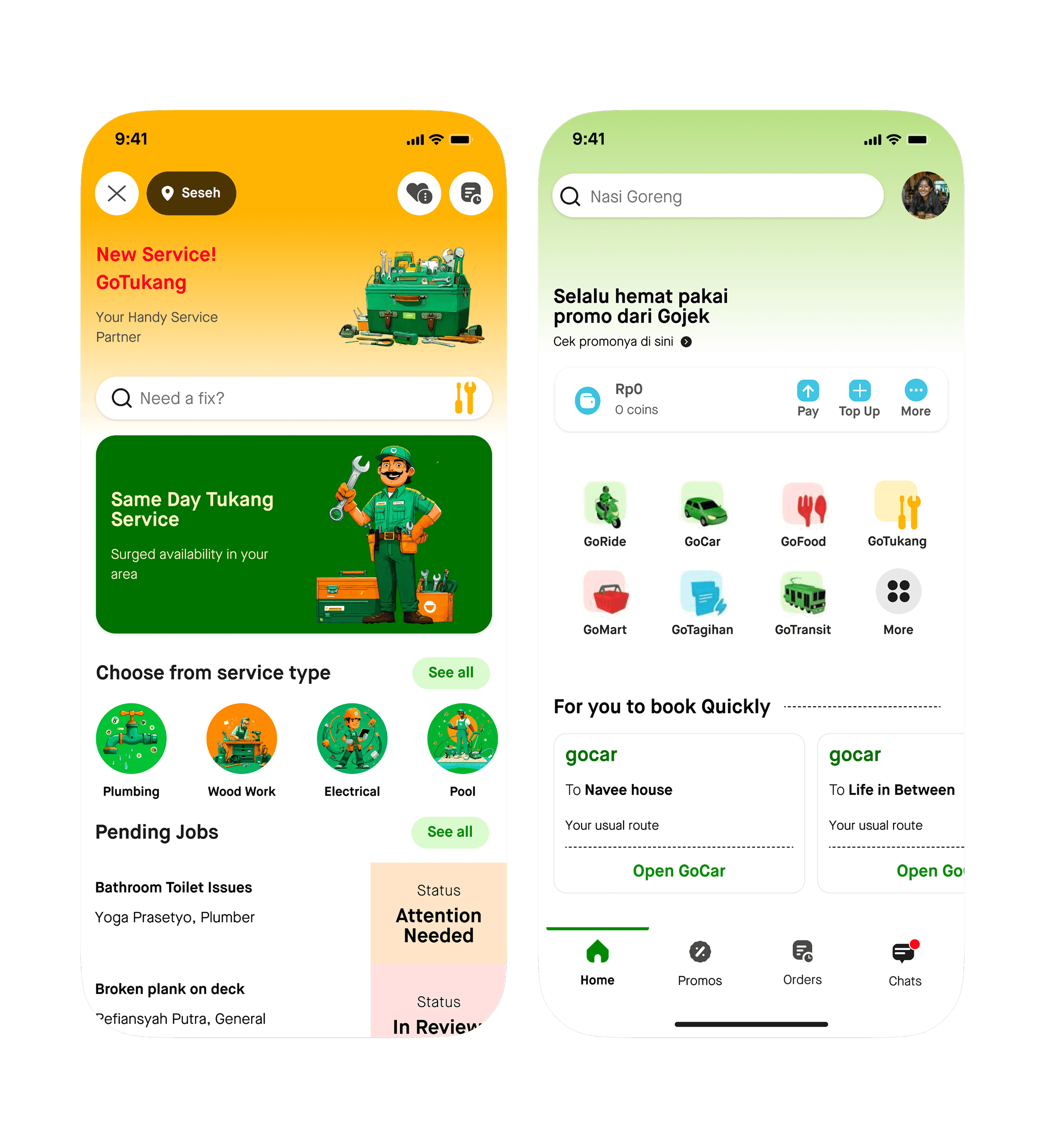
Integrated the experience seamlessly into Gojek’s existing super-app, allowing users to leverage an already trusted platform
The Results
The GoTukang concept demonstrated how improving reliability and transparency could meaningfully reduce operational stress for business owners and property managers.
Created a clear, scalable service model for business-focused handyman services within the Gojek ecosystem
Reduced reliance on informal sourcing methods by introducing a centralized, trusted marketplace
Improved perceived reliability and trust through structured bidding, scheduling, ratings, and two-way communication
Enabled more predictable scheduling, with the model designed to significantly reduce no-shows compared to informal booking methods
Supported both sides of the marketplace by helping handymen and service providers access more consistent, reliable work
Discovery
The Process of Learning and finding a path forward
I explored whether Gojek was well positioned to expand into handyman services by combining market signals with direct user insight.
Initial research showed that existing tukang and home service apps were fragmented, low-visibility, and lacked the scale needed to build trust
Despite a large and active construction workforce, service discovery still relied heavily on word of mouth, personal networks, or informal classifieds
Competitive analysis revealed that smaller platforms offered access to services, but struggled with adoption due to limited reach and brand trust
Interviews with business owners and property managers confirmed that reliability—not availability—was the core challenge
None of the participants were aware of existing niche apps, highlighting a distribution gap rather than a lack of demand
Key insight
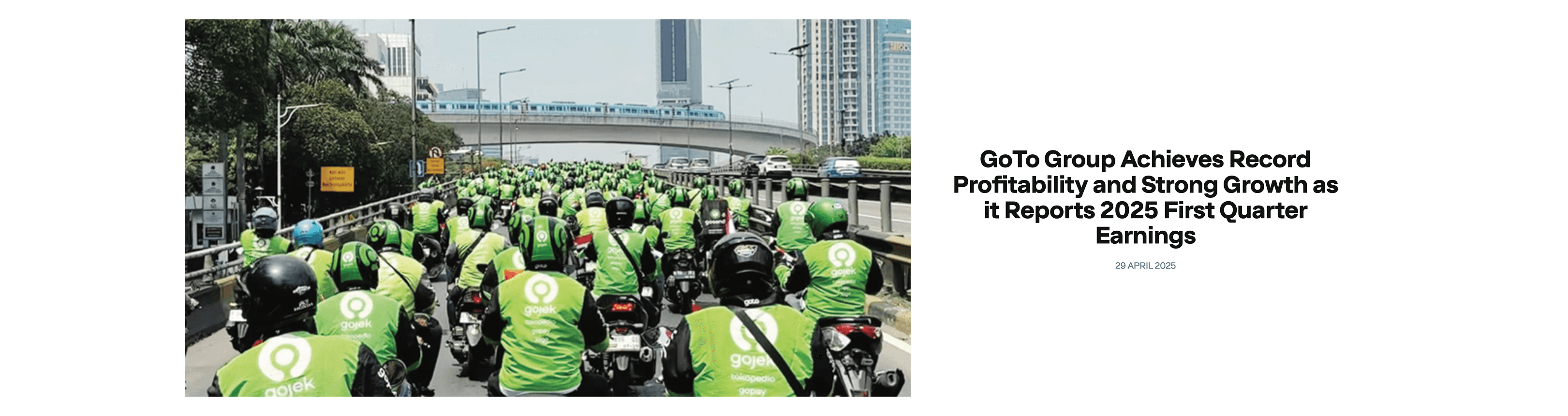
Gojek’s existing scale, trusted brand, and super-app infrastructure uniquely positioned it to solve a problem that smaller platforms could not
Define
The Process of figuring out "What are we actually Solving?"
I explored whether Gojek could responsibly expand into tukang services by understanding how people currently find and trust service providers.
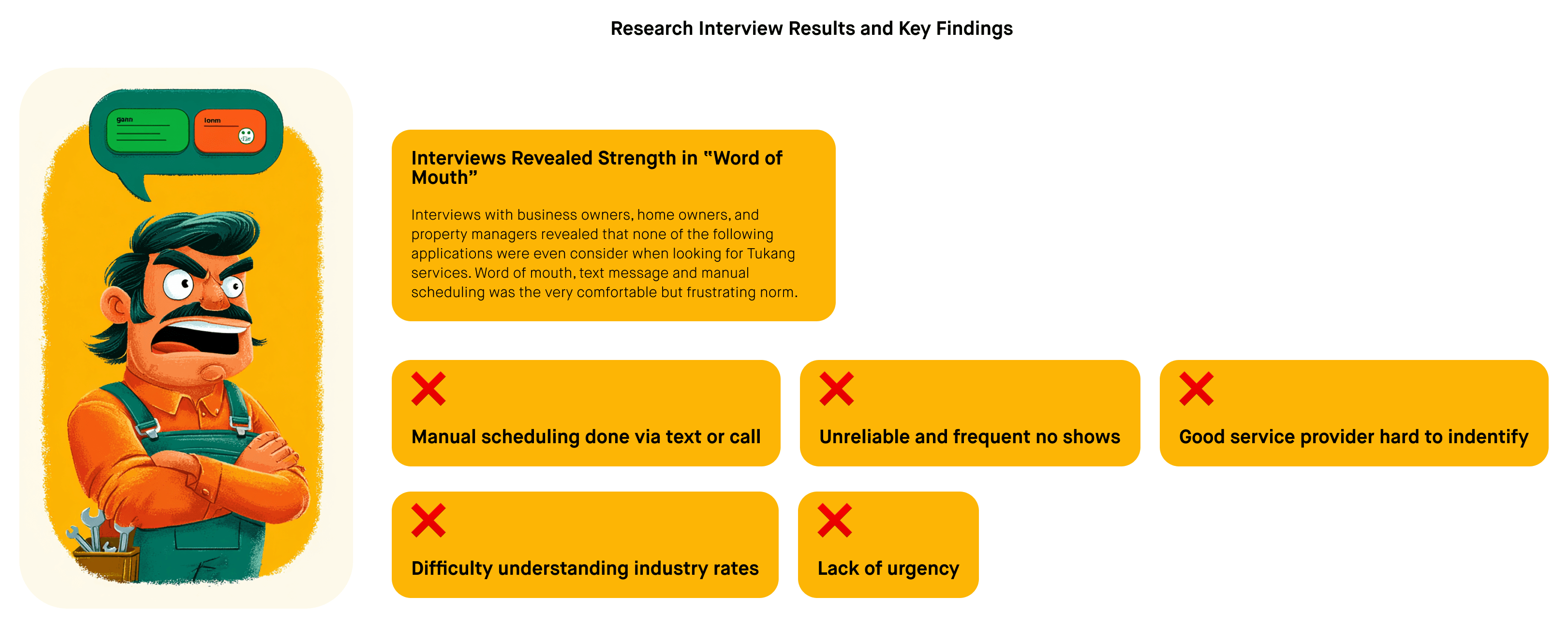
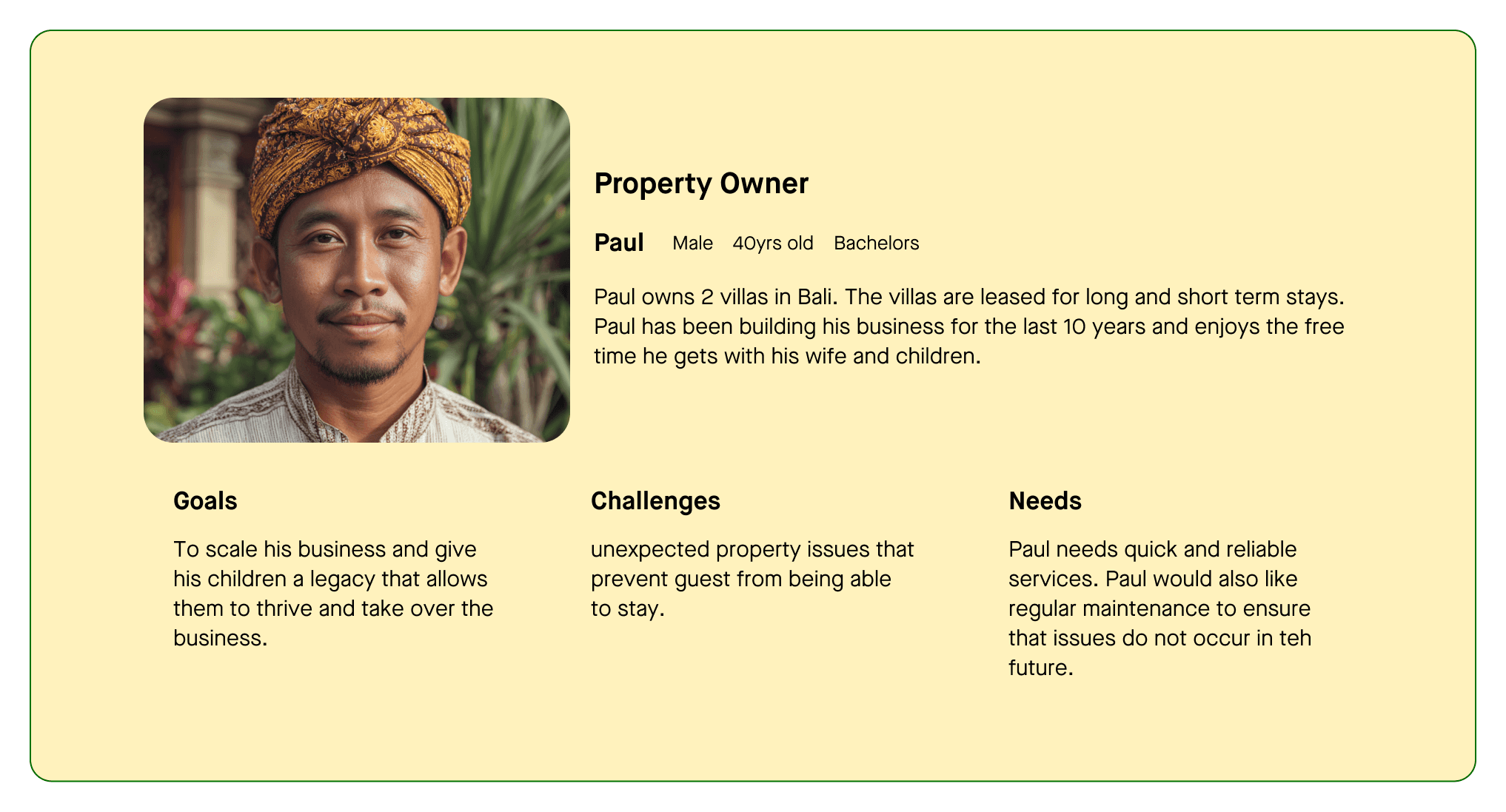
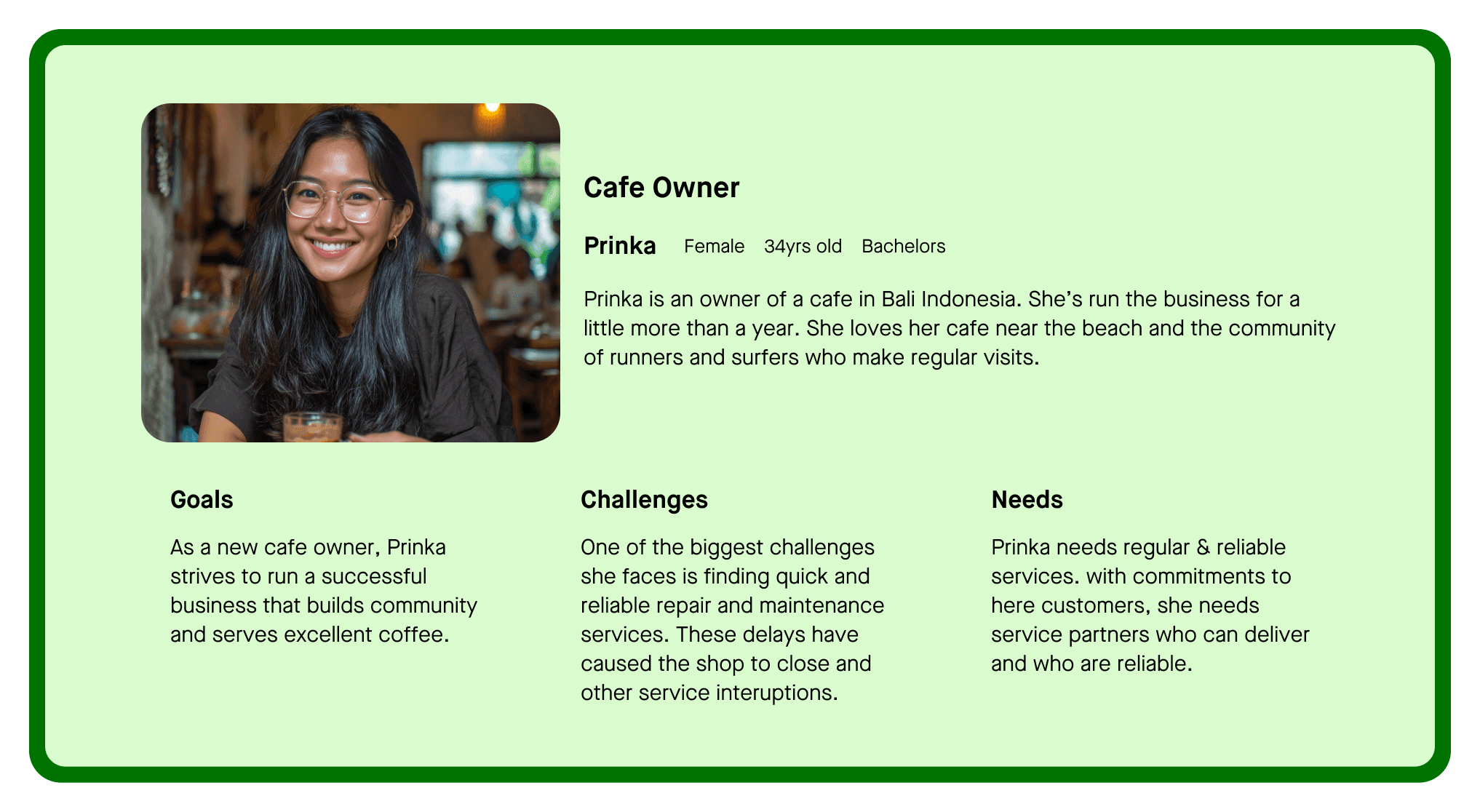
Outside of Jakarta, most business owners and property managers rely almost entirely on word of mouth to find handyman services
Apps were not widely adopted or top-of-mind, especially in regions like Bali and other islands where service discovery remains informal
Users trusted personal referrals because they felt safer and more accountable than unfamiliar digital platforms
Many participants were unaware that tukang service apps even existed, highlighting a visibility and trust gap rather than lack of demand
Interviews revealed that reliability concerns—no-shows and inconsistent quality—were the primary barrier to trying new solutions
Key insight
For tukang services, trust is established socially first; any digital solution must replicate and reinforce word-of-mouth trust through visibility, accountability, and communal feedback
Explore
Exploring all the ways in which we can solve this problem.
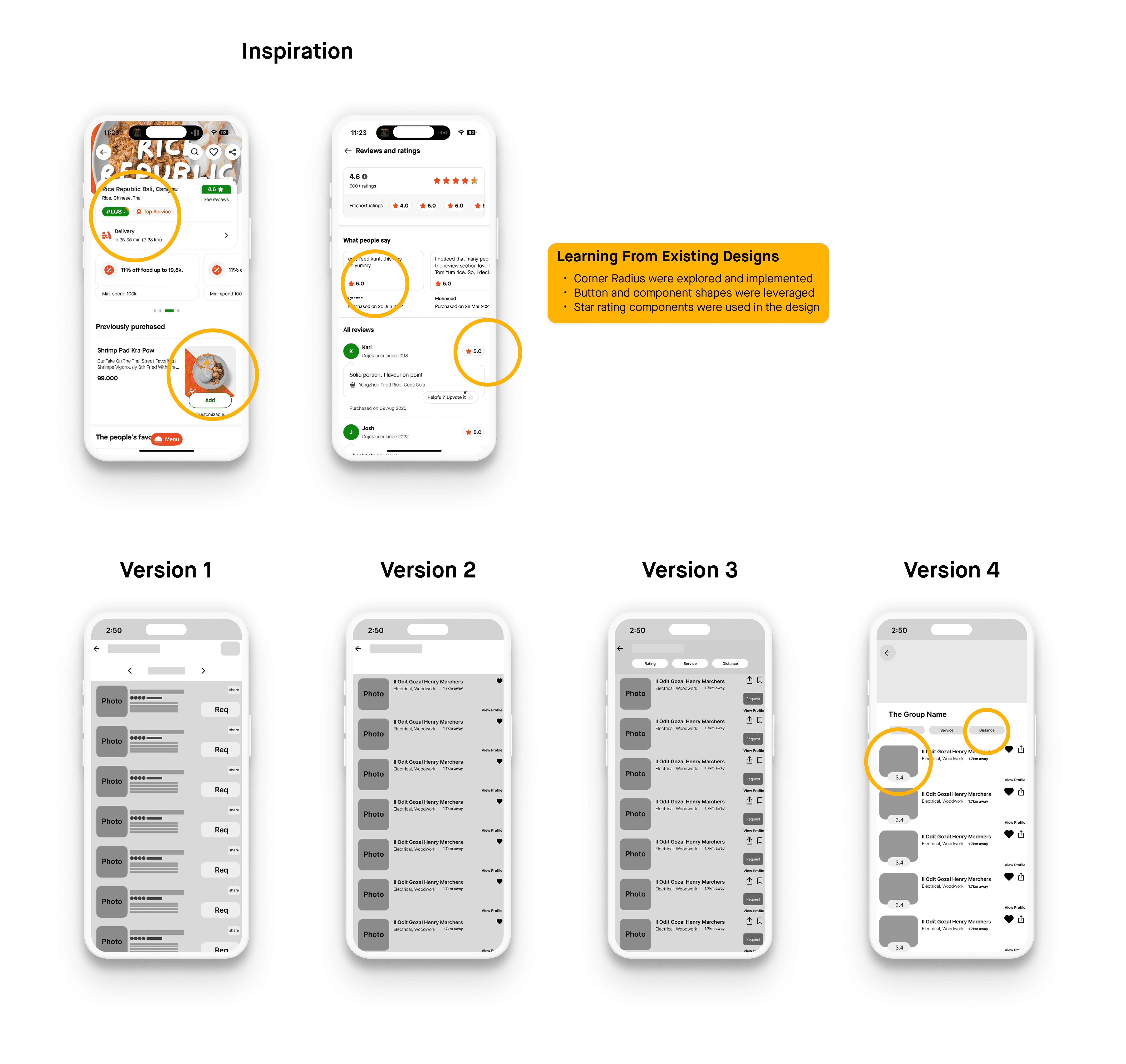
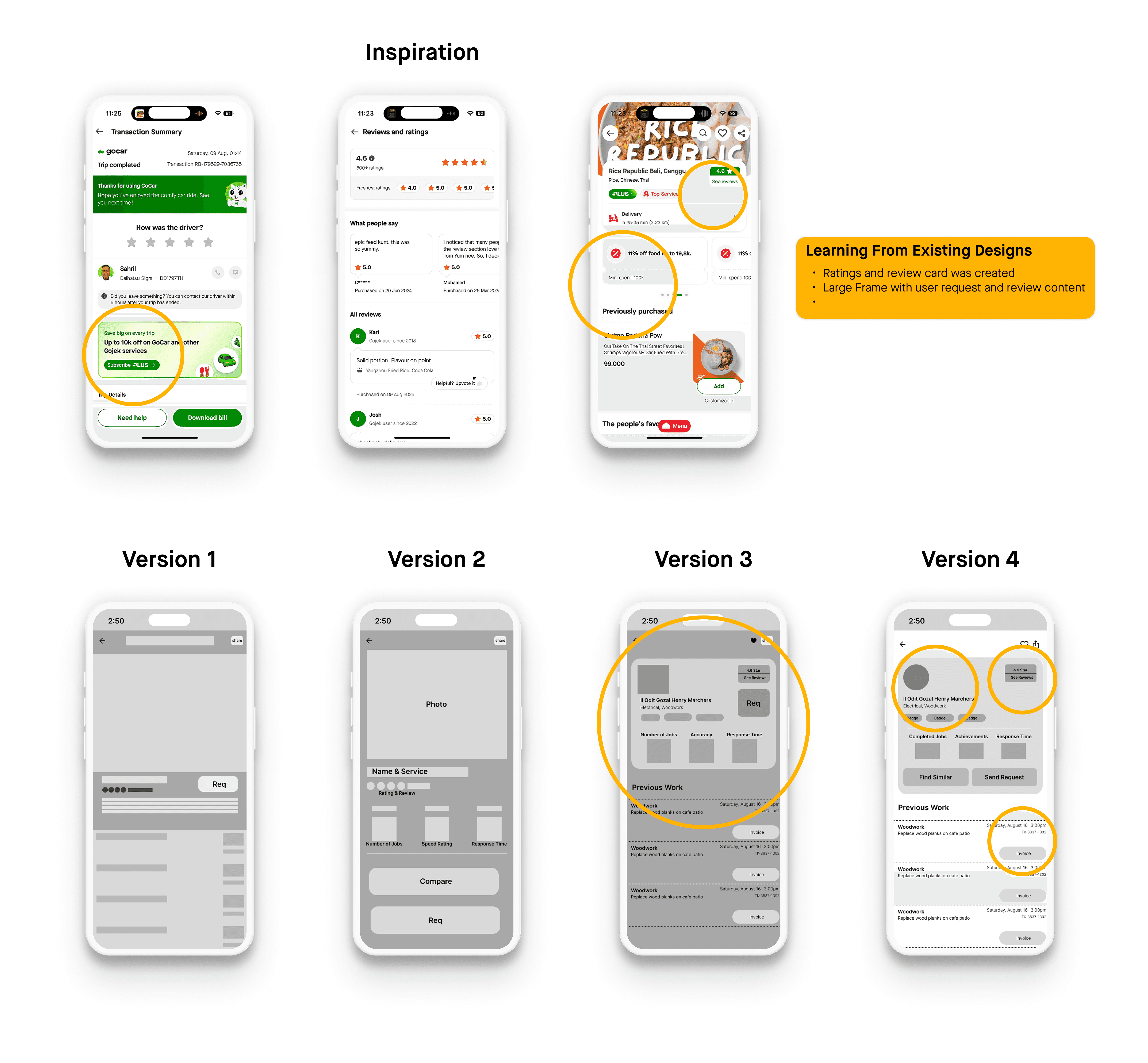
I explored how a new Tukang service could expand Gojek’s ecosystem without breaking trust, familiarity, or platform coherence.
Recognized that Gojek’s strength was not just scale, but consistency across its super-app ecosystem
Treated the existing design system as a constraint rather than a limitation, prioritizing familiarity over novelty
Explored how service discovery, booking, and payments already worked across GoRide, GoFood, and GoPay
Identified reusable patterns that users already understood, reducing the learning curve for a new service
Focused exploration on how a Tukang flow could feel native to Gojek, not visually or behaviorally separate
Exploration constraints
Existing super-app navigation and mental models
Established enterprise design system
User expectation of speed and familiarity
Key decision
Rather than designing a standalone experience, I explored ways to extend existing interaction patterns so the service felt immediately trustworthy and easy to adopt
Design
Flows, IA and Wire Frames. Taking Lofi to HiFI Designs
I designed and validated a core user journey that prioritized speed, clarity, and reliability within Gojek’s super-app ecosystem.
Explored multiple flow structures and selected the path that required the fewest possible steps to complete a request
Consolidated actions onto fewer screens to minimize cognitive load and reduce drop-off
Focused the high-fidelity prototype on the Search and Request a Tukang journey as the highest-impact interaction
Used visual hierarchy and progressive disclosure to guide users through scope, timing, and confirmation
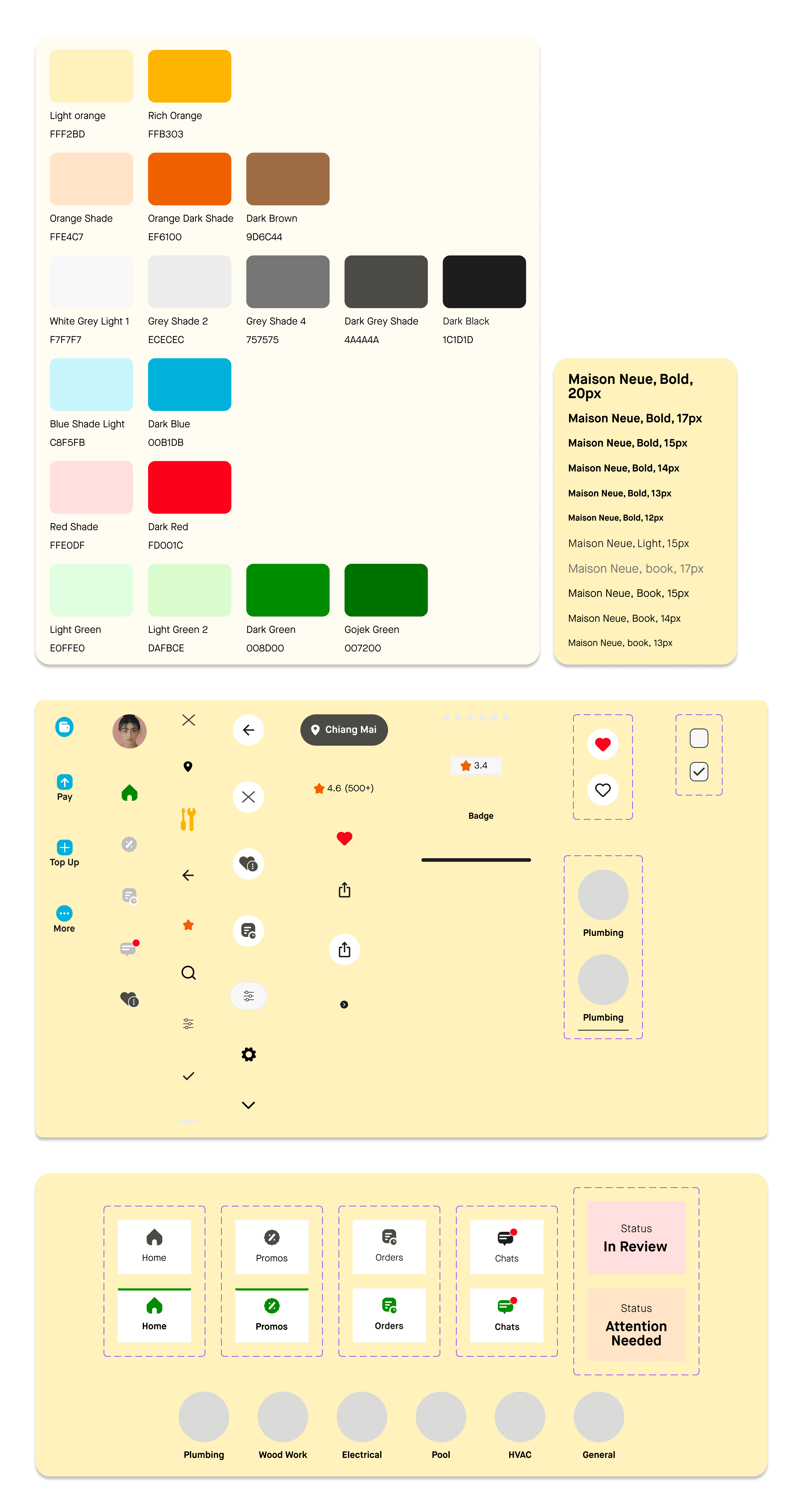
Built a feature-level UI system aligned with Gojek’s existing visual language to preserve familiarity and trust
Design considerations
Evaluated multiple flow structures before committing to a single high-impact journey
Chose clarity and predictability over speed or density
Validation
Tested the high-fidelity prototype with users to confirm that the reduced-step flow felt intuitive and efficient
Feedback validated the direction, with small refinements made to hierarchy and sequencing before moving forward

Test
COnducting rounds of testing before hand offs
I tested the high-fidelity prototype to validate whether the reduced-step flow supported clarity, confidence, and task completion for users.
Usability testing confirmed that the core flow felt intuitive and aligned with user expectations
Testing surfaced a small number of targeted refinements rather than structural issues, validating early wireframe decisions
Iterations focused on improving clarity and confidence rather than adding new functionality
Visual hierarchy and interaction cues were refined to reduce hesitation during key decision moments
The final flow balanced efficiency with reassurance, supporting both user needs and business goals
Key refinements
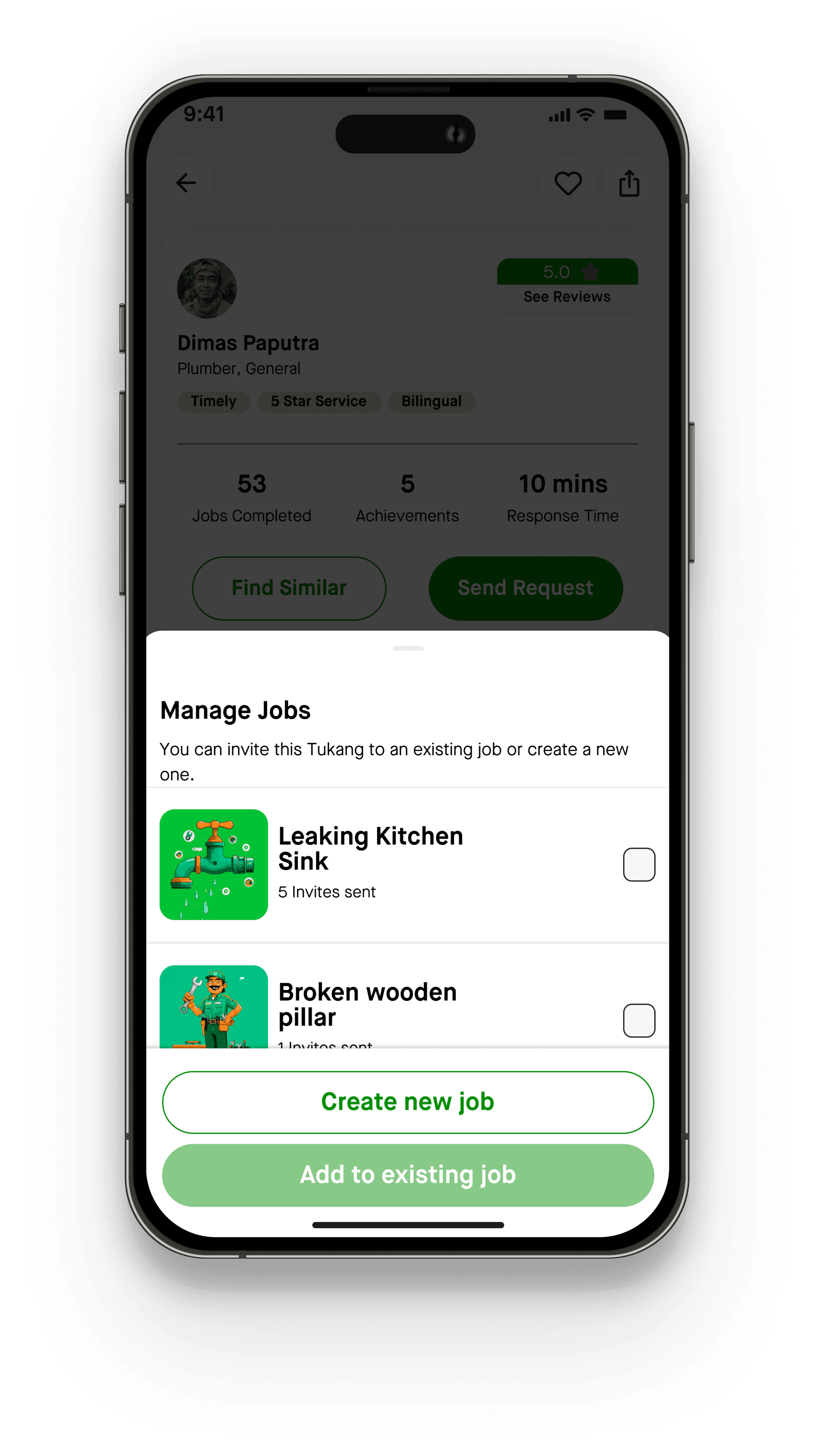
Introduced brand-aligned imagery to reinforce familiarity and trust
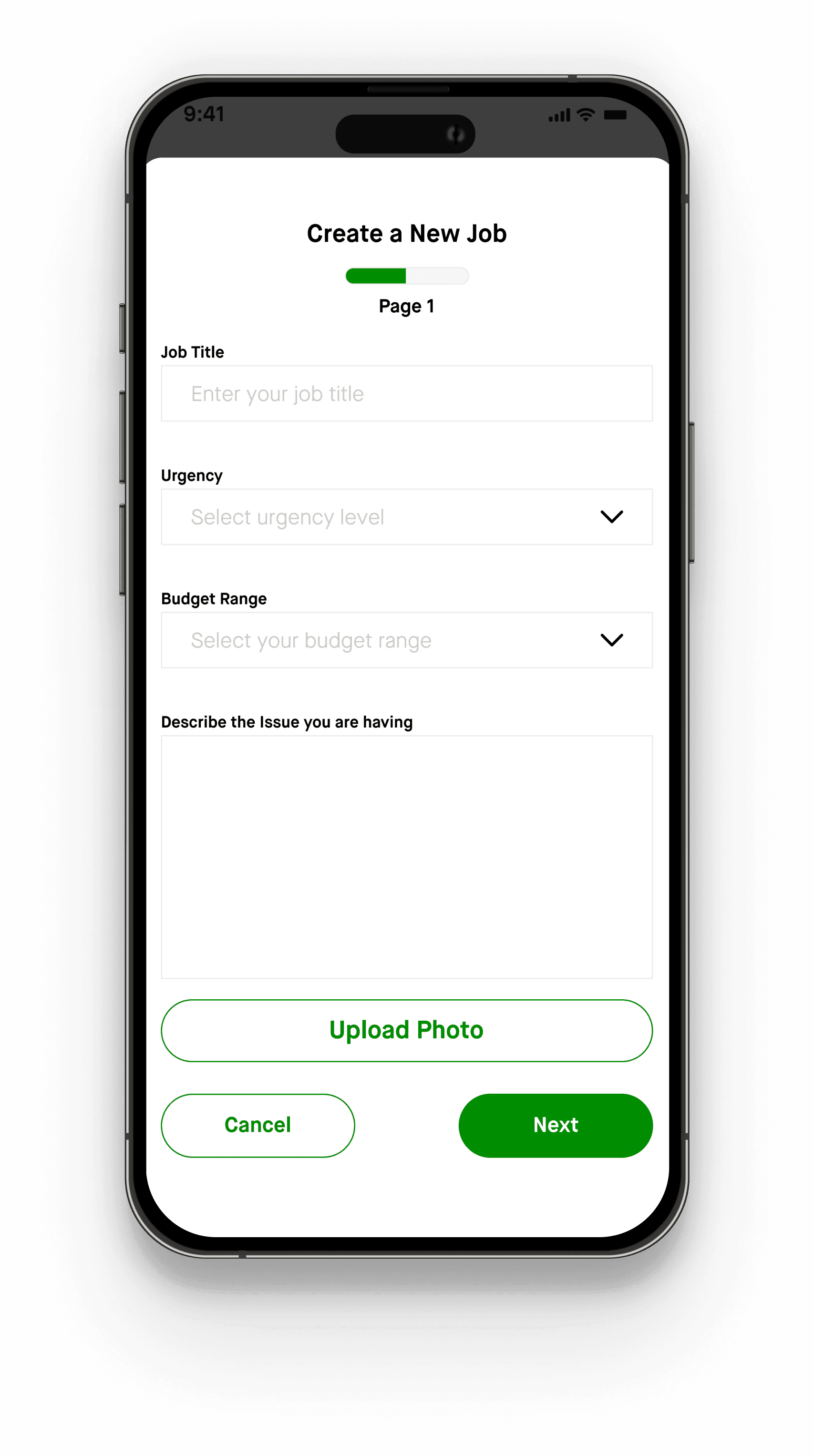
Added essential UI components (calendar selectors, dropdowns, keyboard inputs) to support accurate scheduling and scoping
Refined button copy to reduce ambiguity and guide next actions
Split the flow into two clearer request paths to streamline interactions and reduce cognitive load
Reflection
No project is DONe. Reflect and plan what could be better and whats next.
This project highlighted the importance of designing for scale within an established ecosystem.
Rather than introducing novelty, the focus was on consistency, trust, and usability—ensuring the Tukang service felt native to Gojek’s platform.
By prioritizing minimal clicks, clear hierarchy, and early flow validation, major usability risks were resolved at the wireframe stage, allowing testing to focus on refinement rather than rework. Rebuilding components without access to a public design system strengthened my ability to design scalable features that align with enterprise patterns and constraints.
The result balances user trust, operational efficiency, and business growth—demonstrating UX as both a user-centered and strategic discipline.
What I’d Do Next
Define success metrics (booking completion, no-show reduction, repeat usage)
Run longitudinal testing on trust signals (ratings, reviews, visual proof)
Expand provider tools (availability, job history, performance insights)
Localize for non-urban markets with varying digital maturity
Partner with engineering and data teams to scale reliably
Case Study
Overview
Go Tukang
Feature Add
I designed a feature expansion for an Asia-based super app that introduced on-demand handy services into an already dense ecosystem. The challenge was integrating a new service vertical without disrupting existing user behaviors or overwhelming the interface. By mapping end-to-end service flows and prioritizing speed, clarity, and trust, I created a seamless booking experience that felt native to the platform while supporting local service providers at scale. This project showcases my ability to design within large, complex systems, balance feature growth with usability, and adapt product decisions to regional, cultural, and behavioral contexts.
Lead Designer
Role
Solo
Squad
7 weeks
Duration
The Problem
Business owners and property managers lacked reliable access to handyman services, creating operational risk and revenue loss.
Handymen frequently arrived late or failed to show up, disrupting scheduled operations
Unreliable service directly impacted revenue-generating activities and property readiness
Sourcing trusted providers was time-consuming and dependent on personal networks
There was no centralized platform to compare availability, pricing, or reliability
Unpredictable scheduling increased stress and made day-to-day planning difficult
The Solution
I designed GoTukang, an end-to-end mobile service flow within the Gojek ecosystem that made sourcing handyman services more reliable, transparent, and easier to manage.
Enabled business owners and property managers to search and discover nearby handymen by service type
Introduced project-based requests so users could clearly define scope, timing, and requirements upfront
Allowed users to invite multiple handymen to bid, increasing availability and reducing reliance on a single provider
Designed scheduling, booking, and in-app communication flows to minimize no-shows and misalignment
Increased trust through visible pricing, ratings, and service history before booking
Integrated the experience seamlessly into Gojek’s existing super-app, allowing users to leverage an already trusted platform
The Results
The GoTukang concept demonstrated how improving reliability and transparency could meaningfully reduce operational stress for business owners and property managers.
Created a clear, scalable service model for business-focused handyman services within the Gojek ecosystem
Reduced reliance on informal sourcing methods by introducing a centralized, trusted marketplace
Improved perceived reliability and trust through structured bidding, scheduling, ratings, and two-way communication
Enabled more predictable scheduling, with the model designed to significantly reduce no-shows compared to informal booking methods
Supported both sides of the marketplace by helping handymen and service providers access more consistent, reliable work
Discovery
The Process of Learning and finding a path forward
I explored whether Gojek was well positioned to expand into handyman services by combining market signals with direct user insight.
Initial research showed that existing tukang and home service apps were fragmented, low-visibility, and lacked the scale needed to build trust
Despite a large and active construction workforce, service discovery still relied heavily on word of mouth, personal networks, or informal classifieds
Competitive analysis revealed that smaller platforms offered access to services, but struggled with adoption due to limited reach and brand trust
Interviews with business owners and property managers confirmed that reliability—not availability—was the core challenge
None of the participants were aware of existing niche apps, highlighting a distribution gap rather than a lack of demand
Key insight
Gojek’s existing scale, trusted brand, and super-app infrastructure uniquely positioned it to solve a problem that smaller platforms could not
Define
The Process of figuring out "What are we actually Solving?"
I explored whether Gojek could responsibly expand into tukang services by understanding how people currently find and trust service providers.
Outside of Jakarta, most business owners and property managers rely almost entirely on word of mouth to find handyman services
Apps were not widely adopted or top-of-mind, especially in regions like Bali and other islands where service discovery remains informal
Users trusted personal referrals because they felt safer and more accountable than unfamiliar digital platforms
Many participants were unaware that tukang service apps even existed, highlighting a visibility and trust gap rather than lack of demand
Interviews revealed that reliability concerns—no-shows and inconsistent quality—were the primary barrier to trying new solutions
Key insight
For tukang services, trust is established socially first; any digital solution must replicate and reinforce word-of-mouth trust through visibility, accountability, and communal feedback
Explore
Exploring all the ways in which we can solve this problem.
I explored how a new Tukang service could expand Gojek’s ecosystem without breaking trust, familiarity, or platform coherence.
Recognized that Gojek’s strength was not just scale, but consistency across its super-app ecosystem
Treated the existing design system as a constraint rather than a limitation, prioritizing familiarity over novelty
Explored how service discovery, booking, and payments already worked across GoRide, GoFood, and GoPay
Identified reusable patterns that users already understood, reducing the learning curve for a new service
Focused exploration on how a Tukang flow could feel native to Gojek, not visually or behaviorally separate
Exploration constraints
Existing super-app navigation and mental models
Established enterprise design system
User expectation of speed and familiarity
Key decision
Rather than designing a standalone experience, I explored ways to extend existing interaction patterns so the service felt immediately trustworthy and easy to adopt
Design
Flows, IA and Wire Frames. Taking Lofi to HiFI Designs
I designed and validated a core user journey that prioritized speed, clarity, and reliability within Gojek’s super-app ecosystem.
Explored multiple flow structures and selected the path that required the fewest possible steps to complete a request
Consolidated actions onto fewer screens to minimize cognitive load and reduce drop-off
Focused the high-fidelity prototype on the Search and Request a Tukang journey as the highest-impact interaction
Used visual hierarchy and progressive disclosure to guide users through scope, timing, and confirmation
Built a feature-level UI system aligned with Gojek’s existing visual language to preserve familiarity and trust
Design considerations
Evaluated multiple flow structures before committing to a single high-impact journey
Chose clarity and predictability over speed or density
Validation
Tested the high-fidelity prototype with users to confirm that the reduced-step flow felt intuitive and efficient
Feedback validated the direction, with small refinements made to hierarchy and sequencing before moving forward
Test
COnducting rounds of testing before hand offs
I tested the high-fidelity prototype to validate whether the reduced-step flow supported clarity, confidence, and task completion for users.
Usability testing confirmed that the core flow felt intuitive and aligned with user expectations
Testing surfaced a small number of targeted refinements rather than structural issues, validating early wireframe decisions
Iterations focused on improving clarity and confidence rather than adding new functionality
Visual hierarchy and interaction cues were refined to reduce hesitation during key decision moments
The final flow balanced efficiency with reassurance, supporting both user needs and business goals
Key refinements
Introduced brand-aligned imagery to reinforce familiarity and trust
Added essential UI components (calendar selectors, dropdowns, keyboard inputs) to support accurate scheduling and scoping
Refined button copy to reduce ambiguity and guide next actions
Split the flow into two clearer request paths to streamline interactions and reduce cognitive load
Reflection
No project is DONe. Reflect and plan what could be better and whats next.
This project highlighted the importance of designing for scale within an established ecosystem.
Rather than introducing novelty, the focus was on consistency, trust, and usability—ensuring the Tukang service felt native to Gojek’s platform.
By prioritizing minimal clicks, clear hierarchy, and early flow validation, major usability risks were resolved at the wireframe stage, allowing testing to focus on refinement rather than rework. Rebuilding components without access to a public design system strengthened my ability to design scalable features that align with enterprise patterns and constraints.
The result balances user trust, operational efficiency, and business growth—demonstrating UX as both a user-centered and strategic discipline.
What I’d Do Next
Define success metrics (booking completion, no-show reduction, repeat usage)
Run longitudinal testing on trust signals (ratings, reviews, visual proof)
Expand provider tools (availability, job history, performance insights)
Localize for non-urban markets with varying digital maturity
Partner with engineering and data teams to scale reliably
Case
Study
Overview
Go Tukang
Feature Add
I designed a feature expansion for an Asia-based super app that introduced on-demand handy services into an already dense ecosystem. The challenge was integrating a new service vertical without disrupting existing user behaviors or overwhelming the interface. By mapping end-to-end service flows and prioritizing speed, clarity, and trust, I created a seamless booking experience that felt native to the platform while supporting local service providers at scale. This project showcases my ability to design within large, complex systems, balance feature growth with usability, and adapt product decisions to regional, cultural, and behavioral contexts.
Lead Designer
R0le
Solo
Squad
7 weeks
Duration
The Problem
Business owners and property managers lacked reliable access to handyman services, creating operational risk and revenue loss.
Handymen frequently arrived late or failed to show up, disrupting scheduled operations
Unreliable service directly impacted revenue-generating activities and property readiness
Sourcing trusted providers was time-consuming and dependent on personal networks
There was no centralized platform to compare availability, pricing, or reliability
Unpredictable scheduling increased stress and made day-to-day planning difficult
The Solution
I designed GoTukang, an end-to-end mobile service flow within the Gojek ecosystem that made sourcing handyman services more reliable, transparent, and easier to manage.
Enabled business owners and property managers to search and discover nearby handymen by service type
Introduced project-based requests so users could clearly define scope, timing, and requirements upfront
Allowed users to invite multiple handymen to bid, increasing availability and reducing reliance on a single provider
Designed scheduling, booking, and in-app communication flows to minimize no-shows and misalignment
Increased trust through visible pricing, ratings, and service history before booking
Integrated the experience seamlessly into Gojek’s existing super-app, allowing users to leverage an already trusted platform
The Results
The GoTukang concept demonstrated how improving reliability and transparency could meaningfully reduce operational stress for business owners and property managers.
Created a clear, scalable service model for business-focused handyman services within the Gojek ecosystem
Reduced reliance on informal sourcing methods by introducing a centralized, trusted marketplace
Improved perceived reliability and trust through structured bidding, scheduling, ratings, and two-way communication
Enabled more predictable scheduling, with the model designed to significantly reduce no-shows compared to informal booking methods
Supported both sides of the marketplace by helping handymen and service providers access more consistent, reliable work
Discovery
The Process of Learning and finding a path forward
I explored whether Gojek was well positioned to expand into handyman services by combining market signals with direct user insight.
Initial research showed that existing tukang and home service apps were fragmented, low-visibility, and lacked the scale needed to build trust
Despite a large and active construction workforce, service discovery still relied heavily on word of mouth, personal networks, or informal classifieds
Competitive analysis revealed that smaller platforms offered access to services, but struggled with adoption due to limited reach and brand trust
Interviews with business owners and property managers confirmed that reliability—not availability—was the core challenge
None of the participants were aware of existing niche apps, highlighting a distribution gap rather than a lack of demand
Key insight
Gojek’s existing scale, trusted brand, and super-app infrastructure uniquely positioned it to solve a problem that smaller platforms could not
Define
The Process of figuring out "What are we actually Solving?"
I explored whether Gojek could responsibly expand into tukang services by understanding how people currently find and trust service providers.
Outside of Jakarta, most business owners and property managers rely almost entirely on word of mouth to find handyman services
Apps were not widely adopted or top-of-mind, especially in regions like Bali and other islands where service discovery remains informal
Users trusted personal referrals because they felt safer and more accountable than unfamiliar digital platforms
Many participants were unaware that tukang service apps even existed, highlighting a visibility and trust gap rather than lack of demand
Interviews revealed that reliability concerns—no-shows and inconsistent quality—were the primary barrier to trying new solutions
Key insight
For tukang services, trust is established socially first; any digital solution must replicate and reinforce word-of-mouth trust through visibility, accountability, and communal feedback
Explore
Exploring all the ways in which we can solve this problem.
I explored how a new Tukang service could expand Gojek’s ecosystem without breaking trust, familiarity, or platform coherence.
Recognized that Gojek’s strength was not just scale, but consistency across its super-app ecosystem
Treated the existing design system as a constraint rather than a limitation, prioritizing familiarity over novelty
Explored how service discovery, booking, and payments already worked across GoRide, GoFood, and GoPay
Identified reusable patterns that users already understood, reducing the learning curve for a new service
Focused exploration on how a Tukang flow could feel native to Gojek, not visually or behaviorally separate
Exploration constraints
Existing super-app navigation and mental models
Established enterprise design system
User expectation of speed and familiarity
Key decision
Rather than designing a standalone experience, I explored ways to extend existing interaction patterns so the service felt immediately trustworthy and easy to adopt
Design
Flows, IA and Wire Frames. Taking Lofi to HiFI Designs
I designed and validated a core user journey that prioritized speed, clarity, and reliability within Gojek’s super-app ecosystem.
Explored multiple flow structures and selected the path that required the fewest possible steps to complete a request
Consolidated actions onto fewer screens to minimize cognitive load and reduce drop-off
Focused the high-fidelity prototype on the Search and Request a Tukang journey as the highest-impact interaction
Used visual hierarchy and progressive disclosure to guide users through scope, timing, and confirmation
Built a feature-level UI system aligned with Gojek’s existing visual language to preserve familiarity and trust
Design considerations
Evaluated multiple flow structures before committing to a single high-impact journey
Chose clarity and predictability over speed or density
Validation
Tested the high-fidelity prototype with users to confirm that the reduced-step flow felt intuitive and efficient
Feedback validated the direction, with small refinements made to hierarchy and sequencing before moving forward
Test
COnducting rounds of testing before hand offs
I tested the high-fidelity prototype to validate whether the reduced-step flow supported clarity, confidence, and task completion for users.
Usability testing confirmed that the core flow felt intuitive and aligned with user expectations
Testing surfaced a small number of targeted refinements rather than structural issues, validating early wireframe decisions
Iterations focused on improving clarity and confidence rather than adding new functionality
Visual hierarchy and interaction cues were refined to reduce hesitation during key decision moments
The final flow balanced efficiency with reassurance, supporting both user needs and business goals
Key refinements
Introduced brand-aligned imagery to reinforce familiarity and trust
Added essential UI components (calendar selectors, dropdowns, keyboard inputs) to support accurate scheduling and scoping
Refined button copy to reduce ambiguity and guide next actions
Split the flow into two clearer request paths to streamline interactions and reduce cognitive load
Reflection
No project is DONe. Reflect and plan what could be better and whats next.
This project highlighted the importance of designing for scale within an established ecosystem.
Rather than introducing novelty, the focus was on consistency, trust, and usability—ensuring the Tukang service felt native to Gojek’s platform.
By prioritizing minimal clicks, clear hierarchy, and early flow validation, major usability risks were resolved at the wireframe stage, allowing testing to focus on refinement rather than rework. Rebuilding components without access to a public design system strengthened my ability to design scalable features that align with enterprise patterns and constraints.
The result balances user trust, operational efficiency, and business growth—demonstrating UX as both a user-centered and strategic discipline.
What I’d Do Next
Define success metrics (booking completion, no-show reduction, repeat usage)
Run longitudinal testing on trust signals (ratings, reviews, visual proof)
Expand provider tools (availability, job history, performance insights)
Localize for non-urban markets with varying digital maturity
Partner with engineering and data teams to scale reliably